As the world marks World Rural Development Day on 6 July, attention turns to the vital role rural communities play in sustaining economies, protecting food systems and driving sustainable development.
Established by the United Nations General Assembly, the observance recognises that addressing rural challenges is critical to achieving the Sustainable Development Goals and creating a more resilient future for all.
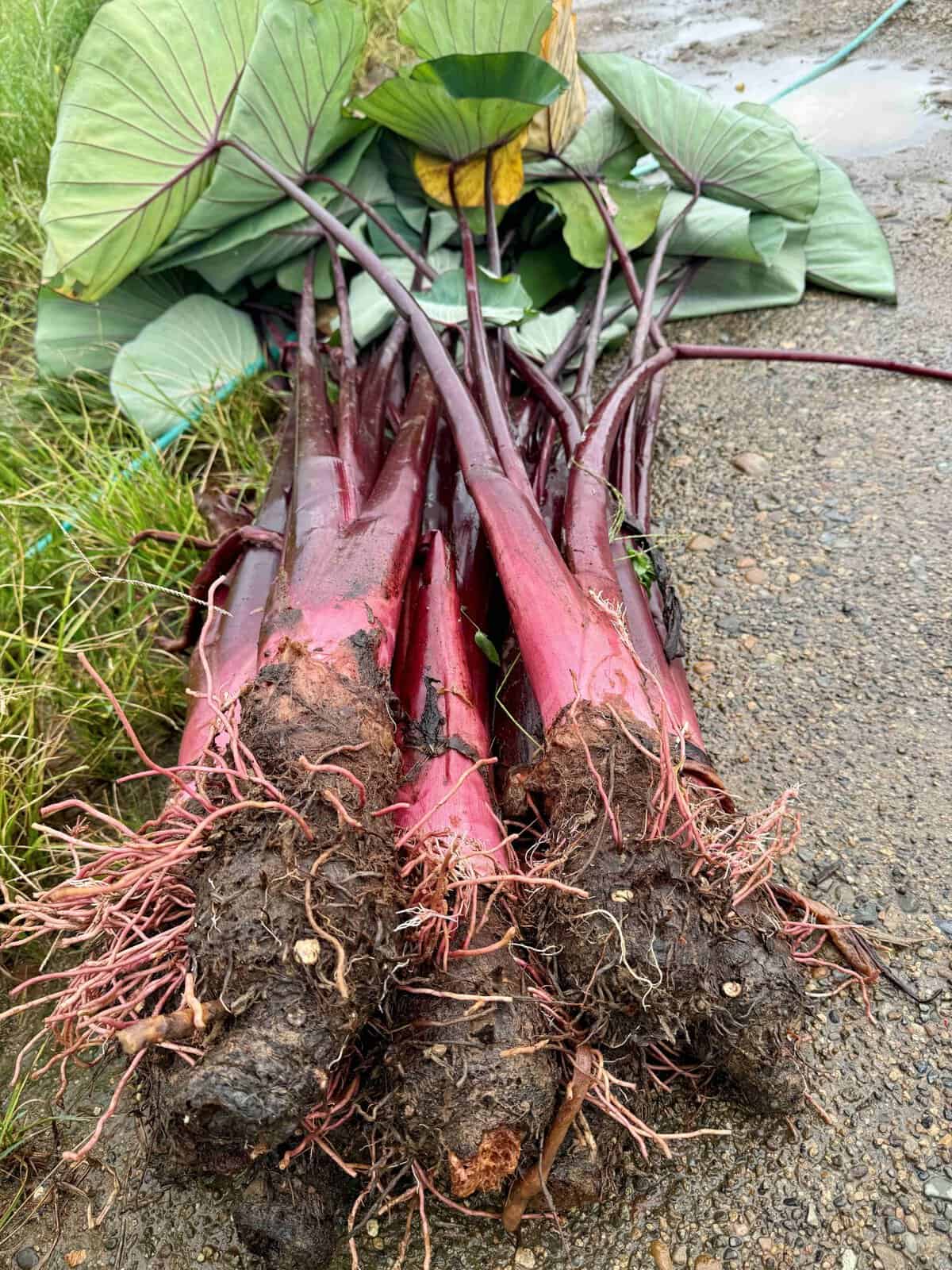
In the Pacific, where agriculture remains the backbone of many rural communities, USP alumna and agricultural researcher Abhineshwar Vinay Prasad is contributing to that global vision through research aimed at improving the sustainability and climate resilience of one of the region’s most important food crops – Taro.
With taro field trials based in Muaniweni, the province of Naitasiri, Fiji about 45 minutes’ drive from The University of the South Pacific’s (USP) Laucala Campus, Prasad’s PhD research seeks to address one of the most pressing questions facing Pacific agriculture today: how can farmers continue producing enough food while adapting to climate change and protecting the health of their soils?
“The agriculture sector in the Pacific Island countries, is at the frontline and is extremely vulnerable to climate change,” Prasad explained.
“Flooding, saltwater intrusion, rising temperatures, longer dry spells and unpredictable rainfall patterns leading to soil erosion, impacting soil health, are affecting the livelihoods of people across the region.”
As populations continue to grow, demands on agricultural production are also increasing. Farmers are under pressure to meet both local consumption needs and export market demands, often cultivating the same plots repeatedly to maximize production.
“Farmers are making efforts to meet the local and export food supply demands, but these efforts can lead to declining soil fertility,” he said. “Crops are planted season-in, season-out, heavily reducing nutrient content, leading to lower yields, reduced crop quality and increasing pest and disease infestations.”
The result is a growing challenge for rural communities already facing the impacts of a changing climate.
A Teaching Assistant at USP, and a 2nd year Doctor of Philosophy student, Prasad’s research on taro carries enormous significance throughout the Pacific.
Beyond its role as a staple food, taro contributes to household incomes, supports local markets and remains deeply embedded in cultural traditions and customary exchanges.
“Taro is a vital staple food crop for Pacific Island countries,” Prasad said. “With increasing demand from local and export markets, taro farmers are facing challenges in keeping up due to declining yields and deteriorating soil health.”
These challenges, combined with climate-related pressures, threaten not only agricultural production but also food and nutrition security across the region.
Recognising these risks, Prasad’s research aims to identify farming practices that can sustain taro production whilst improving soil health and resilience to future climate conditions.
A key component of the research involves the use of the Agricultural Production Systems sIMulator (APSIM), an internationally recognised modelling tool used to simulate crop growth, soil processes and management practices under different environmental conditions.
Originally developed for agricultural research, APSIM allows scientists to examine how crops respond to varying temperatures, rainfall patterns, soil conditions and nutrient management strategies.
Prasad’s study will update and improve the existing APSIM taro module, developed in 2017, by incorporating additional information on the recently introduced variety (Tarova damu), crop phenology, soil water processes, nutrient cycling and soil biology.
The upgraded model will help researchers and farmers better understand how taro performs under different farming and climate scenarios.
“This study is exploring the use of sustainable agricultural intensification interventions to increase yield and improve soil health in current and future climate scenarios in Samoa, Tonga and Fiji,” Prasad explained.
The model will generate information that can support farmers in making more informed decisions about nutrient management, crop growth, expected yields and production planning.
What makes the project particularly unique is its focus on the living ecosystem beneath the soil.
While many agricultural studies focus primarily on plant growth, Prasad’s research also examines soil biodiversity, including bacteria, fungi and archaea that play critical roles in maintaining healthy and productive farming systems.
Over two planting cycles, soil samples will be collected and analyzed before planting, during crop growth and after harvest.
The findings will help researchers better understand how different farming practices influence soil health over time and how these interactions affect crop productivity.
“The incorporation of soil biota interactions into the APSIM taro prototype will increase the accuracy of soil-plant system predictions for taro farming. This will effectively contribute to the sustainability of taro farming, enhancing agricultural productivity and ensuring food security in the region,” Prasad said.
The research spans across Fiji, Samoa and Tonga, examining how taro farming systems perform under both current and projected future climate conditions.
Using climate projections, including extreme weather scenarios and El Niño Southern Oscillation (ENSO) years, the study will assess how different farming systems respond to changing environmental conditions.
According to Prasad, there remains significant knowledge gaps in understanding how Pacific farmers have adapted their practices in response to climate variability.
“Much of the previous research has largely overlooked the examination of normal and modified farming systems,” he said.
“There are gaps in determining what is driving this diversity. Have farmers modified their farming systems in response to climate variations, such as stronger dry seasons? What are the bottlenecks in the production systems?”
The project will explore a range of farming approaches, including monocropping, the use of different rates of organic (Chicken) and inorganic (NPK) manure, mulching, and intercropping within taro production systems.
The goal is to identify farming methods that can increase resilience while maintaining productivity and protecting environmental health.
While the immediate focus is on taro farmers, Prasad believes the project’s applications extend well beyond individual farms.
“This research will offer a wide array of applications,” he said.
“It will assist with on-farm decision-making, designing farming systems for production, establishing resource management goals, evaluating seasonal climate forecasts, analysing agribusiness supply chain issues, crop nutrient management and forecasting, as well as supporting research, education and government policy development.”
The research has the potential to provide valuable information for agricultural planners, extension officers, policymakers and development partners working to strengthen food systems across the Pacific.
As the international community commemorates World Rural Development Day, Prasad’s work highlights the important connection between rural communities and global sustainable development goals.
His research demonstrates that solutions to some of the world’s biggest challenges including food security, climate adaptation and sustainable resource management are often found in rural communities where innovation meets local knowledge.
Through science, technology and a commitment to improving agricultural sustainability, the USP alumnus is helping ensure that Pacific farmers are better equipped to navigate an uncertain future.
In doing so, he embodies the spirit of this year’s observance: rural empowerment creating global impact.
From the fields of Naitasiri to farming communities across Fiji, Samoa and Tonga, his work is helping build more resilient food systems, stronger rural livelihoods and a sustainable future for generations to come.