
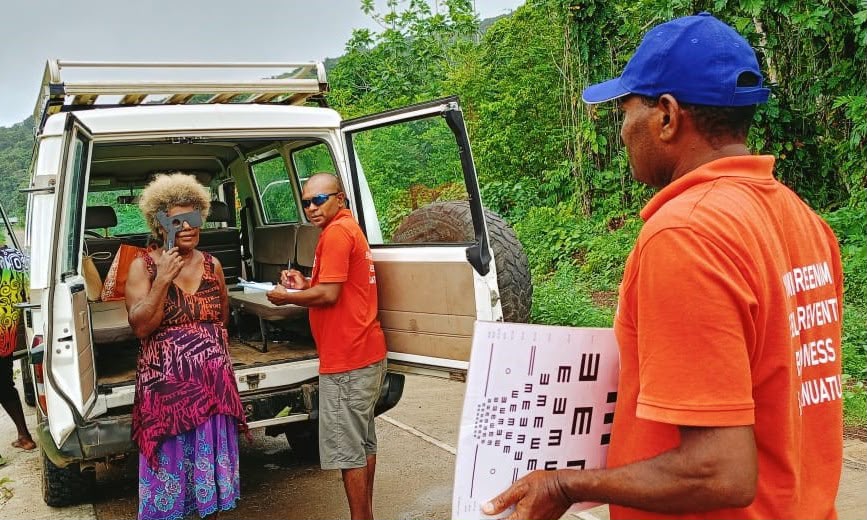
VANUATU’S eye healthcare system will need major structural investment to reach outer-island communities and curb preventable vision loss linked to diabetes, according to the country’s first comprehensive eye health assessment that was released on 20 November.
Conducted by the Vanuatu Ministry of Health alongside The Fred Hollows Foundation NZ and the University of Auckland—with funding from the New Zealand Ministry of Foreign Affairs and Trade—the study used the World Health Organization’s Eye Care Situation Analysis Tool to evaluate 31 system components.
While recognising strengths such as free public cataract surgeries, researchers found that 17 areas need major strengthening, four must be built from scratch, and 10 require minor upgrades.
With Vanuatu’s National Eye Care Plan 2022–2026 phasing out, the findings will be the basis for the next national strategy, according to former Acting Director General of Health Dr Santus Wari.
Across the wider Pacific, an estimated 1.2 million people live with blindness or vision impairment, 90 per cent of which is preventable or treatable, Foundation CEO Dr Audrey Aumua said.
Workforce shortages remain a major factor across Vanuatu.
Specialist numbers have doubled over five years to two ophthalmologists and 14 eye care nurses—with another doctor training overseas at Fiji’s Pacific Eye Institute, yet services remain concentrated in Port Vila and Luganville.
There are no optometrists in the public system, leaving rural islands reliant on periodic outreach visits.
To close the gap, the report recommends establishing local eye-nurse training at the Vanuatu College of Nursing Education.
Non-communicable diseases are also a real threat.
A 2023 national survey detected sight-threatening diabetic retinopathy in 29.2 per cent of surveyed adults aged 50 and over with diabetes, but Vanuatu lacks a national diabetic eye screening programme.
Dr Johnson Kasso, an ophthalmologist at Luganville’s Northern Provincial Hospital, said linking structured screening directly to provincial hospitals and NCD clinics would catch disease before permanent blindness sets in.
Affordability also restricts basic vision correction, with only 10.3 per cent of surveyed older adults needing distance glasses possessing them.
By pairing subsidised spectacles with stronger health data and domestic financing, Port Vila hopes to turn two decades of regional eye-care partnership into something durable over the long term for their communities.