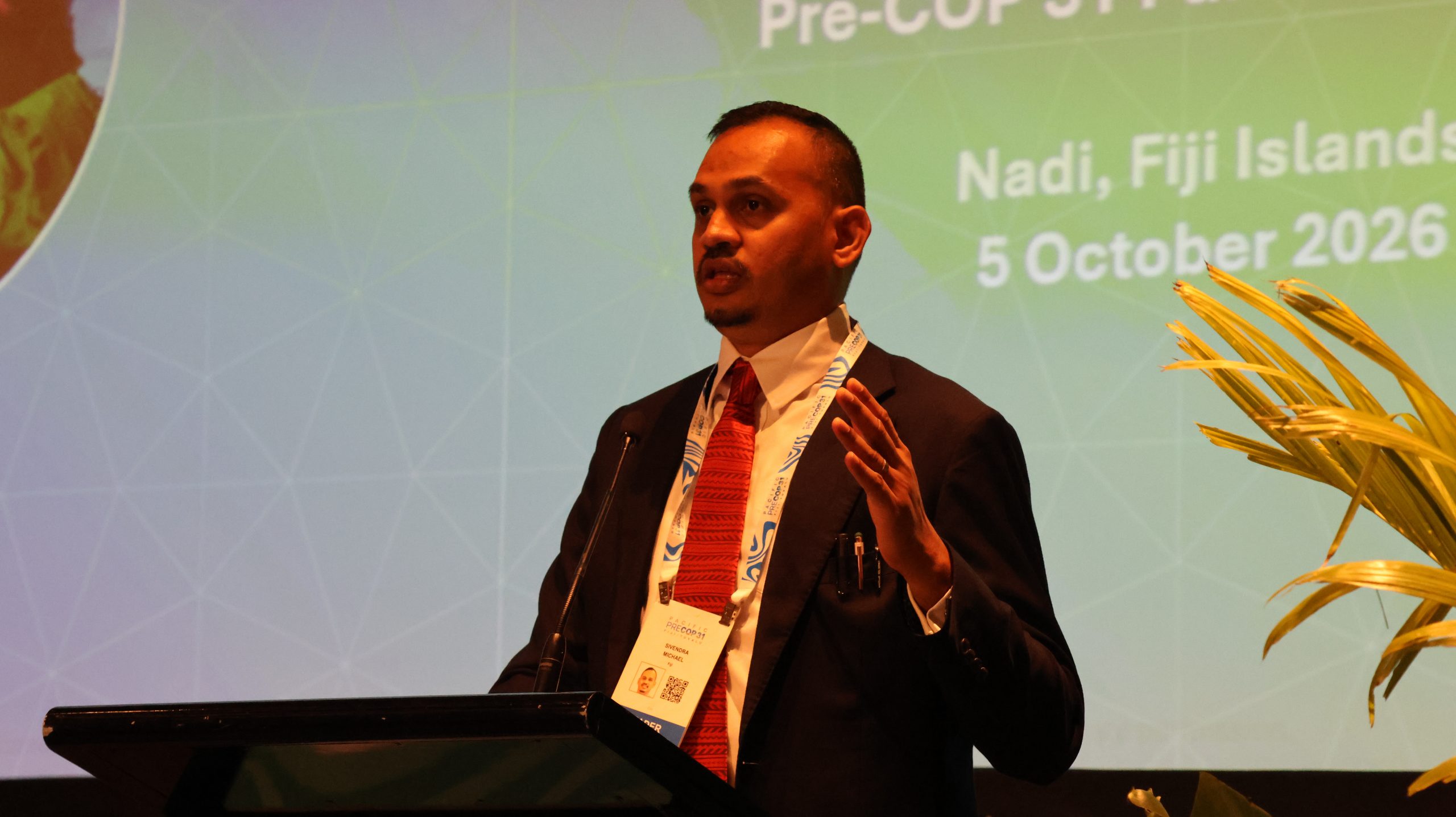
PACIFIC countries are calling for faster, longer-term climate adaptation finance, as the Green Climate Fund steps up efforts to make funding more accessible across the region.
The issue was at the centre of a Pacific Pre-COP31 session on adaptation finance, bringing together Fiji, Palau, ADB, the Green Climate Fund and regional agencies to discuss how to get more climate finance to vulnerable Pacific countries.
Fiji’s Permanent Secretary Dr Sivendra Michael said, “developing countries’ adaptation needs are estimated to be about 12 times the current level of international public adaptation finance.”
“The challenge was not simply the amount of money available, but how that money reaches communities.”
Fiji has identified 43 communities where planned relocation may be required. Each relocation can cost millions of dollars and take years, while projects such as coastal protection, food security and infrastructure often do not generate the financial returns which conventional lenders seek.
Michael called for a shift from “financing the project” to “financing the plan”, alongside greater use of grants and highly concessional finance.
He also proposed measuring the “time to community” the time it takes for climate finance to move from approval to tangible results on the ground.
But development finance institutions also pointed to changes already under way.
The Director of Governance Affairs and Secretary to the Board Green Climate Fund, Artur Cardoso de Lacerda said, “it has deployed around US$7 billion in adaptation finance across about 145 countries.”
Its Pacific portfolio has also grown, with approvals increasing from around $USD500 million in 2023 and potentially reaching close to $USD1.3 billion if a major joint ADB-GCF regional programme is approved.
Meanwhile, plans are underway to establish its first regional offices, with a Pacific office planned for Suva in 2027.
“The fund is targeting completion of funding proposal reviews within nine months and is working to streamline disbursements,” de Lacerda said.
It is also seeking to expand the role of Pacific-based and locally led organisations in accessing climate finance.
The fund has eight accredited entities from the Pacific, with five already having board-approved proposals, while programmes are also being developed to strengthen direct access for Indigenous peoples and community organisations.
For Pacific countries, however, the question remains whether these reforms can translate into finance reaching communities faster and at the scale required.
Palau’s National Climate Change Coordinator, Xavier Matsutaro, said, “many adaptation investments require time horizons far beyond the traditional three-to-five-year project cycle.”
Ports, food systems, waste management and coastal resilience, he shares, can require programs lasting a decade or more.
The discussion reflected a growing push to move away from isolated projects towards coordinated national and regional adaptation programmes.
For the Pacific, the measure of success will ultimately be whether those reforms reduce the time between a community identifying a climate risk and seeing finance translate into action.
For the GCF and other development partners, the challenge is now to demonstrate that the changes being introduced can deliver that result.