
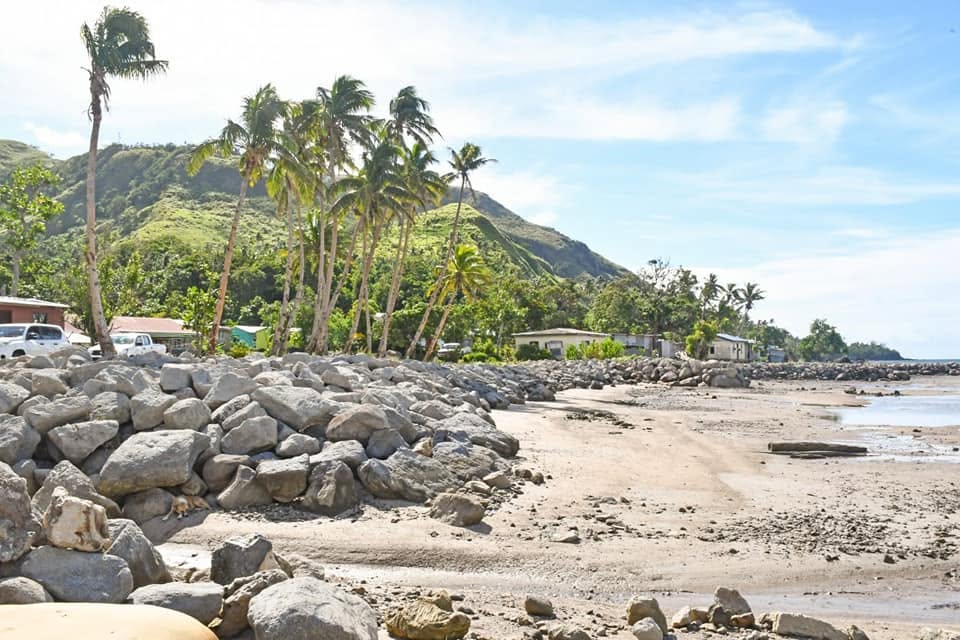
SOLOMON Islands Prime Minister Matthew Wale called for greater investment in reefs, mangroves and other natural coastal defences, saying they protect Pacific communities from climate impacts and should be recognised as infrastructure alongside seawalls.
Speaking at a high-level political session of the Pacific Action for Climate Transitions Pre-COP31 event in Nadi, Wale said coral reefs protect 41 per cent of hazard-exposed coastal people in the Pacific, the highest share of any region.
“Investing in reefs, coastal protection and mangroves is cost-effective adaptation, disaster-risk reduction and food security in one,” he said.
Wale cited estimated costs of $US15 million to $US20 million per kilometre for engineered seawalls, arguing that reefs, mangroves and other natural systems also provide economic and protective value.
Global finance remains sharply weighted against nature, he said, citing the 2026 State of Finance for Nature report’s estimate of about $US220 billion invested annually in nature-based solutions, compared with roughly $US7.3 trillion flowing into activities that harm nature.
“The imbalance demonstrates the need to redirect investment towards solutions that strengthen both environmental and economic resilience,” he said.
For Pacific countries, Wale said investment should support locally led and Pacific-designed mechanisms, rather than depend on complex financing systems that small administrations struggle to access.
He pointed to opportunities for Solomon Islands in marine planning, blue-carbon initiatives, community-based marine management, forest restoration and conservation.
“The Pacific’s natural capital already provides essential services to its people and should be treated as a long-term asset,” Wale said.
“We do not ask the world to save our Blue Pacific Continent. This ocean already works for us: it feeds us, shelters us, and holds our culture and history,” he said, calling for partnerships that let Pacific countries manage and invest in natural capital on terms reflecting their circumstances and priorities.


