

Tuvalu has taken a major step towards transforming plastic waste into a valuable source of energy with the launch of the country’s first plastic waste and used engine oil pyrolysis machine, through a research project by The University of the South Pacific (USP).
The initiative addresses two of the most pressing challenges facing Pacific Island nations – waste management and energy security – by converting plastic waste and used engine oil into alternative fuel sources.
The project was spearheaded by USP Master’s research student Miriama Uluiviti, under the supervision of Associate Professor David Rohindra. Their research focused on transforming plastic waste, an increasing environmental concern across Pacific islands, into practical energy solutions using pyrolysis technology.
The project was supported through funding from The Pacific Community (SPC) under the Pacific Adaptation of Waste to Energy Solutions (PAWES) Programme. The pyrolysis machine, supplied by Nufuels New Zealand, was officially launched and installed recently in Tuvalu.
The machine uses biomass for the heating process that converts plastic waste and waste engine oil into fuel in the absence of oxygen. It can process 10 kilograms of waste plastic per batch, producing approximately 10 litres of liquid fuel and 4 m3 of hydrocarbon gas.
Testing also showed that 15 litres of waste engine oil could produce around 12 litres of diesel-like fuel and 3 m3.
The resulting fuels have been successfully tested in generators, machinery and household gas stoves, demonstrating how waste can be transformed into practical energy solutions for households and communities while strengthening local energy security.
Uluiviti, who is also an employee of the Tuvalu Waste Department, acknowledged the support received throughout the project.
“It is inspiring to see how our collective efforts can lead to such impactful change for our community. I am proud to be part of this pioneering initiative that not only addresses waste issues but also provides practical energy solutions for our families,” she said.
Reflecting on the successful completion of the project, Associate Professor Rohindra commended the collaborative effort behind the initiative.
“This project began in 2024, and I am proud to see it culminate with the successful installation of the pyrolysis system in Tuvalu. I am grateful to USP for providing this opportunity to contribute to regional sustainability initiatives. As a supervisor, I am delighted to see how dedicated students can turn innovative ideas into practical solutions that benefit communities,” he said.
Director of Waste and Recycling, Epu Falega, highlighted the significance of the technology for Tuvalu’s environmental future.
“This innovative pyrolysis system represents a significant step forward for Tuvalu’s waste management and renewable energy strategies,” the USP alumnus said.
Speaking at the official launch ceremony, Chief Guest Walter Pulogo, Acting Secretary of the Ministry of Home Affairs, Climate Change and Environment, emphasised the importance of innovation and regional cooperation in advancing climate resilience.
“This project exemplifies the kind of innovative thinking and regional collaboration needed to address climate change and waste management issues. Tuvalu’s leadership in adopting renewable energy solutions not only benefits our environment but also sets a powerful example for other Pacific nations,” he stated.
Like many small island developing states, Tuvalu faces increasing environmental pressures. Rising sea levels threaten land and freshwater resources, while limited waste disposal infrastructure contributes to pollution that affects marine ecosystems and community livelihoods. Dependence on imported fossil fuels also presents ongoing economic and energy security challenges.
The pyrolysis project delivers environmental and socio-economic benefits by reducing plastic and waste oil pollution, generating alternative fuel, strengthening local energy security, providing practical energy for households and communities, and supporting climate resilience through sustainable waste utilisation.
The project demonstrates the value of collaboration between USP, SPC, the Government of Tuvalu and private sector partners in delivering sustainable, climate-resilient solutions for Pacific communities.
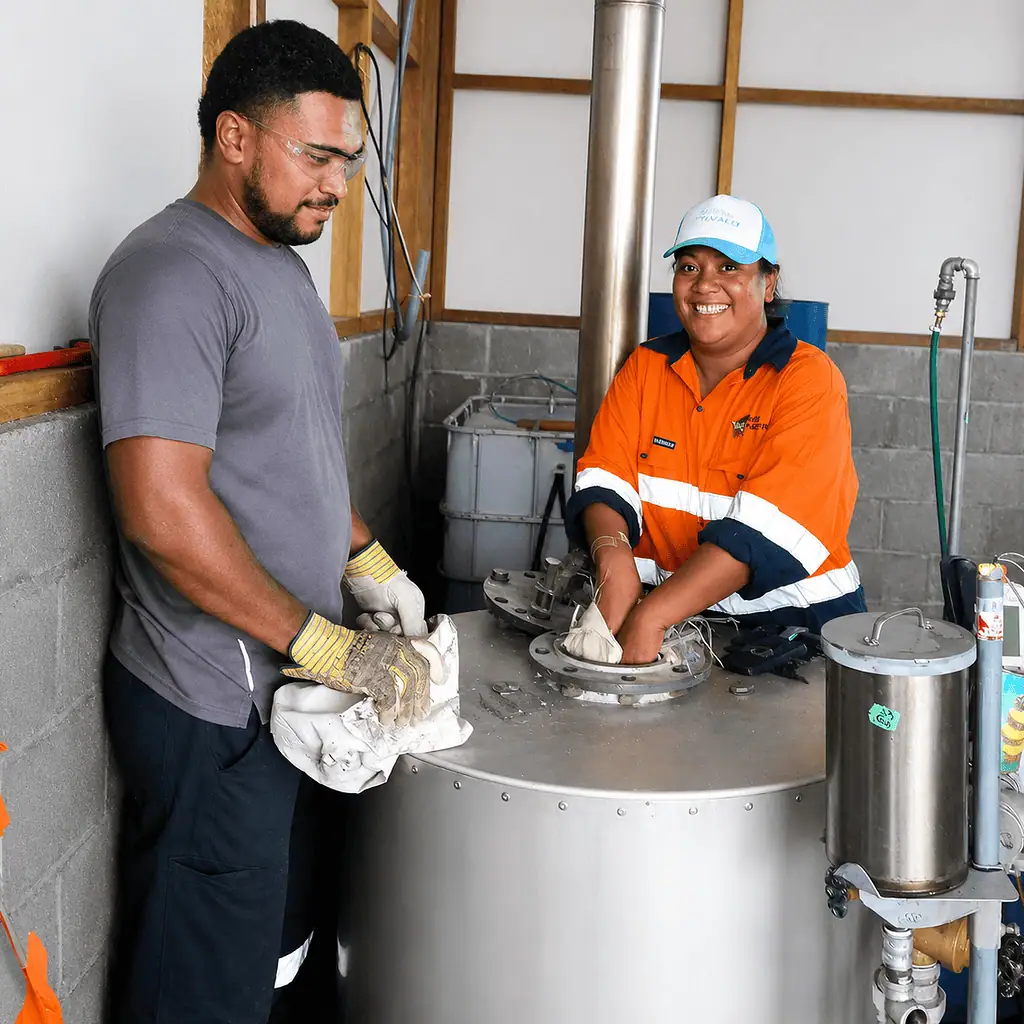
Miriama and Jo filling the pyrolysis reactor with waste plastics.
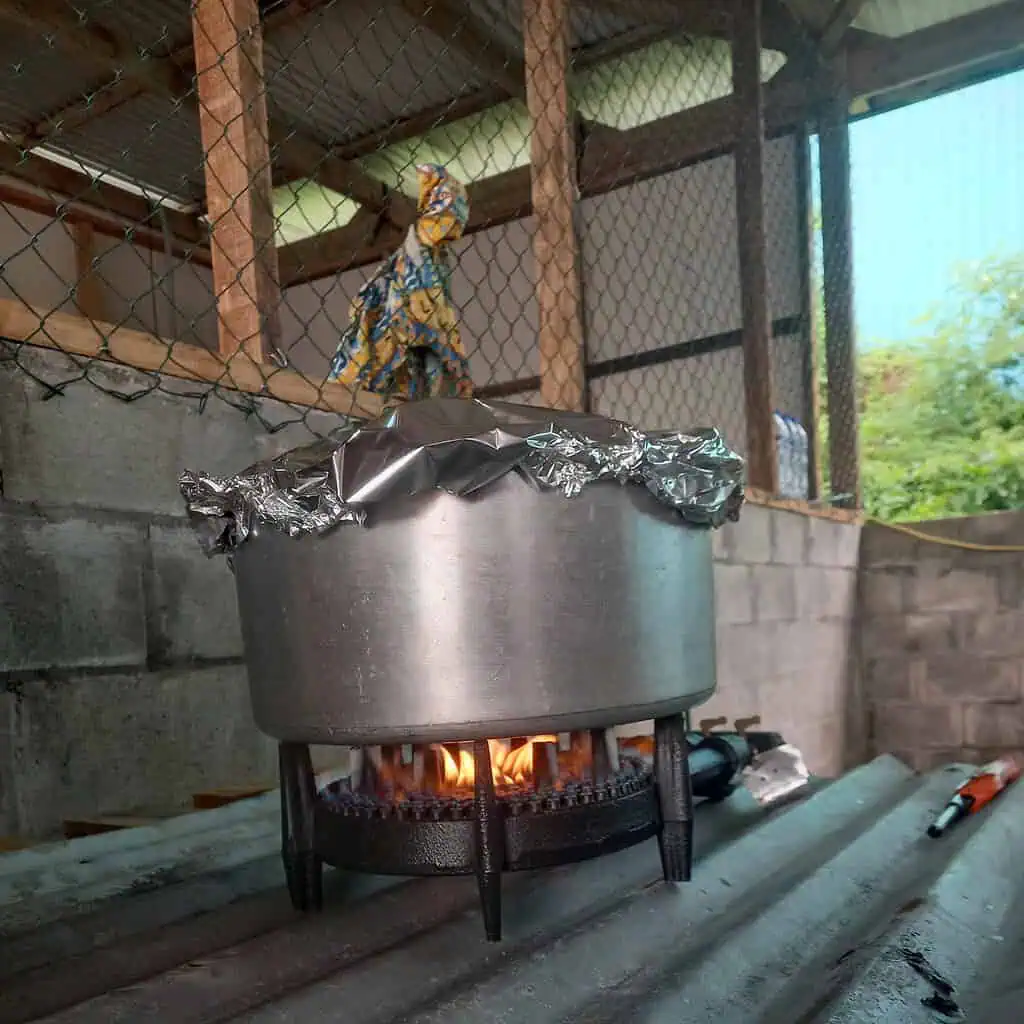
The gas obtained from the pyrolysis of plastics or waste engine oil is used as cooking gas.

The gas produced from pyrolysis powers the generator, which in turn powers the floodlight.
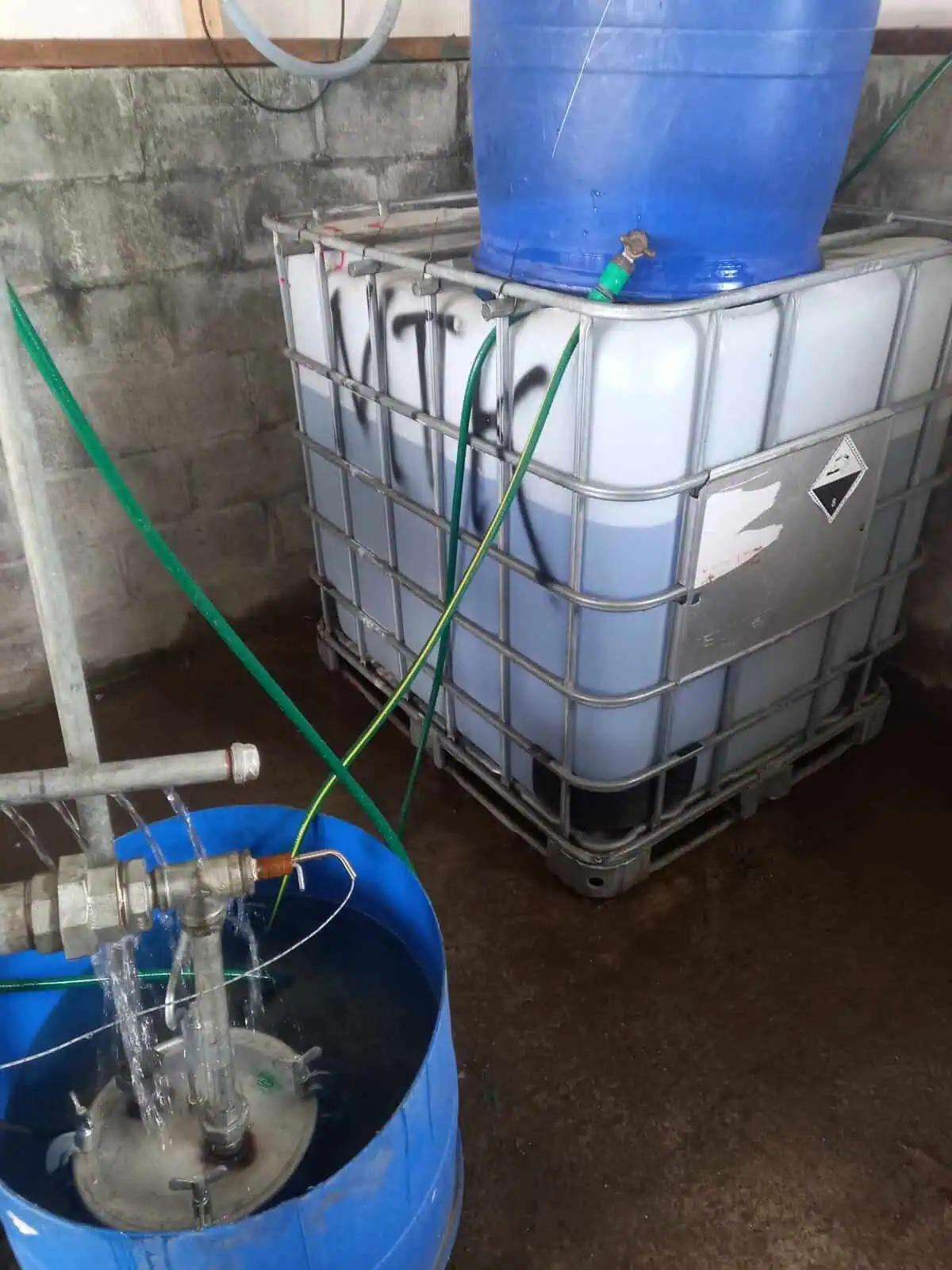
After pyrolysis, the condensed plastic waste is collected as fuel, while the produced gases are captured in an underwater tank.


