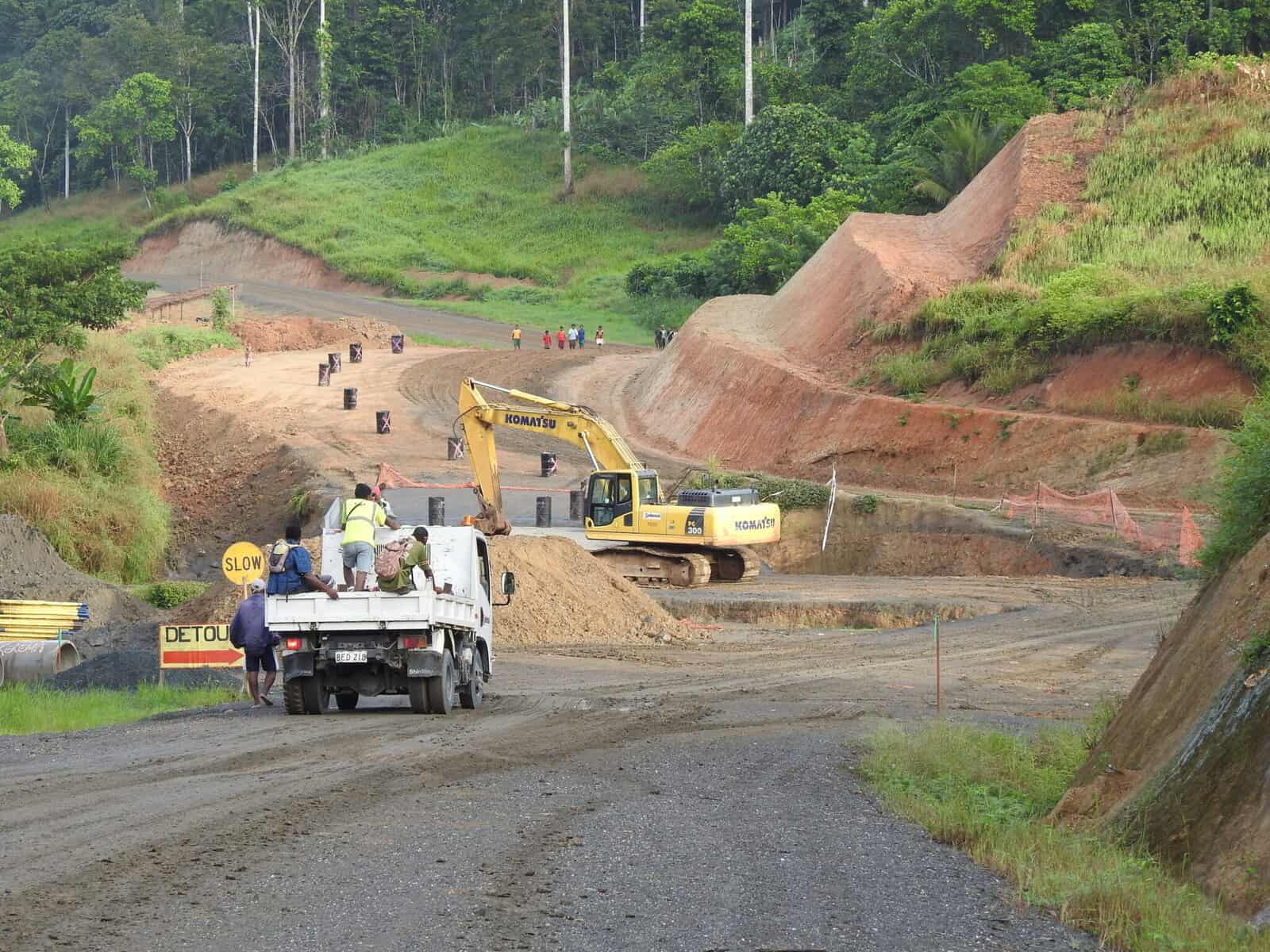
WHEN a 7.3-magnitude earthquake struck Vanuatu in 2024, nearly 80,000 people—roughly one quarter of the population—were affected: lives were lost, families displaced, and homes reduced to rubble. Severely damaged roads, schools, and hospitals impeded essential services. Businesses closed, and tourism and agriculture came to a standstill, putting jobs, incomes, and economic growth at risk across the country.
In small island economies with limited diversification, shocks quickly translate into lost employment and increased vulnerability. In Pacific small states, such shocks are not exceptions; they are recurring realities.
Vanuatu’s experience reflects the daily constraints small states face worldwide. They are geographically remote, heavily import-dependent, with narrow markets, high trade and logistics costs, and acute exposure to climate and external shocks. The combination of these structural and external characteristics has led to high costs of doing business for investors and financiers, limited fiscal space for the public sector, and, most importantly, low growth and limited job creation for the people who live in them.
Small states need more than a one-size-fits-all approach. Their distinctive development challenges demand focus, speed, and tailored solutions. The World Bank Group’s new Small States Strategy addresses these challenges with jobs and a framework built on three core principles: Selectivity, Differentiation, and Efficiency.
Selectivity means concentrating on priorities with transformative impact. Through six “Lighthouse Initiatives”, spanning health, connectivity, energy, resilient infrastructure, fiscal sustainability, and small-business support, resources are being channelled toward sectors that can convert growth into sustainable, private-sector-led job creation.
But selecting priorities is only part of the equation. How they are delivered matters just as much. In the Pacific, this means deploying differentiated approaches that respond to regional and country contexts, ensuring the delivery model is fit for purpose. This includes the use of hub-and-spoke regional solutions to increase efficiency and replication.
For example, under the health Lighthouse, the Pacific Healthy Islands Transformation programme will support Fiji to become a regional medical hub, with work planned to establish the Colonial War Memorial Hospital as an anchor for tertiary care for the region. Kiribati, Tonga, and Tuvalu will connect as spokes through improved tele-health networks, cross-border referral systems, and centres of excellence. The aim is that regional public goods such as platforms, tools, and training can be built once and shared across all countries, dramatically reducing costs for each individual small state.
But the hub does not need to be a country; it can also be a regional shared platform. In small island economies, limited transaction volumes make it difficult to sustain correspondent banking relationships on commercial terms. Individually, these markets often lack the scale global banks require. Collectively, however, they can create it.
Eight economies—Fiji, Kiribati, the Marshall Islands, Samoa, Solomon Islands, Tonga, Tuvalu, and Vanuatu—are therefore working together, coordinated by the Pacific Islands Forum Secretariat and supported by the World Bank Group, to establish a contingent regional cover arrangement that would be activated if any participating country were to lose its last correspondent banking relationship. A regional provider is expected to be contracted in the coming months to stand ready as this backstop facility.
This initiative also lays the groundwork for the future Pacific Payments Mechanism–a dedicated regional platform designed to aggregate cross-border transactions over time and provide the scale needed to keep trade, remittances, and investment flowing across the Pacific.
Selectivity and differentiation ultimately serve a shared objective: achieving efficiency and delivery at scale. This includes unlocking private finance for small states. In some Pacific economies, small businesses are often perceived as too risky by local banks, limiting their access to credit. The International Finance Corporation has stepped in to share 50 per cent portfolio risk with local banks, backed by the International Development Association’s Private Sector Window, enabling small and medium enterprises to access credit.
Building on this model, a recently signed facility will enable BRED Bank (Fiji), for example, to build a portfolio of up to $FJD27 million in new loans to support rural SMEs in job-rich sectors such as agriculture and tourism. By reducing risk and accelerating credit flows, this approach is expanding access to finance for businesses that need it most, in markets where it was previously scarce.
Small Pacific states cannot change their size or geography. They can, however, build economies that generate jobs, providing income, dignity, and resilience against future shocks. A more targeted and efficient approach can help Pacific economies strengthen private sectors, expand opportunities, and build resilience over time.
This article first appeared on Devpolicy Blog