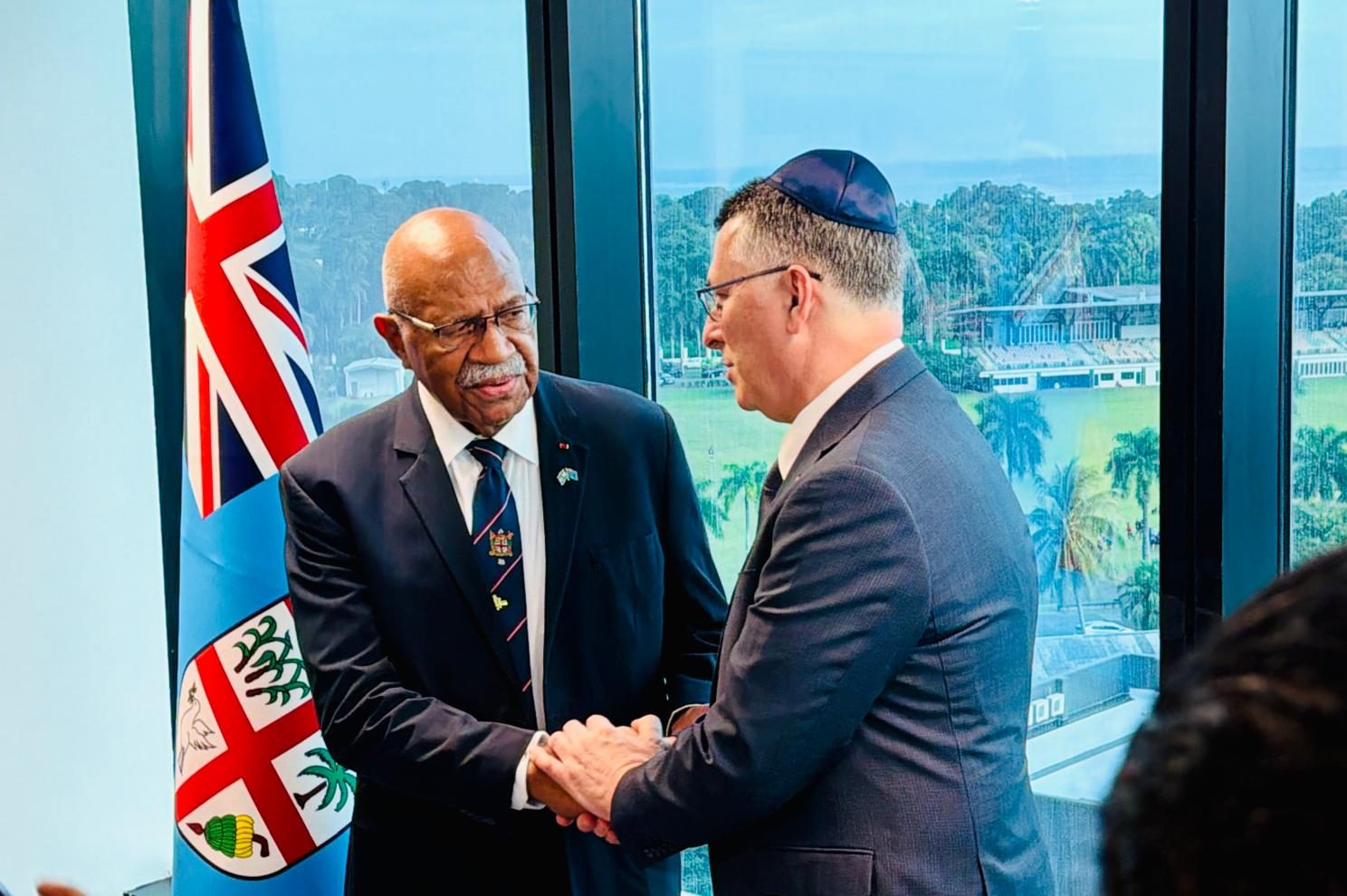
FIJI’S relationship with Israel is entering a “new chapter” as the two countries mark the reopening of Israel’s embassy in Suva.
Prime Minister Sitiveni Rabuka said the continuation of a diplomatic exchange is rooted in faith, shared values and practical cooperation.
Speaking at a press conference, Rabuka framed the move as a reciprocal milestone after last year’s opening of Fiji’s embassy in Jerusalem.
“This afternoon, we come full circle; the Suva opening cements our ties and ushers in a golden era of our relations.”
He described the relationship as no longer just a symbolic or historic relationship but one that is dynamic and focused on current realities.
The prime minister used unusually sweeping language to describe the bilateral bond, saying the two countries had been linked by “a profound and unbreakable covenant of shared democratic values, mutual respect of sovereignty, and indeed, one of our Christian faiths, and both sides of firm faith in God.”
Linking Fiji’s Pacific geography with Israel’s place in the Middle East, he added, “The countries’ faith has bridged the distances and the differences over the years.”
Rabuka outlined a broad agenda for the relationship, including health, digital transformation, cybersecurity, agriculture, food security, diplomatic training, and human resource development.
“Israel’s technology could help Fiji strengthen resilience and protect critical systems, while also supporting efforts against illicit drugs and transnational organised crime.”
He also placed the embassy reopening in a wider regional and geopolitical context, saying Fiji wants to rebuild regional solidarity through the Pacific Islands Forum 2050 Strategy and the Blue Pacific agenda.
While acknowledging Israel’s legitimate security concerns, he said Fiji continues to support dialogue, diplomacy, and a peaceful resolution to the Middle East conflict in line with international law and the UN Charter.
The diplomatic language was warm, but the message was also strategic: Fiji wants the relationship to deliver concrete gains in security, climate resilience, food systems and state capacity, not just symbolism.
As Rabuka put it, the partnership should continue to evolve in ways that bring practical benefits and support “long-term development and resilience for our peoples.
Growing Alliance
Israel’s foreign minister, Gideon Sa’ar, framed Fiji’s decision to open an embassy in Jerusalem as part of a broader push to deepen ties with Pacific nations, saying the move reflects “our intent to deepen our friendship with Fiji and Pacific Island countries.”
Sa’ar described the relationship in openly ideological terms, calling it “an authentic alliance of believers based on deep faith and biblical roots.”
“Fiji’s embassy opening showed “moral leadership” and added that Israel views the Pacific as “a strategic, friendly area with huge potential.”
“The embassy move is part of a wider diplomatic campaign. This is the fourth new Israeli embassy that I opened in just 16 months,” he said, arguing that Israel is “in high demand” despite regional conflict and international pressure.
Sa’ar said Israel wants to expand cooperation with Fiji in “agriculture, water, energy, technology, and more.”
The minister used the address to link diplomacy with security, saying Israel’s northern communities are under attack from Hezbollah and Iranian-backed forces.
“Our lessons from October 7th are clear. We will not allow our citizens to be on the front lines against radical Jihadists.”
“The embassy opening is only the beginning of a broader relationship. The opening of our mutual embassies is just the beginning of a promising new chapter.”