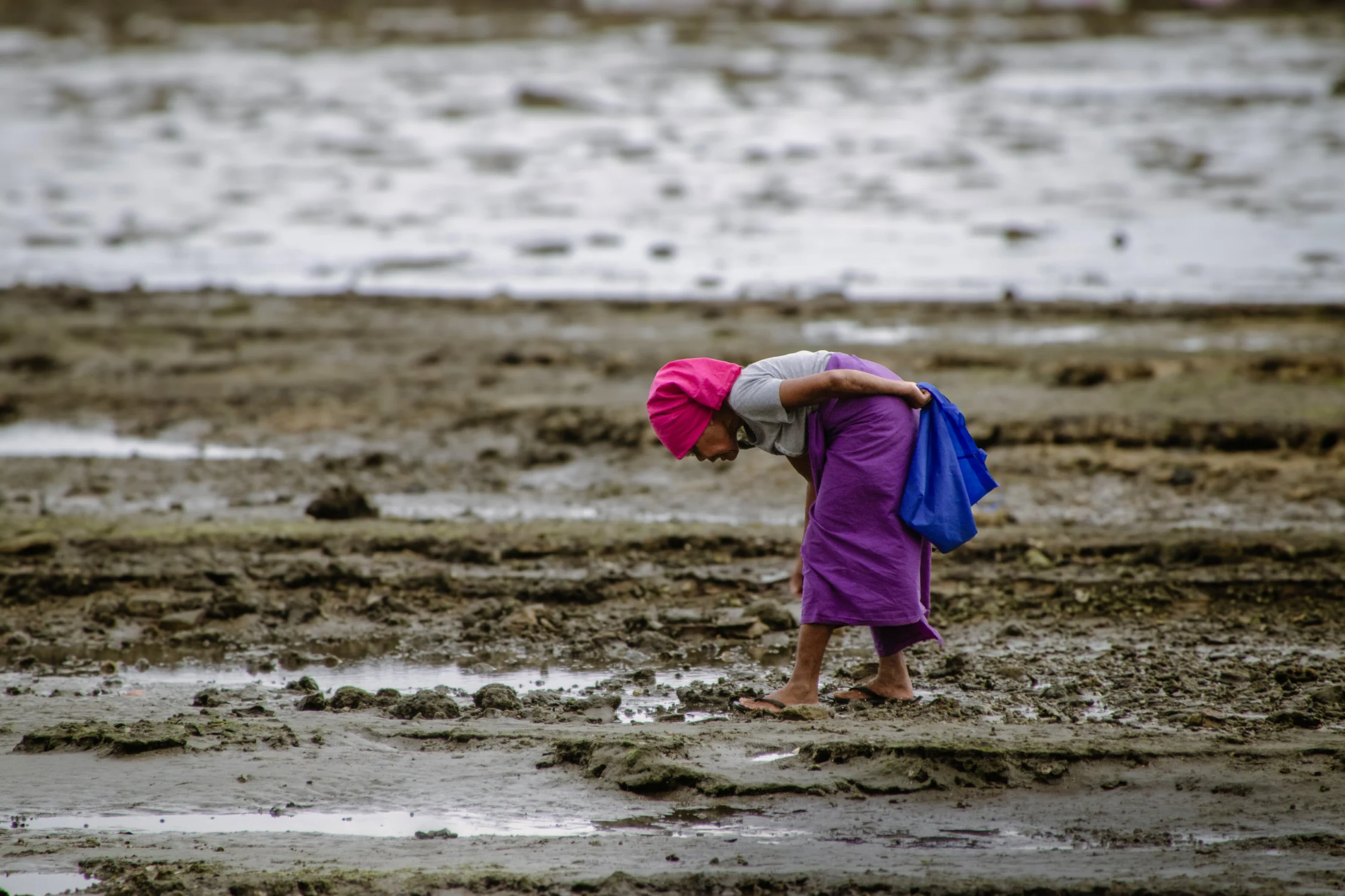
NO region is more under threat from climate change than the Pacific.
Policy changes are certainly needed but governments of the region must have the tools to facilitate the transformation of agriculture systems so that farmers, fishers and forestry workers can adapt to climate change.
Addressing the impact of climate change requires sustained funding and coordinated action. For adaptation strategies to be effective, they must be tailored to each country and territory in the region. No strategy will succeed without community engagement and local expertise. We are already seeing evidence of local people diversifying their food systems to better combat climate change. https://www.spc.int/updates/blog/dynamic-story/2025/11/climate-change-implications-for-fisheries-and-aquaculture-Pacific?shpath=/blue-book-chapter-8-9-10-copy-2
The Food and Agriculture Organization, which I hope to lead, is the international organization best placed to assist the countries and territories of the Pacific in this transformation. The FAO can provide technical assistance and draw on expertise from its 194 members and its many international partners to devise solutions tailored to the specific needs of the region.
The problems facing the 18 island nations and thousands of smaller islands spread across more than 800,000 kilometres are specific to the Pacific. But they are also global in nature. https://www.britannica.com/place/Pacific-Islands
Every corner of the world is threatened by climate change but the small island states of the Pacific are particularly vulnerable. Agriculture and fisheries are threatened. Livelihoods are at risk from the extreme rainfall events and rising sea levels brought about by changing climatic conditions.
The islands of Melanesia, Micronesia and Polynesia already face the twin realities of very little arable land and relatively large populations dependent on the production of those plots. Constrained by geography and topography, the region struggles to add jobs or move from subsistence farming into more lucrative production. https://thedocs.worldbank.org/en/doc/a04d2954d291f783c8a729d0a7342f51-0070062026/original/Pacific-Economic-Update-May-2026-Full-report.pdf
Exporting is difficult given the vast distances countries in the region, as well as with key export markets, including Australia, New Zealand, China and the European Union, and the associated high transportation costs.
But there are other obstacles as well including inadequate deterrents on smuggling and a lack of quality control systems demanded by regulators in importing countries.
Adequate quality control systems would go a very long way to addressing this problem and this is exactly the kind of undertaking where technical assistance from the FAO and partner institutions can turn things around.
Growing concerns in import markets about the environmental impact of palm oil production have constrained export growth. https://wits.worldbank.org/trade/comtrade/en/country/ALL/year/2023/tradeflow/Exports/partner/WLD/product/151110
Last year PNG Prime Minister James Marape launched a major initiative aimed at enhancing the sustainability and resilience of the oil palm agriculture system. Central to the plan is the empowerment of smallholders who are vital to the production of oil palm in PNG. These smallholders will receive improved access to quality seedlings and better access to finance. The government has committed to better enforcement of sustainability standards.
This is precisely the sort of farm system reform I advocate. If I am chosen to lead the FAO, farmer and fisher centric policies and programmes will be at the centre of everything we do. These are the people who know the land and sea far better than consultants or bureaucrats who arrive from distant capitals. My objective is to put FAO back in the driver’s seat for leading the food systems transformation. This means employing all the FAO tools at our disposal to increase efficiency and improve all elements of today’s food systems from soil health to nutrition research and from water management to the blue economy. It also means putting more FAO staff on the ground in affecting areas and reducing the number of consultants at the organization’s Rome headquarters.
It is my intention to improve the FAO’s capability to harness research, technology and finance to empower farmers and rural communities in driving innovation and creating jobs for these food systems.
The region already has a proven track record of creating and maintaining effective fisheries management systems. One good example is the Parties to the Nauru Agreement (PNA) Vessel Day Scheme (VDS) in which eight Pacific nations have established a system of access to the waters of their Exclusive Economic Zones (EEZ) which is based on the allocation of fishing time.
The blue economy is of crucial importance to the region providing livelihoods, nutrition and significant revenues for hard-pressed governments. People in the Pacific obtain between 50%-90% of their animal protein from coastal marine life. https://www.spc.int/updates/blog/dynamic-story/2025/11/climate-change-implications-for-fisheries-and-aquaculture-Pacific?shpath=/blue-book-chapter-8-9-10-copy-2
Tuna is perhaps the most valuable resource in the region. Over the past decade, the waters of the region have yielded between 3.2 and 3.5 million tonnes of the four regional tuna species, valued at just over $2 billion. Approximately 50% of the Pacific tuna catch comes from the EEZ of Pacific Islands and territories, while the other half comes from the high seas.
The VDS programme has led to an increase in revenues and has prompted foreign fishing nations to boost their investments in local processing facilities. The result has been increased employment for Pacific Islanders in the industry and economic growth in PNA countries.
But climate change is threatening this successful program. As ocean temperatures rise, tuna will migrate from the controlled waters of the PNA VDC and into open waters where large scale fleets from China, Japan, the United States and South Korea can access them without compensating the South Pacific nations.
I am also keenly aware of concerns regarding the extent of the illegal fishing that takes place in and around the EEZs of Pacific nations. My experience in the European Union encompassed stints as both Commissioner for Agriculture and Commissioner for Trade. I saw first-hand the difficulties in negotiating agreements at the World Trade Organization to ban subsidies for illegal, unreported and unregulated fishing and for curbing government support for overfishing. If I am chosen as Director-General of the FAO I will strongly support WTO Members’ efforts to bring about a fair and equitable agreement to further discipline fisheries subsidies. https://www.elibrary.imf.org/view/journals/001/2024/255/article-A001-en.xml
In Africa, food insecurity means hunger. In the Pacific it means malnutrition so severe that it has generated the world’s highest rates of obesity and diabetes.
Non-communicable diseases are responsible for about 70% of deaths in the Pacific. A large portion of these deaths are people younger than 60 years old. These deaths are a tragedy and the disabilities created by obesity and diabetes severely strain individuals, families and businesses.
As elsewhere in the world, the problem in the South Pacific is that families have shifted from traditional diets to cheap, heavily processed foods. The FAO can and should do more to reinforce the efforts of Pacific governments to combat this health crisis. Regulations can be used to reduce demand for unhealthy foods such as turkey tails and mutton flaps. Education programmes in schools and villages can be utilized to encourage consumers to buy traditional foods grown on the land. Fiscal policies can enable governments to extend incentives for the consumption of such foods while discouraging consumption of sugary, salty or processed foods.
Traditional crops like taro, once a staple, should be re-introduced to menus.
Seaweed fisheries could be transformed to enable village-based processing, sustainable use of natural resources and food sources for families. https://www.fao.org/newsroom/story/Towards-healthier-and-more-nutritious-diets-in-Pacific-Small-Island-Developing-States/en
I’m standing for Director-General of the FAO not to create a new mandate but to deliver on the core pledges that member states have already made. I want to ensure that the people most in need across the Pacific Islands are prioritized and that the organization’s programmes are staffed in the field rather than to any administration at headquarters.