This is the last of a three-part editorial series on the Pacific Meteorological Council (PMC), the Pacific Islands Meteorological Strategy (PIMS) and Weather Ready Pacific. All information used is sourced from the PCM-8 Agenda.
WEATHER Ready Pacific is a Pacific-owned and led decadal programme, endorsed by Pacific Leaders in 2021 and by Pacific Meteorological Ministers in 2023 as the regional vehicle for Early Warnings for All. The Pacific Meteorological Council directs it, and five executing agencies deliver it under SPREP coordination, organised around six interconnected Key Result Areas.
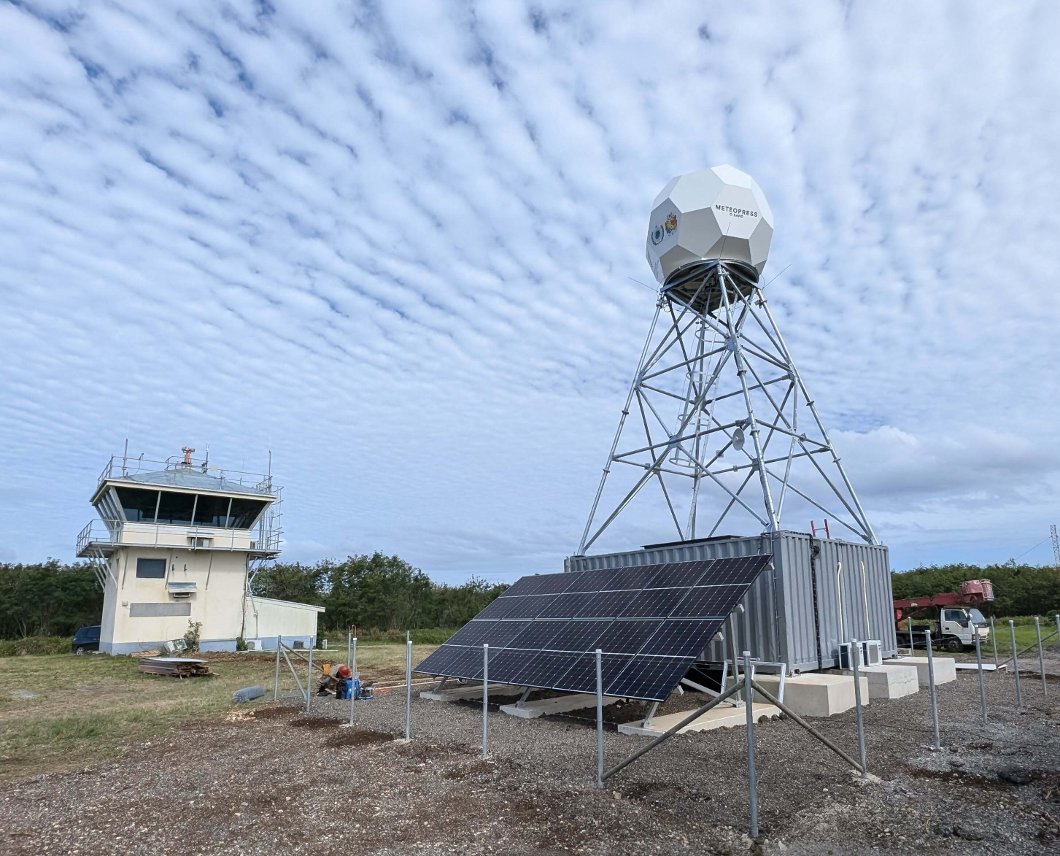
WRP’s first full year of implementation was 2025. The overall status was Amber: strong foundations were built across the six result areas, while the most demanding delivery work remained ahead. Tonga’s first weather radar entered daily operational use. Nine BIP-M and BIP-MT graduates returned home to Tonga, Kiribati, Samoa, Cook Islands, PNG, Tuvalu and Vanuatu. A Regional Observation Networks Workshop brought together 65 representatives from 14 Pacific Island countries.
Early results in 2026
In the first half of 2026, the overall status improved to Amber. The foundations laid in 2025 are beginning to translate into early, output-level results. The rating is deliberately not Green: evidence of change remains early and concentrated, outcome-level effects are not yet observable, and the most demanding work warning communication and the integrated forecasting platform still lies ahead.
Common Alerting Protocol training across five countries delivered strong measured gains in participants’ knowledge and confidence. CAP warning capability is now operational in all five. Four coastal sensors were deployed across Tokelau’s three atolls. Tonga radar maintained 100 per cent system uptime and was woven into daily forecasting. The SPC Pacific Hydrological Diagnostic Assessment Framework was applied across 13 countries.
The Integrated Forecasting Platform advanced from concept to a validated, build-ready design. Its build and timing are the key forward risks. Warning communication remains the most important near-term priority.
One Pacific Meteorology
The development of PIMS 2027-2036 provides an opportunity to establish an overarching architecture through which Pacific meteorological priorities are identified, investments coordinated, programmes implemented and regional progress measured.
PIMS 2027-2036 would serve as the overarching regional strategic framework. The PMC and PMMM would provide regional governance, technical oversight, political leadership and advocacy. WMO would provide international technical authority. SPREP would provide Pacific regional coordination and secretariat functions. Weather Ready Pacific would serve as a major regional investment and implementation mechanism. National NMHSs would remain national owners and implementers responsible for determining priorities, operating systems and delivering services.
Each Pacific NMHS should maintain a nationally owned approximately 10-year Meteorological Development and Investment Plan aligned with PIMS. National plans should feed a consolidated Pacific Meteorological Investment Pipeline showing funded activities, unfunded priorities, capacity and infrastructure gaps, maintenance requirements and regional investment opportunities.
The principle should be: one data collection and MERL process. The intended model is one national development plan for each NMHS, one regional investment pipeline and one implementation framework, with multiple funding and implementing partners.
Maintenance and climate-data crisis
The Pacific Islands have lost, on average, one long-term dataset every two years, and the trend has continued downward since 1980, despite the huge investments in climate monitoring and MHEWS capacity development in recent decades.
The causes include the high cost of maintenance and replacement of monitoring infrastructure, donor funding focused on capital investment rather than long-term operations, limited technical workforce capacity, geographic isolation and logistics, fragmented regional support systems, weak asset lifecycle planning and support, and growing dependence on digital systems.
The Weather Ready Pacific Program is currently assessing the cost of maintaining the Pacific Network. It is estimated that $USD 15-20 million in climate monitoring investments are lost annually due to the lack of maintenance. A failed Pacific weather station can sometimes wait up to three months for a spare part.
Infrastructure maintenance can account for up to 70 per cent of full life-cycle costs, and is consistently unfunded. The gap cannot be addressed through any single funding source.
Proposed Sustainable Maintenance Facility
The Financing Options Paper identifies an endowment or perpetual capital vehicle as the leading long-term option. It could create a permanent, ring-fenced capital base, with investment returns used to fund annual operations, maintenance and asset replacement.
The Maintenance Facility could be capitalised once as a permanent, ring-fenced capital base, with only investment returns, not principal, used to finance annual operations, maintenance and asset replacement. Unlike a pooled trust fund, which depends on periodic donor replenishments, an endowment converts a recurring funding requirement into a one-off capitalisation exercise.
Annual disbursements from the endowment’s investment returns could be transferred to SPREP, acting as the implementing agency, for on-grant funding to beneficiaries. Beneficiaries could include national accounts, funding NMHSs and NDMOs directly, as well as regional entities such as SPREP and SPC.
The endowment option should be understood as the preferred direction for further design work, not as a final decision on the financing and legal structure, hosting arrangements or capitalisation. Additional analysis is required to confirm the true cost of long-term maintenance, develop the financial facility design, test donor and partner appetite, assess ODA compatibility, define investment governance, and determine how the Facility would sit within or alongside SPREP, the WRP governance framework, and other regional and global initiatives.
Financing
The WRP Pooled Fund could act as an interim financing mechanism to fund operations and maintenance while the Maintenance Facility is being established. Once capitalised, the endowment could leverage its sponsor capital base to issue bonds, subject to the entity obtaining an appropriate credit rating, and receive income from other revenue-generating sources.
Other revenue sources being explored include charges for non-core data generated by the MHEWS observation assets and aviation sector cost recovery for aviation forecasting and warning services. WRP is looking at introducing a maintenance charge to development projects in the region to contribute further operations and maintenance funding.
The Facility could complement the Pacific Resilience Facility and SOFF compliance phase. The Pacific Resilience Facility supports broader community resilience and downstream climate and disaster resilience outcomes. The proposed Sustainable Maintenance Facility focuses on the upstream hydro-met and MHEWS assets, systems, and technical functions that generate and sustain warning services for the community.
The next decade
The vision of PIMS 2027-2036 is: “A Pacific-led, resilient and future-ready Blue Pacific Continent, where National Meteorological and Hydrological Services are strengthened through effective partnerships to deliver people-centred, impact-based and inclusive hydro meteorological services that protect lives, strengthen climate resilience and support sustainable prosperity.”
PIMS 2027-2036 is the overarching regional strategic framework for hydrometeorological development in the Pacific. Its purpose is to foster and align national ownership, regional cooperation and partner support behind a coherent ten-year strategy for sustainably strengthening NMHS capabilities, enabling institutional frameworks, partnerships and infrastructure, while coordinating shared investment priorities and resource mobilisation.
The foundations laid in 2025 and consolidated in the first half of 2026 now set the agenda for the period ahead, where the emphasis shifts from establishment to delivery at pace and to converting outputs into durable, Pacific-owned capability.
Priority activities include progressing the Integrated Forecasting Platform from build-ready design into Phase 1 construction, standing up the Asset Management Information System, and finalising the Sustainable MHEWS Financing Facility approved in principle at SC4.
Warning communication remains the most important near-term priority. The PMU will build and resource a standardised, region-wide monitoring and evaluation framework to measure outcomes consistently, fill the remaining ESS/GEDSI Officer position, and advance the WRP Decadal Investment Plan, which will formally activate KRA 6.
The Theory of Change is operationalised through four interconnected Priority Areas and 12 Pacific Key Outcomes. The latest Strategy provides biennial performance reviews, a mid-term review in 2031 and a comprehensive review in 2035.
PIMS 2027-2036 is intended to transform a strategic reference document into a living regional framework for collective action, investment and measurable accountability.
Supported by SPREP and SPC to cover the 8th Pacific Meteorological Council Meeting (PMC-8) in Nuku’alofa, Tonga. Editorial control remains with the author.
First Series | “The Pacific Meteorological Council’s coordination journey” – https://islandsbusiness.com/news-break/the-pacific-meteorological-councils-coordination-journey/
Second Series | “PIMS 2017-2026: progress, lessons and the evidence gap” – https://islandsbusiness.com/news-break/pims-2017-2026-progress-lessons-and-the-evidence-gap/