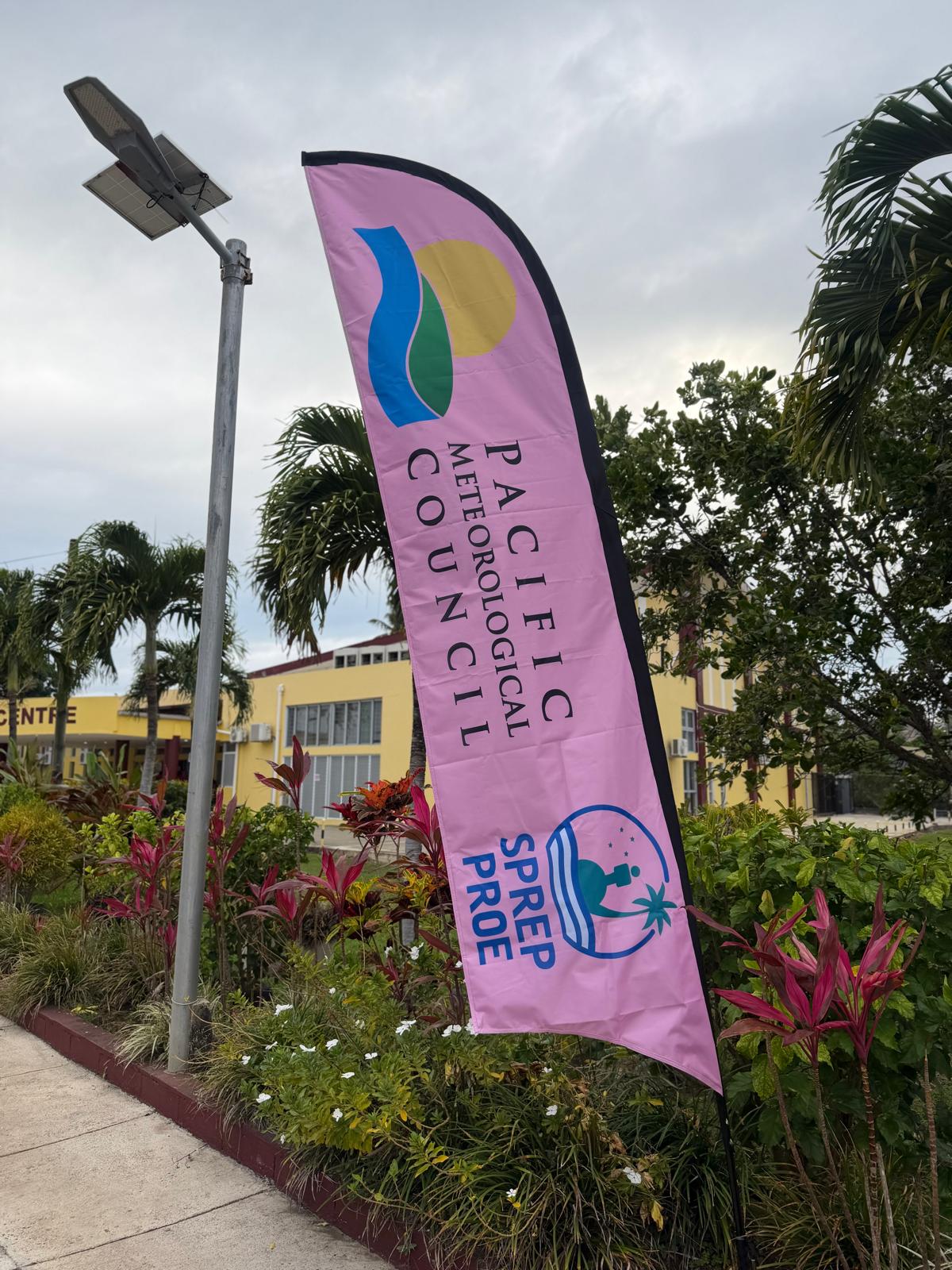
This is the first of a three-part editorial series on the Pacific Meteorological Council (PMC), the Pacific Islands Meteorological Strategy (PIMS) and Weather Ready Pacific (WRP). All information used is sourced from the PCM-8 Agenda.
THE Pacific Meteorological Council was formed in 2011, replacing a series of Regional Meteorological Services Directors meetings that began in 1993. The formation of the PMC and the coincident establishment of the Pacific Meteorological Desk Partnership occurred in response to a growing appreciation of the need to increase meteorological coordination in the region.
A review commissioned in 2010 considered weather and climate services in the Pacific and recommended a strengthening of regional arrangements. This review had also built upon a 2000 needs analysis for strengthening Pacific Island Meteorological Services.
Attendance at Pacific Meteorological Council meetings grew from 54 in 2011 to 168 in 2015. Attendance continued to grow, with the 2023 meeting attracting 230 participants. The PMC initiated a series of Ministerial Meetings on Meteorology, with the first held in 2015 and the most recent in 2023. The PMC also held a Pacific Donor and Development Partners Meeting in 2023, the first of its type.
Multiple lines of evidence suggest that the PMC has, overall, been highly successful in realising its intent of greater regional coordination in support of hydro-meteorological services and regional needs, and visibility for the importance of hydrometeorology.
A stressed coordination environment
Pacific National Meteorological and Hydrological Service (NMHSs) operate in a crowded, stressed coordination environment with many national, bilateral, regional, and global projects. The review recorded concerns about fragmented implementation, short project cycles, donor and partner coordination, and the administrative burden on NMHSs.
There are two main Meteorology Programs in operation in the Pacific Islands. One operates under the World Meteorological Organisation (WMO) framework as part of the WMO Region V structure, and one operates under the SPREP framework under the Pacific Met Council structure. Both structures have the same stakeholders in the Pacific.
Multiple programmes have led to separate governance arrangements, country consultations, needs assessments, technical missions, workplans, training programmes, procurement processes, monitoring systems, reporting requirements, steering committees, donor engagement processes, and investment pipelines. For small NMHSs with limited human resources, participation in multiple programme processes can itself become a significant operational burden.
The challenge is therefore to ensure that available assistance is coordinated, complementary, country-led and strategically targeted.
PMC and the Pacific Meteorological Desk Partnership
The Apia-based part of the Pacific Meteorological Desk Partnership is not, and has never been, sufficiently resourced. Despite the growth in PMC-related workload since 2011, an ambitious policy and project agenda, and an obvious policy impetus, only one full-time position is currently filled, with some of the excess workload being borne by project-funded staff.
The PMDP capacity issues are also affecting the effectiveness of PMC Panels. The need for the PMC and Pacific Meteorological Desk Partnership to assist in coordination continues to increase.
The Review identified a clear implementation and follow-up gap between PMC meetings. It found that PMC actions were not sufficiently tracked between meetings, Panel activity often concentrated around the biennial PMC, communications and meeting preparations were sometimes late, and stakeholders were frustrated by the rate of progress in some areas.
Management Group between meetings
The PMC Management Group would provide a standing member-led mechanism to identify duplication and gaps, maintain strategic alignment with the PIMS and the 2050 Strategy, and give timely guidance without waiting two years for the next full PMC.
The PMC Management Group shall coordinate implementation across the NMHSs, make recommendations to the full PMC meeting, provide guidance to the Secretariat on the implementation of the programme of works agreed by the PMC meeting, identify duplication and gaps in implementation, maintain strategic alignment with the Pacific Islands Meteorology Strategy and the 2050 Strategy for the Blue Pacific, and represent PMC in high-level consultations.
The PMC Management Group is a subordinate body of the PMC and cannot make decisions affecting the PMC that require the input of all PMC members or overturn decisions made by the PMC meeting. It will hold at least one meeting in the years the PMC does not meet. The meeting will be held virtually unless otherwise agreed. Decisions taken by the PMC Management Group will be by consensus.
The survey provides a strong mandate to proceed while also favouring a cautious implementation approach. The two leading timing options account for 28 of 32 responses: either establish the Group at PMC-8 or first operate it on a pilot basis. The proposed approach combines these preferences by authorising the Management Group at PMC-8 on a pilot basis, with a formal effectiveness review at PMC-9.
A hybrid unified steering committee
A unified steering committee would substantially reduce the number of regional Steering Committee meetings and travel costs, reduce the meeting burden on NMHS Directors, improve coordination between programmes and alignment with PIMS, allow donors to see the broader PMC investment landscape, preserve programme-specific accountability and existing donor agreements, and reduce duplication and create opportunities for joint investment.
The Hybrid Unified PMC Steering Committee will provide a single, coordinated governance platform for major programmes and projects operating under the Pacific Meteorological Council, while preserving the specific mandates, Terms of Reference, membership, fiduciary responsibilities and decision-making requirements of individual programmes and projects.
The meeting itself is unified, but legal, fiduciary and programme accountability remains distinct where required. WRP funding decisions remain WRP Steering Committee decisions even though they are taken during the Unified PMC Steering Committee meeting.
A saving in the order of $170K in travel expenses could have been made. A hybrid unified steering committee approach is proposed for piloting in Niue in 2027.
Supported by SPREP and SPC to cover the 8th Pacific Meteorological Council Meeting (PMC-8) in Nuku’alofa, Tonga. Editorial control remains with the author.