
WHILE the Pacific’s powerful convene in air-conditioned rooms at their annual forum, a different kind of delegation prepares to make its voice heard.
Led by Sail Master Angelo Smith and Traditional Navigator Kaiafa Ledua of the Uto Ni Yalo, sailors from across oceania will brave the wind, seas, sun, and rain to take an alternative voice to the Pacific Islands Leaders Forum in Honiara, Solomon Islands.
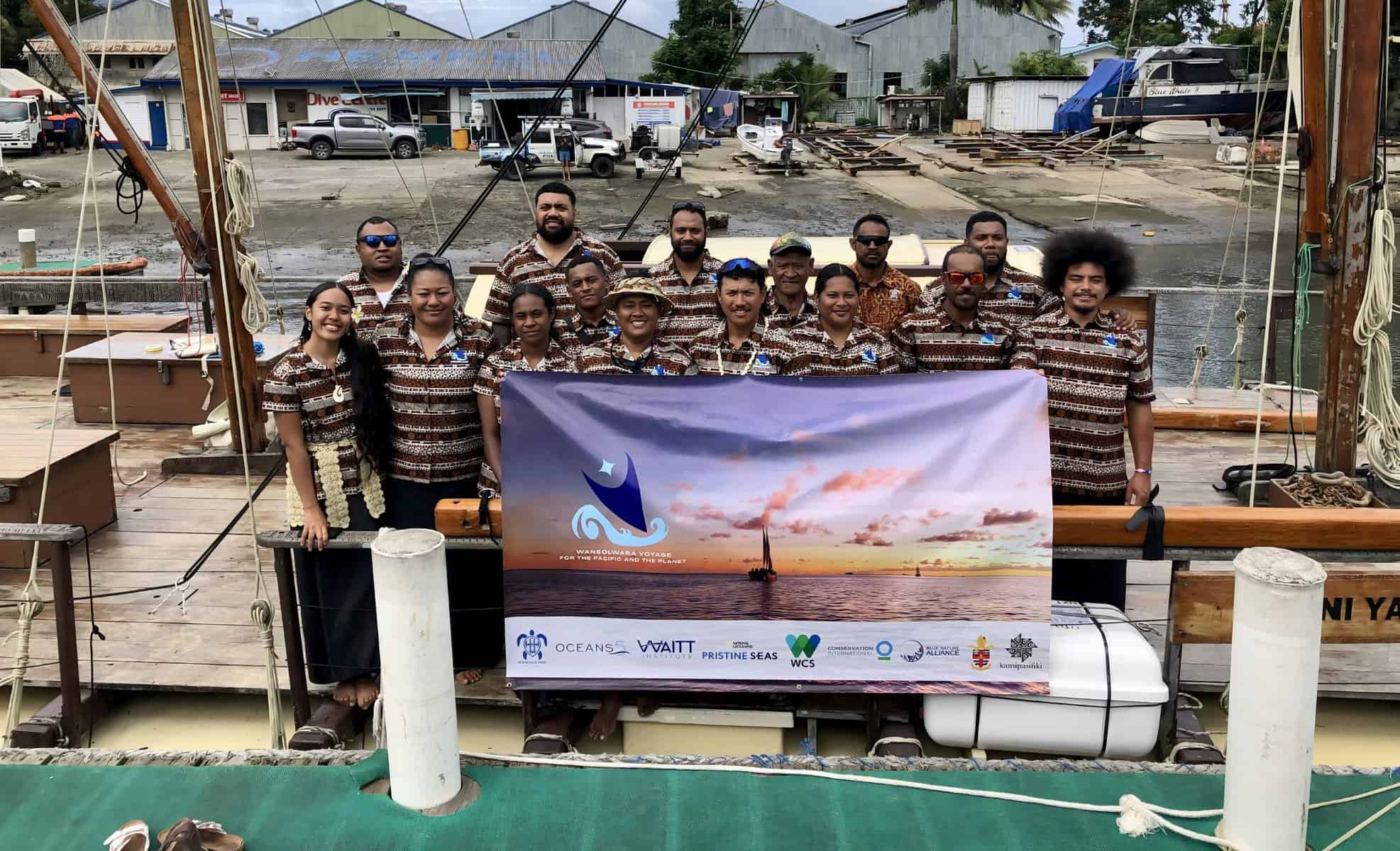
With 15 crew members from Cook Islands, Fiji, Kanaky (New Caledonia), Samoa, and Tonga, the vessel will set sail from Suva today (Friday).
Captain Smith said the voyage was very significant in many ways.
Uto Ni Yalo’s voyage is a statement for sustainable transportation and ocean conservation.
The ocean going twin-hulled canoes is on its second voyage to the forum. The first was last year to Tonga.
Once again she carries the weight of a profound purpose and the hopes of the Pasifika people in her wooden hull.
“The message we’re taking to the PIFs meeting on behalf of the Fijian people, and the wider Pacific community, includes a focus on a healthy ocean, which is important for a healthy climate,” Smith said.
“We’re calling for a fossil fuel-free Pacific, 100 per cent renewable energy, complete ocean management, and the establishment of 30 per cent Marine Protected Areas (MPAs) across our Exclusive Economic Zones (EEZs) and the high seas.
“We advocate for a moratorium on deep-sea mining and call for deep-sea research to be completed across our Pacific countries by 2030.”
Vaka from neighbouring Pacific islands will join the voyage which will be a masterclass in representation and substance, a powerful reminder that for the Pacific, the climate crisis is not a distant threat but a current reality.
“The Pacific Islands region should be an ocean of peace, and we support the awareness for ratification and implementation of the Biodiversity Beyond National Jurisdiction (BBNJ) agreement,” Smith said.
“We also support the Temotu Province in the Solomon Islands and their declaration for marine protected areas.’’
Smith and the crew recognise that the voyage is not without challenges.
“We’ll likely face good winds on our journey to the Solomons, but the return trip will be more challenging due to headwinds as we head back to Fiji, which is windward to the Solomons and Vanuatu,” Smith said.
“The distance is considerable – it’s about the same from here to Honiara as from here to Auckland.
“The primary challenge is getting our voices heard, not just by our leaders but also by other governments, NGOs, and the media. We must ensure our message resonates across different platforms.”
A veteran sailor with more than 100,000 miles of voyaging experience, Smith recognise the importance of traditional knowledge and practices. He said the Pacific people did not cause climate change.
“Indigenous peoples sail sustainably, using the winds and traditional materials, which stresses the need to revive and return to these sustainable ways of living as we move forward,” he said.
Smith hopes that this voyage will raise awareness about cultural heritage.
“Our vessel plays an important role in conveying our message. Its visibility and role as a
champion of sustainable sea transportation will help spark interest and awareness among our people,” he said.
“Seeing traditional sailing in action will be a massive step forward in our efforts.
Smith said he believes that collaborations, partnerships, and engaging with the community are important during the forum and can strengthen collective responses to environmental challenges and other issues.’’
Fiji’s Permanent Secretary for Environment and Climate Change, Dr Sivendra Michael, said the Pacific’s future relied on its capacity to protect national waters, bolster unity, and forge paths away from fossil fuels, focused on renewable energy and Indigenous guardianship.
“The Wansolwara Voyage carries with it the spirit of our ancestors and the aspirations of our people today,” Michael said.
“As leaders, we must honour their call to protect our ocean, resist militarisation, and ensure that the Pacific remains an Ocean of Peace for generations to come.”
“As Mama Uto departs our shores, it carries with it the prayers of our people, the solidarity of our leaders, and the determination of a region that refuses to be passive in the face of climate change and ocean degradation.’’