
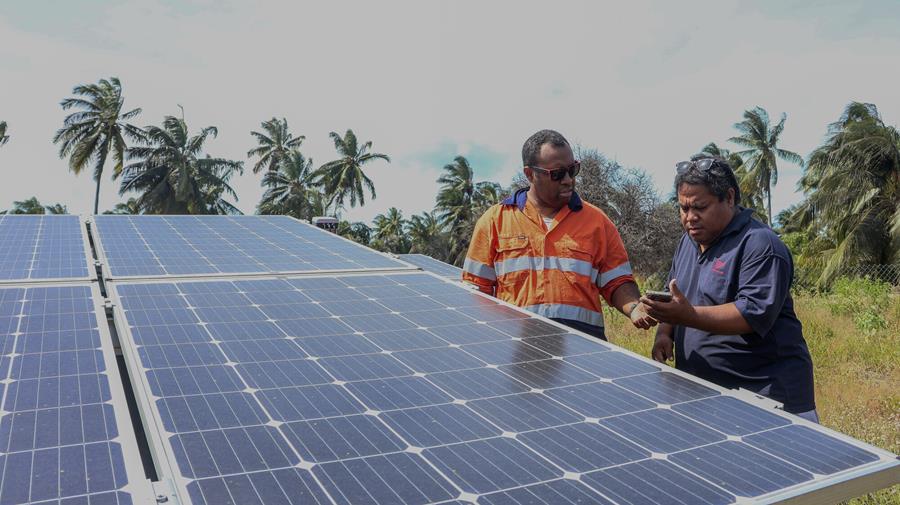
A Pacific-led initiative to establish a Renewable Energy Commissioner (REC) for the Pacific has received support from Australia. The initiative is designed to strengthen energy security, affordability and resilience while supporting sustainable development across the region.
Australia will provide funding over three years through the Australia-Pacific Partnership for Energy Transition (APPET) to support the establishment of the Commissioner and the institutional arrangements required to make the role operational. The initiative is being developed in collaboration with the Pacific Community (SPC), the Pacific Islands Forum Secretariat (PIFS) and the Government of Denmark.
The REC was endorsed by Pacific Energy and Transport Ministers and is expected to support Pacific Island countries and territories in translating renewable energy ambitions into practical implementation. The role was developed following Pacific leaders’ commitment to establish a regional Energy Commissioner as part of the region’s just transition towards a fossil fuel-free Pacific.
Under the approved Terms of Reference, the Commissioner will provide high-level leadership and coordination to accelerate renewable energy deployment, improve investment readiness, strengthen access to finance, support regional procurement initiatives, and enhance monitoring and accountability for the region’s energy transition. The Commissioner will operate as an enabling and coordinating mechanism, helping align governments, regional organisations, utilities, development partners, and financiers behind Pacific priorities.
SPC Director-General Dr Paula Vivili welcomed Australia’s support and the milestone reached by Pacific countries in establishing the role.
“The Renewable Energy Commissioner represents a significant step forward in turning Pacific commitments on renewable energy and energy security into practical outcomes for our people,”
“Pacific Island countries continue to face some of the highest energy costs in the world while remaining vulnerable to external fuel price shocks. Through stronger regional coordination, enhanced access to investment and improved alignment of partner support, the Commissioner will help countries accelerate renewable energy deployment and strengthen long-term energy resilience.”
“SPC is honoured that leaders have entrusted the organisation to anchor this important regional function. We look forward to working closely with PIFS, our members and development partners to ensure the Commissioner delivers measurable outcomes that support the Pacific’s sustainable and secure energy future.”
The Commissioner will be established within SPC as a strategic leadership position, reporting to the SPC Director-General through established SPC governance arrangements, recognising SPC’s long-standing technical leadership in the regional energy sector.
At the same time, the Commissioner will operate under a dual reporting arrangement, reflecting both the technical and political dimensions of the role. For institutional, technical, and operational matters, the Commissioner will report through SPC governance mechanisms. For political advocacy, regional policy alignment and reporting to Pacific Leaders, the Commissioner will report through agreed Pacific Islands Forum processes via the PIFS Secretary-General. This arrangement ensures the role remains connected to the regional political architecture while maintaining SPC’s technical and operational mandate.
While SPC will anchor the position, final hosting arrangements will be determined during the establishment phase through a joint SPC-PIFS working arrangement.
The Commissioner will be accountable to both Pacific Energy Ministers and Pacific Leaders, with the Pacific Regional Energy and Transport Ministers’ Meeting (PRETMM) serving as the principal oversight mechanism, supported between meetings by the Pacific Senior Energy Officials Meeting (PacSEOM). Annual reports on the state of the Pacific renewable energy transition will be produced, drawing on regional data and evidence to track progress, investment flows, project pipelines, and implementation challenges.
Importantly, the Commissioner will not replace the responsibilities of national governments, SPC, PIFS, utilities, regulators, or development partners. Instead, the role is intended to strengthen coordination, improve partner alignment, identify systemic barriers, support investment mobilisation, and help ensure that regional ambitions are translated into tangible results for Pacific communities.
In September, Australian Minister for Climate Change and Energy, the Hon. Chris Bowen MP, announced Australia’s initial AUD 1.89 million commitment towards establishing the Renewable Energy Commissioner, reaffirming Australia’s support for a more secure energy future for the Pacific.
“Australia will provide $1.89 million to help establish the new Renewable Energy Commissioner for the Pacific, supporting investment in renewable energy, strengthening energy security and helping lower power costs across the region.”
“The Commissioner will help turn ambition into action by bringing together governments, investors and development partners to accelerate renewable energy projects and deliver lasting benefits for Pacific communities.”
At Pre-COP in Fiji on 5 October, Minister Bowen announced additional funding of AUD 800,000 to support the establishment of the Renewable Energy Commissioner, bringing Australia’s total contribution to more than AUD 2.6 million.
The establishment phase of the Renewable Energy Commissioner will initially run for three years, after which a formal review will assess its effectiveness, governance arrangements, contribution to renewable energy deployment, energy security outcomes and long-term institutional placement.