

After COP30 in Belém, Brazil, the next summit will move to Antalya in November 2026, where Turkey will host and Australia will chair the negotiations as countries reflect on progress and plan.
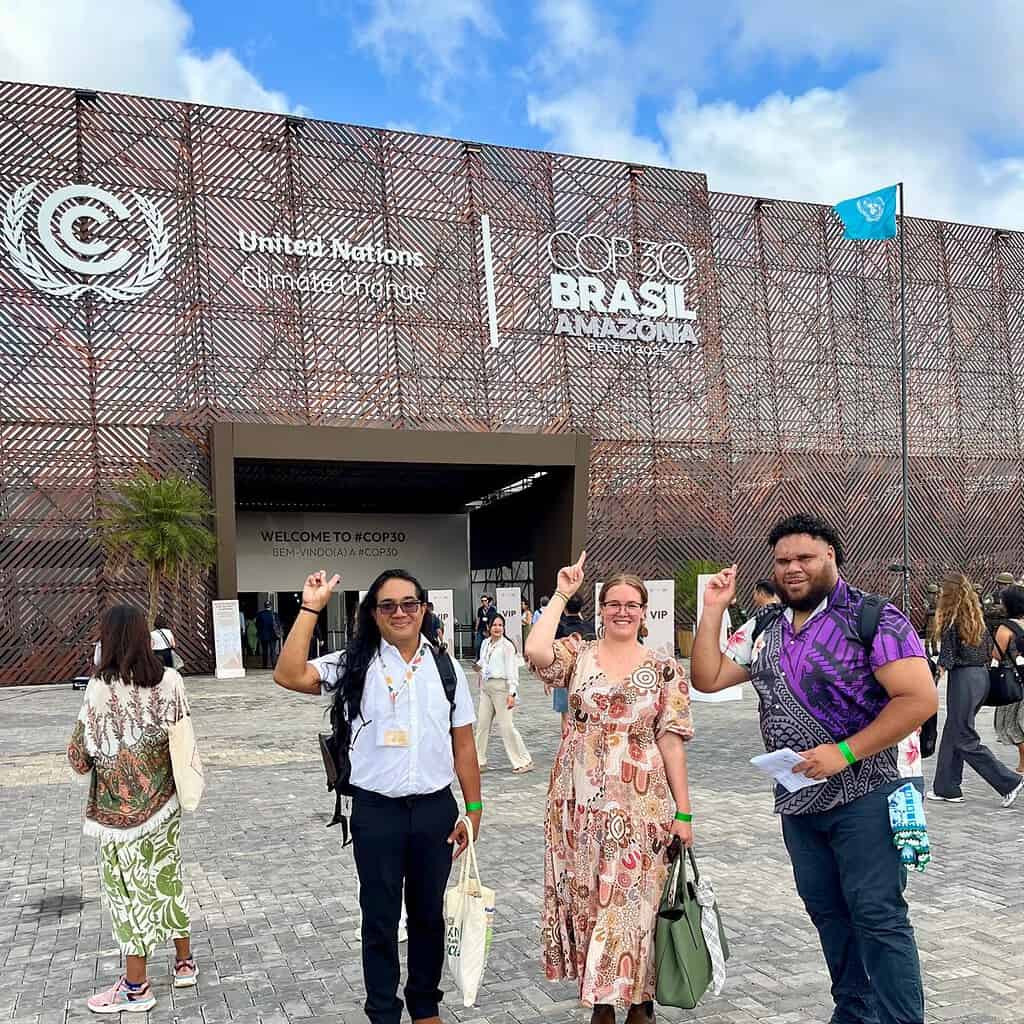
Expectations were high that hosting the conference in the heart of the world’s most vital forest would catalyse bold action on climate change, but for those who came from the climate frontline—the Pacific Islands—the experience was a study in profound contrasts. While the “Amazon Factor” brought unprecedented Indigenous representation to the fore, the negotiations often missed the mark.
To get a more realistic understanding of COP30 and what the Pacific needs from COP31 in Turkey, this article brings together the experiences and insights of Alfred Ralifo (WWF-Pacific’s Conservation Director); Dr. Hendrick Kaniki (Solomon Islands); Mosese Volavola (Indigenous iTaukei conservationist); Robert Karoro (Pacific Regional Indigenous Representative, LCIPP); Barbara Tomi (Papua New Guinea Women in Agriculture); Lavena Naivalu (Nacula District Representative, Fiji), and Alan Petersen (Teitei Taveuni, Fiji).
A “Sort of Indigenous COP”
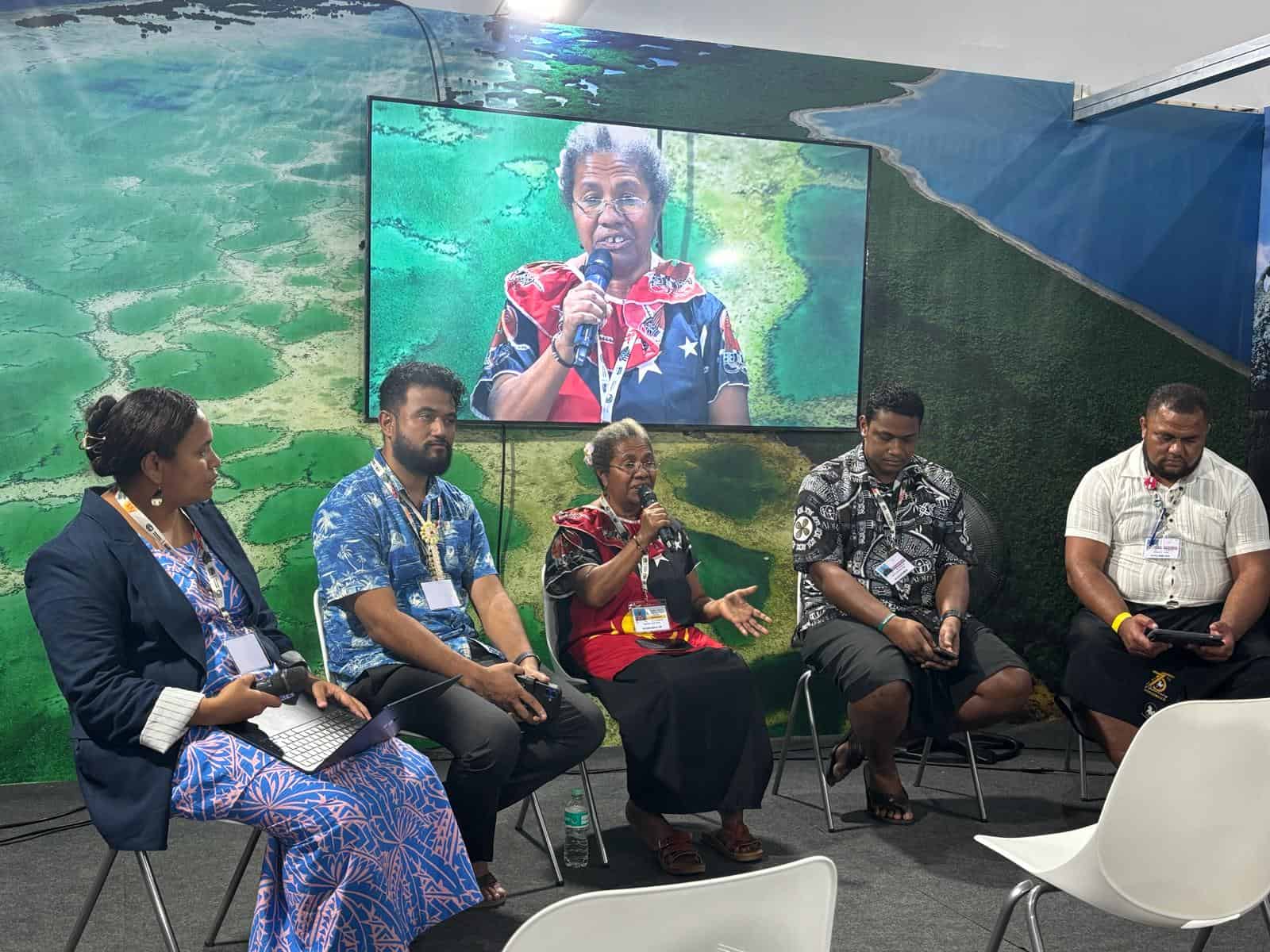
For many, the most visible and hopeful aspect of COP30 was the level of Indigenous participation. Alfred Ralifo from WWF-Pacific, whose organisation has worked alongside Indigenous community leaders and those at the grassroots to help prepare them for the global stages, noted change. “The COP last year was one of the COPs with the largest participation of Indigenous representatives from across the world,” he said. This wasn’t just about numbers, but impact. Ralifo added that the power of lived experience cuts through diplomatic jargon in a way that data can’t. Sometimes, when our community representatives speak in these forums, they bring truth and emotion so powerfully that it moves people to tears.
Robert Karoro of LCIPP arrived in Belém sharing that sense of optimism, calling it “sort of the indigenous COP”. For him, the fact that there were so many traditional leaders, knowledge holders, and activists from the Amazon and beyond, was a victory in and of itself. Mosese Volavola, an Indigenous iTaukei conservationist, arrived with a strategic goal and achieved a significant diplomatic win, helping to secure a bilateral meeting that led to Australia funding Fiji’s hosting of the Regional Gathering of the Local Communities and Indigenous Peoples Platform (LCIPP) this year. For Volavola, this was proof of concept for a new kind of advocacy: “Indigenous community voices can influence regional climate governance when we engage strategically.”
Hope – and Hard Reality
Despite the increased visibility of Indigenous voices, the official outcomes of COP30 left many disappointed.
Negotiators failed to agree on a clear roadmap to phase out fossil fuels or halt deforestation – two issues widely seen as central to limiting global warming.
Environmental organisations described the negotiations as a “carousel of illusions”: constant motion but limited progress.
Karoro offered an insider’s view on the mechanics of this paralysis, explaining the battle over every single word in the final text. “The disappointing bit is that it’s an agreement. They have agreed but not commit,” he said, highlighting the gap between consensus and binding action. He described how “those small words… will see whether they can commit that money or they don’t commit,” and how a single party can block progress, holding the entire process hostage for their own reasons.
Ralifo pointed to the power imbalance at the core of the process. Developed countries have the resources to field large delegations covering 29 parallel agenda items simultaneously, he noted, “while the oil and gas companies send their top lawyers” to protect their interests. The result, as Alan Petersen from Teitei Taveuni in Fiji experienced firsthand, is a system that feels structurally rigged against the most affected. “Personally, I felt that we in the Pacific, although one of the most affected by climate change, we are overlooked in all major decisions,” he reflected. The people who urgently need help are ignored.
Barbara Tomi, representing the Papua New Guinea Women in Agriculture (PNGWiA), brought a very important perspective with a clear message: “Farmer organisations in Papua New Guinea are already leading adaptation efforts, but we need direct and fair funding.” This demand to be able to control what actually happens to aid without it becoming snarled in endless bureaucracy became a recurring theme.
The Verdict – A Growing Chasm
The defining legacy of COP30, according to these Pacific voices, is the gap between what was hoped for and what actually happened – a chasm that promises made in Belém cannot cross.
For some, there was progress. Dr. Hendrick Kaniki from the Solomon Islands saw the elevated profile of the climate-health nexus as a positive step, bringing attention to the direct impacts on human wellbeing. But for those on the ground, such high-level discussions are overcome by the snail’s pace of practical support. Petersen and his colleagues at Teitei Taveuni voiced this frustration with a simple question that many in the region can relate to: “New money, old money… where is the money?”
For Volavola, the focus remains on ensuring Indigenous peoples are treated as “governance actors with solutions,” not as “vulnerable beneficiaries” whose presence is welcomed but whose proposals are ignored.
Karoro offered perhaps the sharpest criticism of the system’s distorted priorities. He contrasted the endless struggle for climate finance, the years of proposals, the complex accreditation processes, the unfulfilled pledges with the ease and speed with which bigger countries fund conflict. “That’s just the crazy bit,” he said. His solution is to be realistic: “set reachable targets… if it’s practical, it works.” Otherwise, he argued, the world is left with a situation where success seems to always be just out of reach.
A Moment of Recognition from the Pacific
For Lavena Naivalu, COP30 carried deep personal meaning.
Her district has been implementing a community-driven sustainable development plan since 2018, following years of village-to-village consultations.
The plan led to the creation of several key strategies, including fisheries management, mangrove restoration, and disaster risk reduction.
The results are already visible.
New water systems have been installed in Yaceta and Vuaki, while Matacawalevu village upgraded its existing water infrastructure. Communities have also established traditional marine protected areas along resort coastlines to support sustainable fisheries management.
Naivalu travelled to Belém not only as a community leader, but also as a mother advocating for the future of her children.
“My representation at COP30 was very important to me,” she said. “I was there to amplify the voices of the communities that are facing the greatest impacts of climate change, which is affecting our human rights as indigenous people of the Pacific.”
One of the most memorable moments of the conference came during an event attended by the United Nations’ Ocean Commissioner, Peter Thomson.
Naivalu shared her experiences of community adaptation in Nacula, unaware that Thomson had previously visited the district.
“He stood up and supported my intervention and encouraged world leaders to come to Nacula to see what communities are doing,” she said.
“For someone at that level to recognise our work was a proud moment. Fiji is just a tiny spot on the world map, but to hear the name of Nacula recognised on a global stage meant a lot for our people.”
The Road to COP31
If COP30 exposed a broken system, these voices from the Pacific are building a blueprint for COP31 and beyond.
Unfinished Business: Finance and Partnership
The number one priority is tearing down the barriers between global finance and local reality. Dr. Kaniki expects to see “clearer access to climate finance” in Turkey, with streamlined processes that don’t require communities to become legal experts before they can build resilience. Petersen and Tomi are singing from the same hymnal when it comes to having funding reach farmers and communities directly, “without complex or restrictive requirements” that favour large international NGOs over grassroots organisations.
Volavola, for his part, is pushing for “stronger operationalisation of Indigenous Peoples’ rights within climate finance.” “Do not treat us as vulnerable populations,” he demands of COP31. “Treat us as governance partners.” This means Indigenous peoples at the decision-making tables where funding priorities are set, not just in the queue of applicants.
New Strategies: Proof of Concept and One Voice
Karoro is pioneering a new strategic approach to the COP process itself. Instead of always playing the victim—“telling the whole world that this is happening to us”—he wants to see “proof of concept” model. He arrives at COP with tangible, working solutions from his community: water tanks that have survived cyclones, successful mangrove planting that has restored coastlines, and data on what actually works. He connects directly with donors and philanthropists, bypassing the stalled negotiations. “That’s when the interest comes in,” he explains, describing the COP as a marketplace where communities can secure partners directly based on demonstrated tangibles.
Tomi saw another avenue for empowerment in Belém. She was inspired by displays of processed traditional foods, which she saw as a potential business venture for the women of Papua New Guinea in climate adaptation through economic development. For her, COP31 must move the conversation around women’s role in food production into the substantive negotiations.
The Fight Beyond the Summit
COP30 in Belém was a summit with a lot of symbolism and only modest outcomes. For these Pacific voices, it was a place of connection and breakthrough, but also a stark reminder of the power imbalances that define the UN process. Dr. Hendrick’s message to the world is straightforward: “Every delay in action costs lives, livelihoods, and futures.”
From Mosese’s diplomatic wins and Robert’s “proof of concept” approach to the farmers’ unified demand for accessible funding.
Lavenia says ultimately, it is all about helping real people on the ground who are being affected. “One very important issue that we will amplify or take to the table is more representation of indigenous people in decision making tables and also policies that reflects the needs of grassroots communities.” The road to COP31 must be paved not with more promises, but with accessible finance, a unified community voice, and the political courage to act.

This feature was produced with support by the UK government through its Foreign, Commonwealth & Development Office (FCDO) Climate and Nature Diplomacy Fund.