
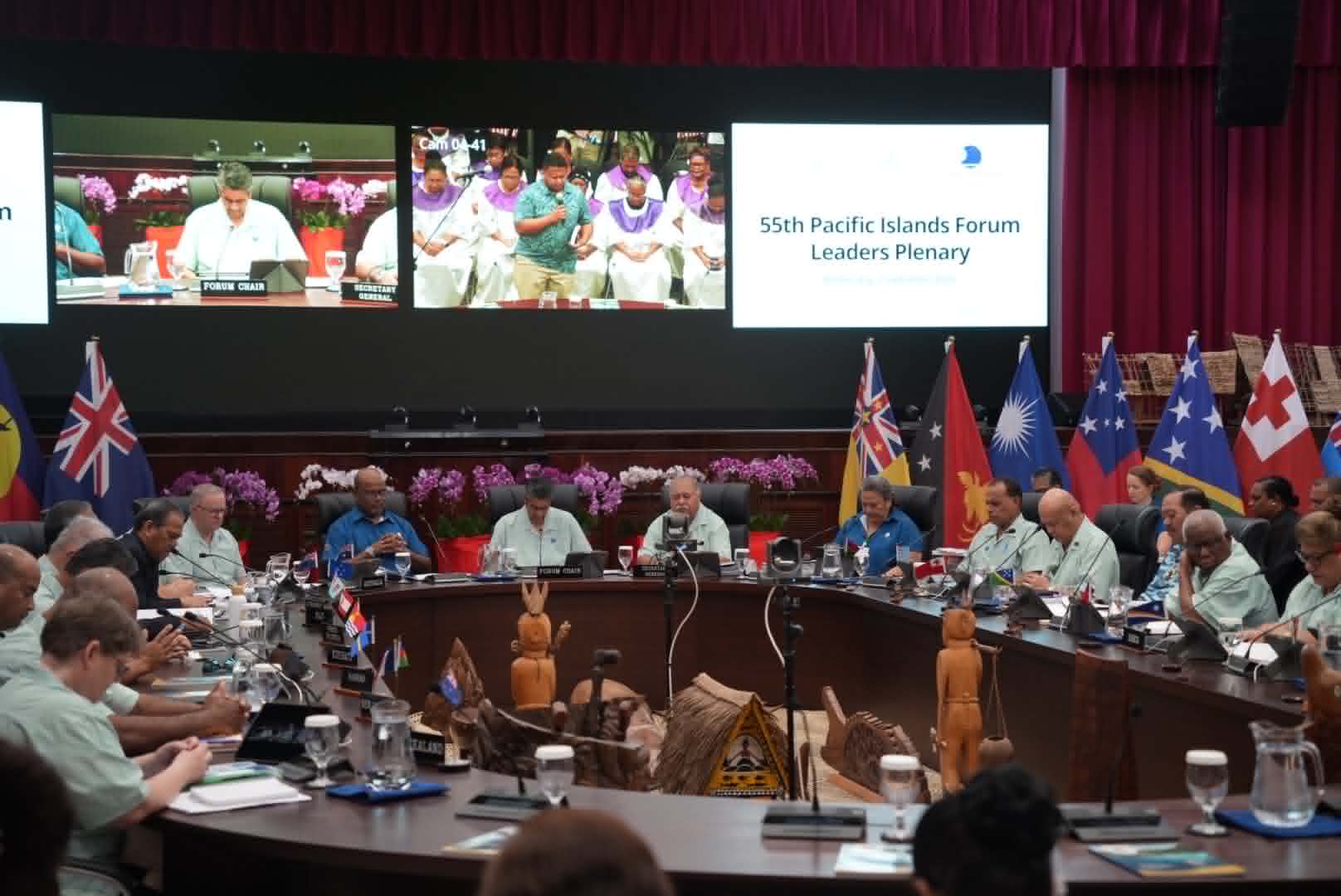
THE Pacific Islands Forum has before it an important opportunity to ensure that the Regional Action Plan on Peace and Security does more than respond to geopolitical pressure.
It must reflect the lived realities of Pacific communities and advance peace as human security, climate justice, inclusion and self-determination.
Through the Pasifika Peace Talanoa platform, civil society peacebuilders, feminist networks, mediators, educators and community leaders from across twenty Pacific Island countries and non-independent states have been strengthening collaboration and bringing forward the priorities of their members and communities. Our message is clear: peace cannot be reduced to the absence of conflict, nor can security be confined to state borders, military posture or deterrence.
If Pacific Forum Leaders are serious about an Ocean of Peace, then peacebuilding must sit at the centre of the regional plan not as an afterthought. Peacebuilding must be a guiding strategy across every pillar.
The adoption of the Ocean of Peace Declaration should be treated as a turning point. It offers a pathway to confront longstanding issues of self-determination and nuclear justice, while making the necessary shift from traditional security agendas to a people-centred approach grounded in the Boe Declaration and inpeacebuilding practice. Yet there is a real concern that the current debate is being pulled toward deterrence, state-led geopolitics and the prioritisation of some voices over others.
This is why civil society participation as thematic advisors is welcomed but also strengthened to so that the Regional Action Plan is shaped by governments and the communities who experience insecurity most directly and by the peacebuilders who work daily to prevent violence, mediate tensions and build social cohesion.
Most Forum member states still do not have dedicated peacebuilding policies and Pacific Island civil society peacebuilding community brings that experience and expertise to ensure gender, youth, disability and civil society inclusion are more than language in a plan. We can co-design strategies to ensure actions are resourced, coordinated and implemented. We also see the value of a regional peacebuilding strategy that connects to the UN Peacebuilding Architecture, Sustainable Development Goal 16, and the intersections between gender, climate change, oceans and human security.
It must also support women-led mediation networks and localise commitments on women’s, youth and disability participation in all aspects of peacebuilding. The Pacific Women Mediators Network stands ready to collaborate with the PIF Political Division and the Thematic Advisory Group on practical actions that can make this real.
First, a peacebuilding strategy should be integrated across all pillars of the Regional Action Plan. Second, a dedicated inclusion strategy should be developed.
This should include revisiting the Regional Action Plan on Women, Peace and Security 2012–2015, commissioning a peer review by gender and peacebuilding experts of the PIF Guidance Note on Women, Peace and Security in the Blue Pacific Continent endorsed by the FSRS in July 2025, and developing specific action plans for diverse youth, faith and traditional leaders while embedding disability inclusion commitments.
Third, civil society and Pacific Island academic institutions should be involved in shaping the concept and role of a Pacific Peace Institute. Such an institute could help generate Pacific-led knowledge, strengthen mediation and dialogue capacities, and connect local practice with regional policy.
Demilitarisation, human security and climate-sensitive peacebuilding must define how the Regional Action Plan progresses. Peacebuilding must address all forms of violence and the drivers of transnational organised crime, while ensuring that the operationalisation of the Ocean of Peace Declaration is rooted in the safety, dignity and agency of Pacific people.
Recent community-based research on climate-sensitive peacebuilding by GPPAC Pacific members in Fiji reinforces this point. In informal settlements such as Togoru and Nanuku, climate change operates as a threat multiplier: it worsens resource scarcity, drives displacement, and intensifies gendered violence.
These realities are often invisible in regional security frameworks that remain focused on state-centric and militarised models. But for women and communities on the frontline, regional stability is directly tied to food security, water safety, disaster preparedness, social cohesion and freedom from violence.
Forthcoming Loss and Damage analysis from Fiji, Kiribati, the Republic of the Marshall Islands, Solomon Islands, Bougainville, the Pacific Disability Forum and the Pacific Conference of Churches will further demonstrate why climate security must be understood through a transformative and inclusive peacebuilding lens.
The Regional Action Plan’s climate security section should therefore prioritise human security, deepen civil society engagement, decentralise funding, support inclusive leadership and integrate local mechanisms for peace.
Prioritising human security means moving beyond militarised models and investing in community resilience, social cohesion and disaster mitigation. Deepening civil society engagement means institutionalising co-design with civil society organisations from the beginning of programmes so interventions are locally informed and conflict sensitive.
Recognising the diversity of civil society, including PRNGO alliance members in the Pasifika Peace Talanoa Track II briefing for FSRS members, the Forum should integrate a civil society briefing into all future FSRS meetings. This would help ensure that policy is informed by community experience rather than shaped only in formal regional spaces.
Decentralising funding means streamlining access to climate and peacebuilding grants and providing flexible, sustainable and direct support to local, women-led and youth-led organisations. Supporting inclusive leadership means creating safe spaces and intergenerational mentorship programmes that value traditional knowledge and community governance structures.
Integrating local mechanisms means using faith-based networks, traditional peacebuilding tools and peace education, while aligning them with formal human rights and peacebuilding frameworks.
The Pacific has long taught the world that security cannot be separated from land, ocean, community, culture and justice. The next step is to ensure our regional security architecture reflects that wisdom in practice.
We urge Pacific Forum Leaders to affirm and ensure that enhanced consultation with civil society peacebuilders is not just procedural but essential to legitimacy and effectiveness. If peace is to mean anything across our Ocean of Peace, it must be co-created with the people whose lives, livelihoods and futures depend on it.