
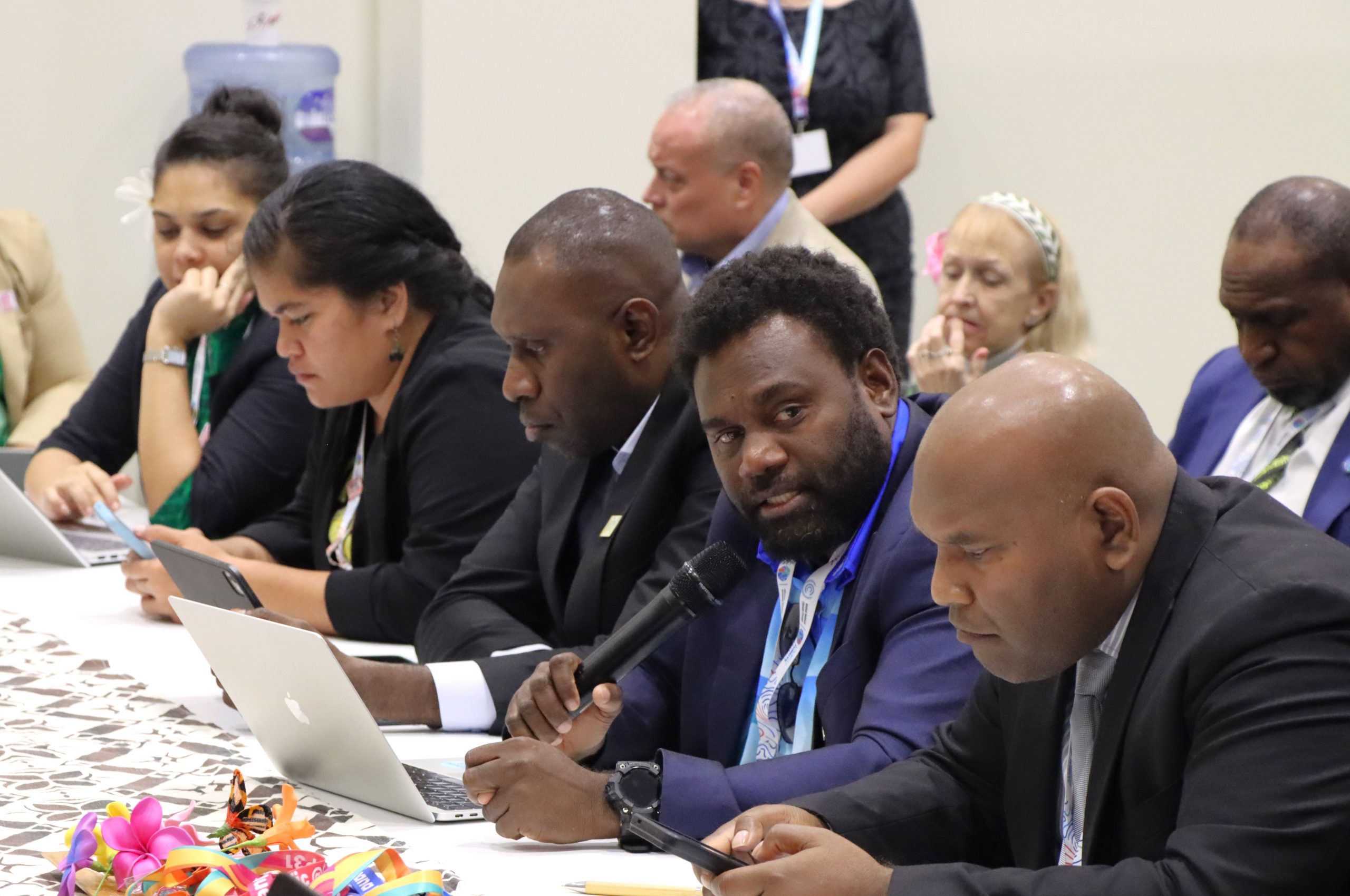
BEHIND the closed doors of COP31, where competing national interests and political positions shape the language of global climate agreements, Pacific negotiators are working to ensure their region’s priorities remain firmly on the table.
As the conference enters its final days, the pressure is mounting to turn weeks of technical discussions and diplomatic engagement into an outcome that delivers meaningful progress for vulnerable island nations.
For Karlos Lee Moresi, Team Leader for Climate Resilience at the Pacific Islands Forum Secretariat (PIFS), who supports Pacific country negotiators as a climate finance adviser through SPREP’s One COP support initiative, this is when the real test of negotiations begins.
“In the context of the last few days, we are waiting for a cover decision from the COP presidency for specific thematic areas. We are also waiting for finalisation of the text or the agreed language on carbon finance, just transition and on 1.5,” Moresi said.
Among the outstanding issues are climate finance, just transition, mitigation and the ambition needed to keep the 1.5°C temperature limit within reach.
For the Pacific, these are not simply technical provisions in a negotiated document. They carry direct implications for the region’s ability to protect its communities, economies and future from worsening climate impacts.
Moresi believes the Pacific has an important diplomatic opportunity this year, with Australia holding the COP negotiations presidency for the first time.
“We are hopeful that our ministers are engaging, and I think one of the advantages for the Pacific at this time is that Australia holds the role of the COP negotiations presidency, and it has never happened before.”
He said the region was seeking to use its partnership with Australia to advance language that better reflects Pacific priorities.
But behind the regional diplomacy and ministerial engagement is another layer of work that often goes unseen.
For Charlene Hoff, a delegate from the Cook Islands Ministry of Foreign Affairs and Immigration and Mitigation Coordinator for the Alliance of Small Island States (AOSIS), the negotiating day often begins long before the conference rooms fill.
By six in the morning, she is already checking her phone for WhatsApp messages, emails and updates from colleagues, trying to catch up on developments from negotiations that may have continued overnight.
Her role is to help coordinate the positions of small island developing states and ensure their concerns are reflected in discussions on reducing greenhouse gas emissions.
Asked to describe the experience of COP negotiations in one word, Hoff chooses “unpredictable”.
“There’s so many things that happen in the space of two weeks. You just don’t know what your day would look like,” she said.
Her mornings typically begin with AOSIS coordination meetings, where delegates share updates, assess developments and agree on priorities for the day.
When new negotiating text is released, the work becomes more intensive.
Delegates scrutinise the language, identify gaps and prepare interventions to ensure their countries’ positions are represented.
Sometimes it means waiting for consultations to begin.
At other times, it means responding quickly when negotiating positions shift or new proposals emerge.
At COP31, mitigation remains one of Hoff’s biggest concerns.
For the Pacific, reducing greenhouse gas emissions is inseparable from the region’s demand to keep global warming within 1.5°C. It is also about ensuring that major emitters take responsibility for reducing emissions, including methane.
“Mitigation is very important for us. It speaks to our 1.5. It speaks to overshoot. It speaks to why it’s so important for these big major emitters to reduce their emissions, reduce their methane,” she said.
As negotiations progress, the challenge is ensuring that previous climate commitments are not weakened in the final outcome.
Hoff said informal consultations had concluded, with outstanding issues moving to the COP presidency level, where countries were working through possible compromises.
For AOSIS, the priority remains protecting the 1.5°C ambition and ensuring that the final language reflects previous commitments under the Global Stocktake, including the outcomes of COP28.
The concern is that any weakening of those commitments could undermine the progress needed to reduce emissions and limit the severity of climate impacts.
The pressure is equally evident in the broader negotiations on climate finance and just transition, where Pacific countries are seeking outcomes that respond to the particular vulnerabilities of small island states.
For Moresi, reaching an agreement will require compromise, even when countries enter negotiations with very different expectations.
Drawing on his experience across several COPs, he believes the final outcome is rarely everything any one country wants.
“Negotiations, no one should come out happy, because if one person comes out happy, that means all they wanted, everything they wanted, was fixed. Negotiation should be about compromise.”
But for the Pacific, compromise cannot mean abandoning the region’s fundamental priorities.
Both Moresi and Hoff understand that the language being negotiated in Antalya carries consequences far beyond the conference halls.
While much of the public attention is focused on ministerial statements, press conferences and high-level announcements, the work of shaping the final decisions happens through hours of technical analysis, regional coordination and diplomatic engagement.
It is also work that highlights the contribution of Pacific women in international climate diplomacy, with delegates like Hoff helping coordinate positions and shape discussions that influence the strength of global climate commitments.
As COP31 approaches its conclusion, the final outcome remains uncertain. But the responsibility of representing communities thousands of kilometres away continues to drive the region’s negotiators.
Moresi has a message for those carrying the Pacific’s positions into the negotiating rooms.
“We have a lot of communities back in the islands counting on us, and that also gives us strength to continue with the negotiations.”
He urges negotiators to remain steadfast in their efforts.
“I just want to encourage negotiators to hold the line, and I think we can deliver something good for our region.”
For Hoff, that determination is equally clear.
“We will not give up. We are here to fight what is right for us.”
As the negotiations enter their final hours, the Pacific’s fight for 1.5°C is about more than securing the right words in a global agreement.
It is about ensuring that the countries and communities most exposed to climate change are not left behind in the decisions that will shape their future.

