
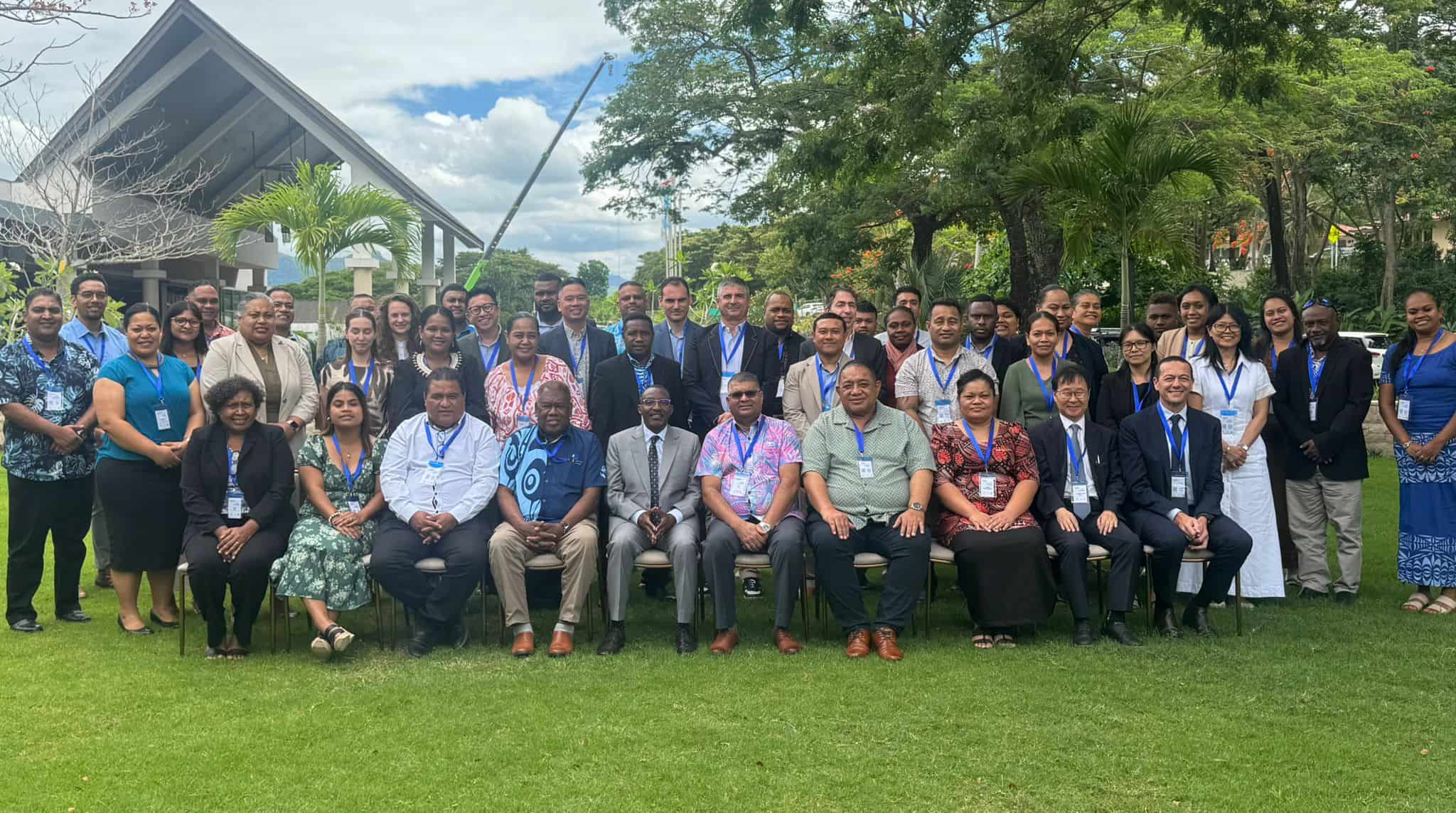
“FAST payments are not just a trend but a fundamental evolution in the way money moves,” Reserve Bank of Fiji Governor Ariff Ali told regional finance leaders as the Pacific Fast Payments Systems Workshop concluded in Nadi last week.
The three-day meeting, held from 3–5 December and convened by the Pacific Islands Forum Secretariat, the Reserve Bank of Fiji, and the World Bank Group, brought together central bank governors, senior finance officials, multilateral organisations, and development partners.
The workshop formed part of the Pacific Strengthening Correspondent Banking Relationships Project funded through a World Bank regional programme led by the Forum Secretariat.
Participants examined global developments in fast payments, including risk management, fraud prevention, new technologies, overlay services, and cross-border interlinking.
With more than 120 jurisdictions operating fast payment systems, regional policymakers focused on how the Pacific can accelerate reforms and keep pace with global innovation.
Ali said the evolution of fast payments was “transformative and a strategic development initiative,” capable of boosting financial inclusion, strengthening economic connectivity, and driving digital transformation.
He outlined Fiji’s recent reforms, including major upgrades to its RTGS system, the rollout of instant funds transfers, the integration of mobile wallets, and new interoperability between banks and mobile payment platforms.
Ali reported sharp growth in digital transactions, noting that internet banking volumes had risen tenfold since 2015 and mobile wallet transfers were projected to reach 50 million transactions worth $3 billion this year.
He reminded delegates that cash still played a major role in Fiji’s economy, with 62 percent of Fijians preferring cash for daily expenses and cash usage accounting for about 8 percent of GDP.
He also referenced the national launch of Fiji’s 2025 polymer banknote series, stressing the need for stronger security features, longer durability, and continued demand for physical currency.
World Bank North and South Pacific Director Stephen Ndegwa described the workshop as a “critical moment” for the region to commit to rapid modernisation.
Ndegwa warned that if Pacific nations took years to deploy fast payment systems, they risked being “left behind” by global advances.
He noted that more than 130 countries were already implementing real-time payments and highlighted examples of strong economic impacts.
He pointed to Thailand’s PromptPay system, expected to add 2 percent to GDP in 2026, and India’s UPI, which has saved the Indian economy US$67 billion over nine years.
Ndegwa stressed that central banks carry the central responsibility for design, implementation, oversight, and stakeholder coordination.
He urged Pacific leaders to sustain collaboration and move quickly to unlock productivity gains, lower transaction costs, expand inclusion, and integrate their economies more closely with global financial systems.