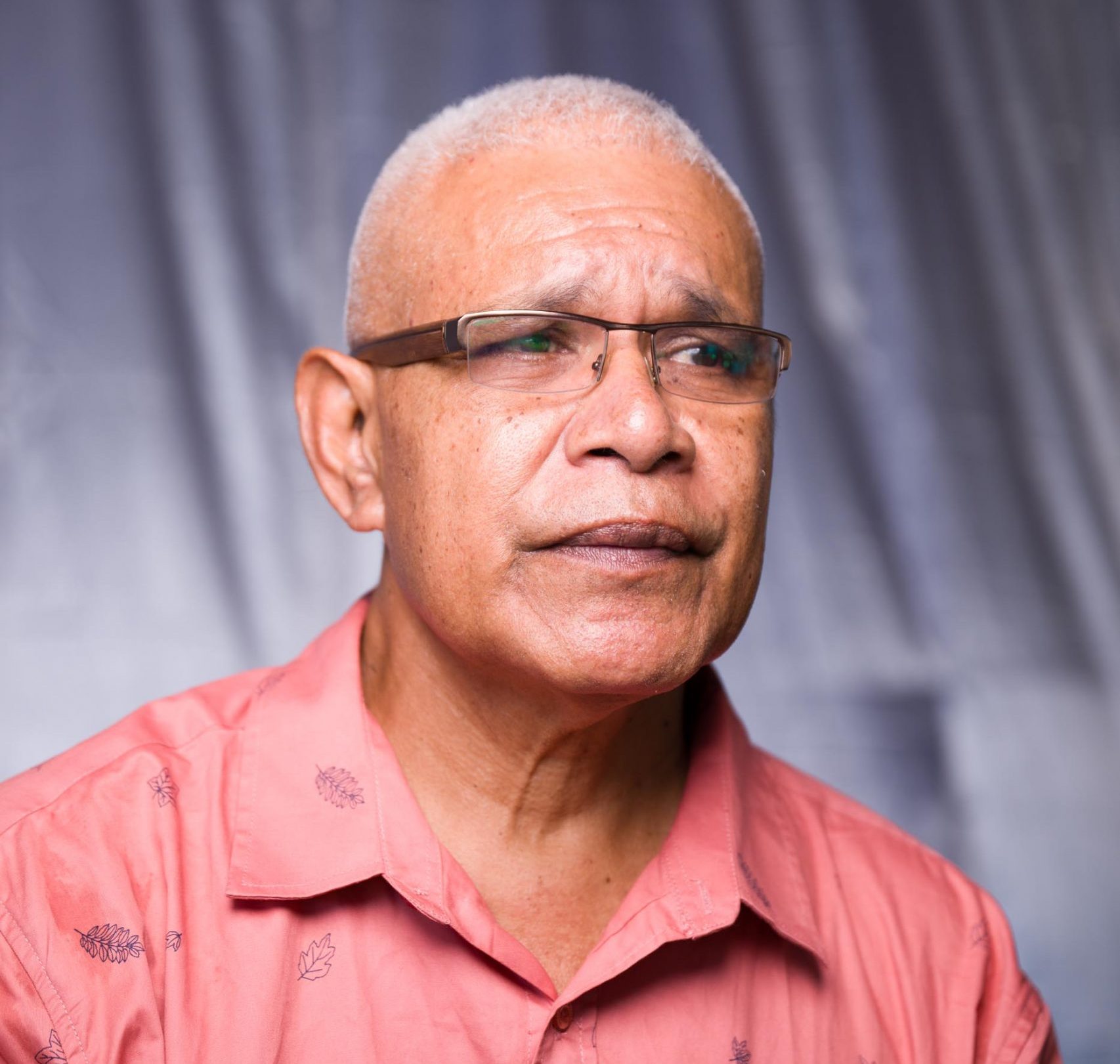
A JOURNALIST who spent 24 years in prison for his role in Fiji’s 2000 coup has called for radical constitutional reform, proposing the abolition of the Prime Minister’s office and ending the country’s standing army.
Jo Nata called for the removal of all immunity provisions for coup perpetrators in his submission to the Constitution Review Commission.
Nata, political adviser to coup front man George Speight, presented a wide-ranging critique of Fiji’s governance structures, colonial legacy, and political culture. He urged the Commission to break decisively from past constitutional arrangements that, in his view, had perpetuated instability and impunity.
Nata’s intervention carries particular weight given his personal history.
He was one of the central figures of the May 2000 coup, which overthrew Fiji’s first Indo-Fijian Prime Minister, Mahendra Chaudhry.
Although he maintains he was not involved in the initial planning, Nata became increasingly embroiled and famously administered the oath of office to the usurper-appointed President, Ratu Jope Seniloli. The court branded him a traitor and one of the masterminds of the coup, a label he has rejected. He was released on December 20, 2023.
Since his release, Nata has become a vocal campaigner against coups, describing them as based on “lies, visions of grandeur and opportunism.”
He earlier testified at the Fiji Truth and Reconciliation Commission, expressing deep remorse while advocating for national healing, economic empowerment for indigenous Fijians, and institutional reform.
‘Immunity must go’
Nata made the removal of constitutional immunity provisions a centerpiece argument of his submission. He argued that the 2013 Constitution’s immunity clauses—which have protected coup-makers from prosecution—must be struck out to demonstrate the nation’s “collective repugnance against coups.”
“Immunity must go. If we are serious about addressing and eradicating the coup culture. There should be no immunity in a new constitution,” Nata said.
He was careful to distinguish between personal forgiveness and constitutional principle.
Nata earlier told the Fiji Truth and Reconciliation Commission that he bore no malice towards past coup leaders but maintained that future perpetrators must face justice.
“It is to make those who may dream of seeing their names in headlines and having their day in the sun that they will also have their day in court. This is the clearest message to demonstrate our collective repugnance against coups,” Nata said.
Nata welcomed the recent submission of RFMF Commander Major General Ro Jone Kalouniwai, who has also called for immunity provisions to be removed. He said Kalouniwai’s position was “significant in the conversation about immunity” and should be given serious consideration.
“For I suspect that the underlying thoughts in the decision of the Supreme Court not to touch the immunity clause was an inherent fear that it might antagonise the military and cause further instability. But you have heard the Commander,” Nata said.
Nata also proposed removing the statute of limitations for treason and sedition. “For however long it takes, the long arms of the law, slowly but surely will get you,” he said.
Abolish Prime Minister, elect President
Perhaps Nata’s most striking proposal was to overhaul Fiji’s executive branch entirely. He argued that the office of the Prime Minister should be abolished and replaced with an elected Executive President.
“The leader of the party which wins the majority of seats and cobbled together a majority coalition is sworn in by the Chief Justice as President,” Nata proposed.
He said Fiji should study both the American and French systems but develop a “unique executive creation” that suits our particular situation.
Under his proposal, Cabinet ministers would be appointed from outside Parliament—selecting experienced leaders from business and professional sectors rather than politicians. Cabinet would be constitutionally limited to 12 members, with ministers retitled as Secretaries.
“People appointed are men and women who have made it and are in good financial positions. It has the potential of minimising corruption at the highest level of government,” Nata said.
Bicameral system and new electoral model
Nata proposed restoring a bicameral parliament, with the Senate renamed as the “House of Elders” (Qase ni Vale). Members would be aged over 50, appointed by the President, and a Standing Joint House Committee would resolve differences between the two chambers.
The Lower House would become the “House of Representatives” (Bose ni Vanua), tasked solely with law-making. Nata argued this would give “true reality” to the separation of powers between Parliament, the Executive, and the judiciary.
He strongly opposed a return to communal voting, saying Fiji should “never again” vote on racial compartments. Instead, he proposed a 52-seat parliament based on provincial boundaries, with the number of seats in each constituency determined by demography and geography.
“The mere existence of the constituency is mandate and reminder to be visited, or else,” Nata said, criticising sitting MPs for failing to engage with their electorates.
Abolish standing army
In what he acknowledged was “flying against the wind,” Nata proposed abolishing Fiji’s standing army. He argued that the military’s involvement in all of Fiji’s coups made the question unavoidable.
“If we are to consider the involvement of the military in the coups in Fiji… I believe it is an idea we should start to seriously think about,” Nata said.
He suggested replacing the standing army with a Fiji Defence Reserve based on the current territorial soldier model, while expanding the RFMF Engineers corps for national infrastructure work.
Nata praised Kalouniwai’s leadership during the 2022 election transition, saying “this nation owes him a deep debt of gratitude.”
“A lesser man would have yielded. That he did not, that he held aloft, held his own, was grit, courage, fortitude and sanity,” Nata said.
This was an apparent reference to allegations that former Prime Minister Frank (Voreqe) Bainimarama had incited Kalouniwai to disregard the 2022 election results and prevent a new government from taking power.
Restoring indigenous institutions and decolonisation
Nata proposed restoring the Bose Levu Vakaturaga (Great Council of Chiefs) with constitutional status, arguing it should be independent, self-funded, and report directly to the President.
“Our chief should decide who sits on the BLV. All things Fijian—land, village system, way of life, fishing, mining, deep sea minerals—should be under the BLV,” he said.
Nata proposed abolishing the Ministry of Fijian Affairs entirely.
He also called for “full, real and total decolonisation,” arguing that Fiji remained “largely a colony” despite over 50 years of independence. He criticised land laws, mining regulations, and the NLTB as operating under colonial regimes.
A nation under God
On the issue of Fiji’s secular state, Nata was ambivalent. He argued that Fiji had “always been a nation under God” and that declaring a secular state “in the plainest English meaning, is a nation without God.”
He said it would be “sufficient if a new constitution states that Fiji is a nation under God to demonstrate that we are people, irrespective of ethnicity, who believe in God.”
Nata’s submission attracted attention as it came from a figure with direct, first-hand experience of Fiji’s political upheavals – experience earned, by his own admission, at great personal cost. He previously told the Truth and Reconciliation Commission that he had “done his part” and that Fijians must now “move on beyond coup anger,” adding that he “deserved” his sentence for his role in the 2000 coup.
The Constitution Review Commission is currently receiving public submissions as it considers changes to Fiji’s foundational legal document.