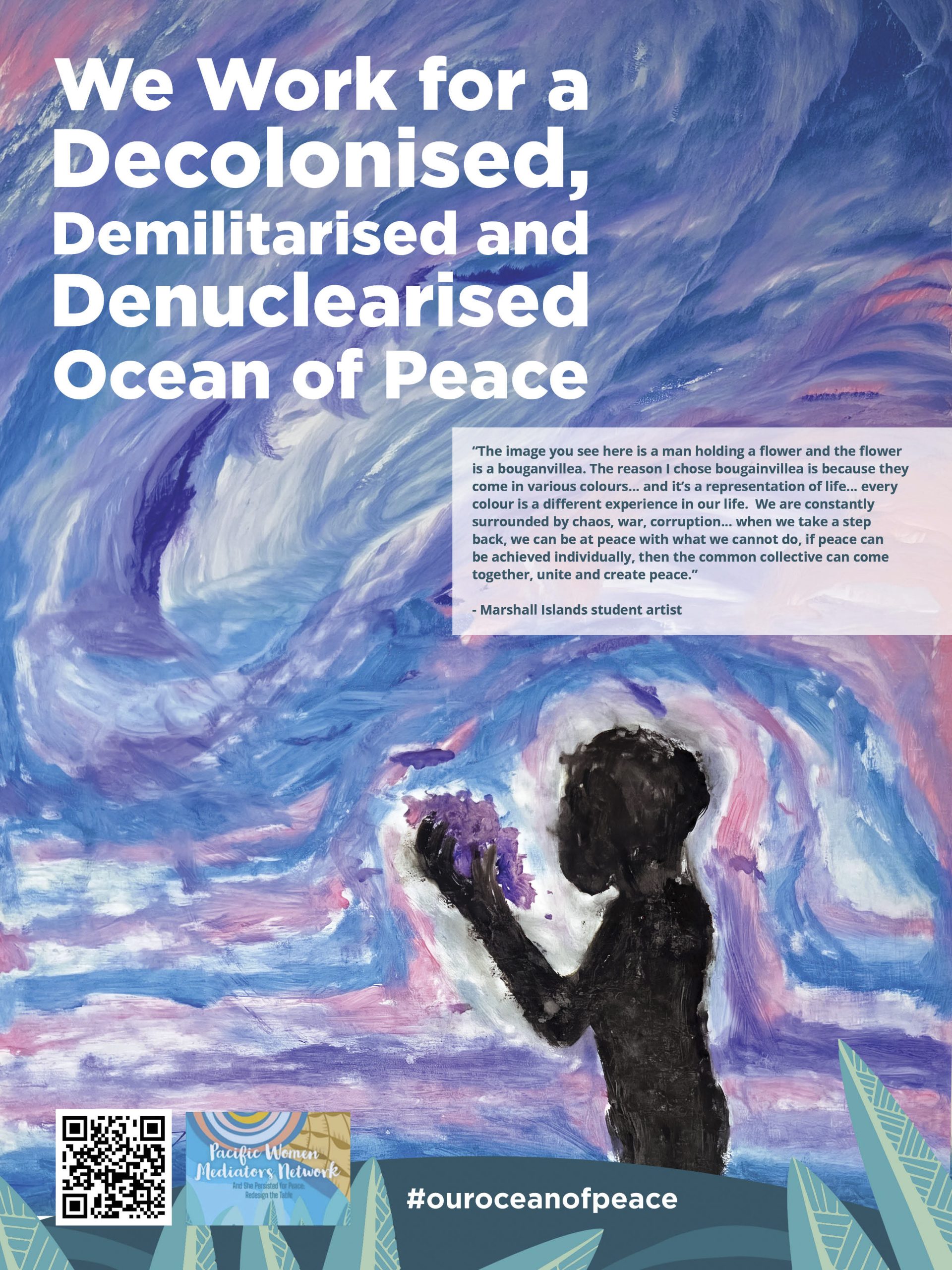
PEACE in the Pacific cannot be declared from above and delivered to communities as policy language. It must be built from the ground of dignity, memory, land, ocean, women’s work, and the living traditions that have carried our peoples through violence, dispossession, and political uncertainty. For the Kanak people and indigenous communities across Oceania, peacebuilding is not a technical exercise. It is an unyielding quest for human dignity, cultural restoration, historical justice, and political decolonization.
Our region carries the heavy inheritance of imperialism and colonial domination: the attempted erasure of indigenous governance, the dispossession of lands, and the undermining of fundamental human dignity. In Kanaky New Caledonia, formal peace processes such as the Matignon Accords of 1988 and the Nouméa Accord of 1998 did not emerge from abstract diplomacy. They grew from a profound Kanak political determination to choose dialogue, mediation, and negotiated survival over absolute destruction in a violent colonial context. In our tradition and kastom, mediation is not an imported method. It is embedded in how we relate to one another, to the land, to the clan, to the ancestors, and to the Moana. Women have always been foundational pillars of this customary mediation, sustaining social cohesion and community stability, often from behind the scenes.
This is where the philosophy of Do Kamo becomes essential. As articulated in Kanak thought, including through the Protestant Church of Kanaky New Caledonia and the legacy of Jean-Marie Tjibaou, Do Kamo is the authentic human being in permanent becoming: a person whose identity is not fixed behind them, but always ahead of them. It is a journey of restoration, dignity, harmony, and interconnectedness with oneself, the clan, the ancestors, the land, and the ocean. True peacebuilding is the political, cultural, and spiritual realization of Do Kamo. We cannot restore the authentic human being while colonial trauma, structural subordination, and the denial of self-determination continue to shape our lives.
Our project, Indigenous Soul, My Heritage, My Peace, centered on Kanak women’s indigenous practices, shows that frontline peacebuilding begins at the root of life. Maternal care, birth sovereignty, customary knowledge, and community practices are not secondary cultural matters. They are political acts of dignity, conflict prevention, and social cohesion. They ground the Women, Peace, and Security agenda in indigenous and customary realities rather than in distant institutional language.
This is why regional peacebuilding networks matter. Connecting with GPPAC Pacific and the Pacific Women Mediators Network has been transformative for Women Weaving Peace – Kanaky/New Caledonia. Before joining these networks, our initiative La Pause Décoloniale operated as an isolated, self-funded, frontline militant radio initiative. It was rooted in our communities, but it was also navigating a deeply polarized domestic environment without a protective regional shield.
Belonging changes that. It provides political protection and institutional elevation. It creates the backing needed to structure our association and translate local field actions into the global language of Women, Peace, and Security without surrendering our own indigenous voice. Belonging also connects frontline realities to regional alliances. It allows us to bridge the Kanak struggle with broader Pacific dynamics. We are no longer passive data providers for external experts. We are sovereign regional dialogue partners, codifying and sharing our own peace methodologies.
Our inclusion in GPPAC and the Pacific Women Mediators Network brings the Kanak struggle into the regional peace architecture. It operationalises the Women, Peace, and Security agenda from an indigenous frontline perspective and continues to affirm Kanak women not only as victims of political crisis, but as custodians of peace, mediation, cultural continuity, and decolonial healing. This solidarity strengthens the regional fabric required to build a truly decolonized Ocean of Peace.
Now Pacific Forum Leaders face a decisive test. If the Ocean of Peace Declaration and the 2050 Strategy for the Blue Pacific Continent are to become more than high-level commitments, they must be translated into practical, transformative action with civil society peacebuilding networks. Peace regionalism must be people-centered, inclusive, and rooted in Oceanian values and traditional knowledge.
That begins with direct support for frontline women. Human security, justice, and peace cannot be achieved through state-centric or military frameworks alone. Pacific leaders must formally recognize civil society peacebuilding networks such as GPPAC Pacific and the Pacific Women Mediators Network as essential implementation partners. Recognition must be matched with direct, sustainable, and accessible resources for autonomous frontline organizations, especially those led by indigenous women in times of political crisis.
It also requires leaders to uphold Oceanian knowledge, cultures, and values as living foundations of peace. Indigenous peacebuilding methodologies, including maternal care, birth sovereignty, and customary practices, must be supported as legitimate mechanisms for conflict prevention and healing. This also means respecting Indigenous Data Sovereignty. Not all knowledge is meant to be extracted, digitized, or made available to outsiders. Communities must retain the authority to decide what is shared, what is protected, and what remains held within customary guardianship.
Pacific leaders must also create genuine, accountable partnerships with civil society, customary authorities, and community organizations. Top-down policies will not build an Ocean of Peace. Safe and structured dialogue mechanisms are needed so grassroots peacebuilders can directly shape regional security agendas and influence public policy.
Most importantly, the Ocean of Peace must be anchored in decolonization and self-determination. A prosperous, peaceful, and resilient Blue Pacific is incompatible with ongoing colonialism. True regional security requires confronting the root causes of political instability, supporting the struggles of Kanaky, West Papua, Maohi Nui, and other peoples for self-determination, and honouring historical peace processes as pathways toward justice.
Finally, peacebuilding must invest in youth and intergenerational transmission. Young people need community-led spaces that re-anchor them in cultural identity, dignity, historical consciousness, and civic responsibility. In a time of polarization, these spaces can turn friction into dialogue, pain into learning, and memory into collective strength.
The Pacific does not need an Ocean of Peace that remains a slogan. It needs an Ocean of Peace that listens to indigenous women, respects kastom, protects dignity, and confronts colonial realities. For Kanak women, peacebuilding is not simply about ending conflict. It is about restoring the conditions in which Do Kamo, the authentic human being in permanent becoming, can finally flourish. That is the peace our region deserves, and it must begin now.