
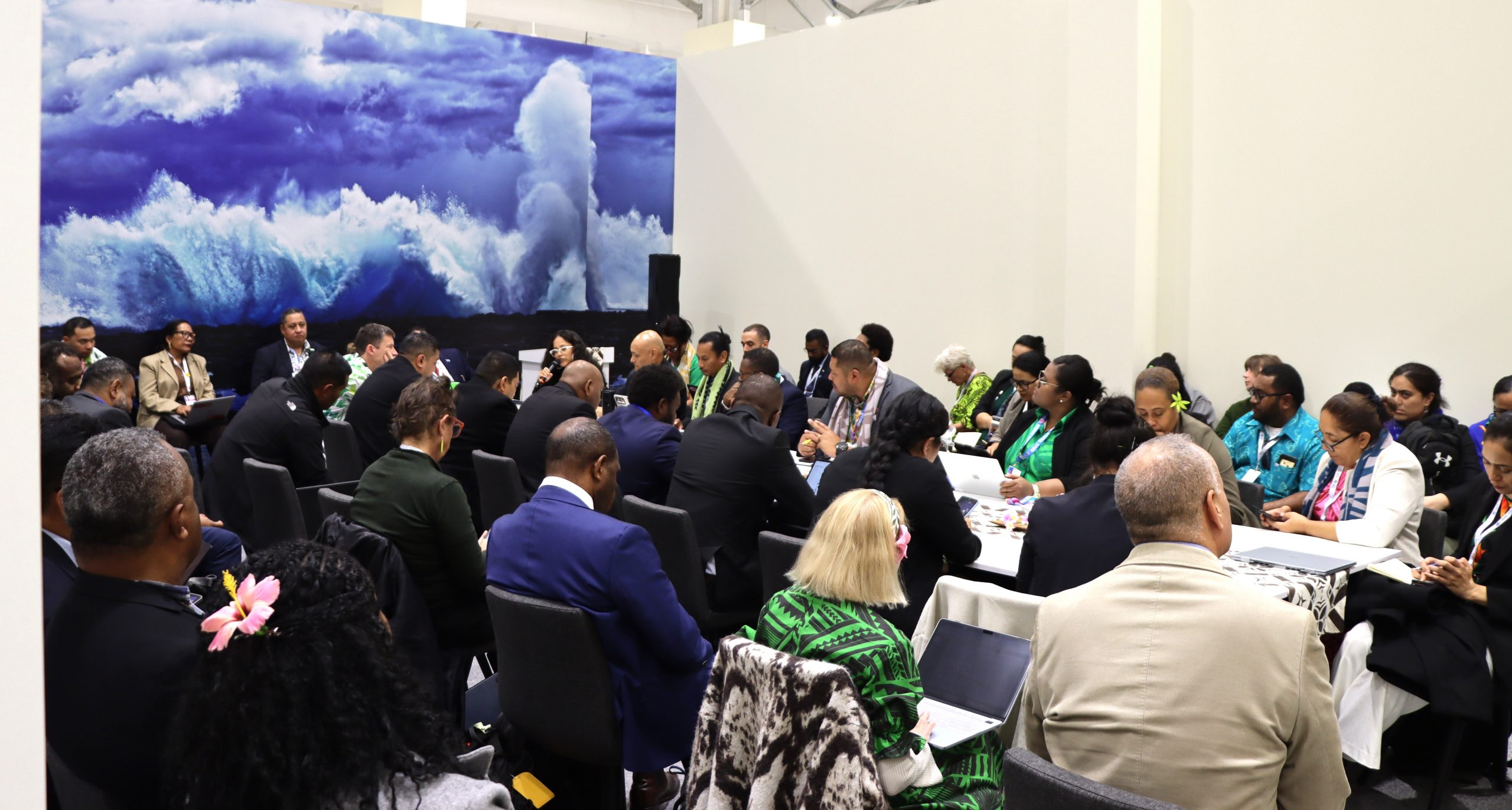
SIX weeks after Pacific leaders, communities and civil society organisations gathered in Fiji for the Pacific Pre-COP, advocates arrived in Türkiye with a common set of priorities shaped by the region’s longstanding climate justice demands.
For Fenton Lutunatabua, Pacific and Caribbean Programme Manager at 350.org, the Pre-COP was an important opportunity to establish a shared position ahead of the international negotiations.
The priorities were clear: keeping 1.5°C within reach, recognising the connection between oceans and climate change, and securing the climate finance vulnerable countries need.
“We were clear-eyed and focused on what are the things that we just cannot waver from,” he said.
But as COP31 moves towards its conclusion, civil society representatives are questioning whether those priorities are being translated into meaningful outcomes.
One of the growing concerns is the suggestion that exceeding the 1.5°C temperature limit is becoming an accepted reality.
For Pacific communities already dealing with drought, water insecurity, rising seas, flooding and extreme weather, Lutunatabua said the consequences of further warming were difficult to comprehend.
He pointed to Fiji’s declaration of a state of national disaster in response to drought conditions associated with the prevailing El Niño event as an indication of the pressures communities are already facing.
“Anything above that is something that we can’t even dare to imagine,” he said.
“For Pacific civil society, keeping 1.5°C alive means challenging narratives that risk normalising temperature overshoot and pressing governments to strengthen their commitments to reducing emissions.”
Shiva Gounder, Greenpeace Australia Pacific said, “concerns have also emerged around negotiations on climate science, with some parties seeking to shift the temperature ambition towards 2°C rather than maintaining the Paris Agreement’s 1.5°C goal.”
“There were also disagreements over recognising the Intergovernmental Panel on Climate Change (IPCC) as the source of the best available climate science.”
For Shiva, weakening the scientific basis of climate decisions would have serious implications for communities already experiencing the consequences of climate change.
“We have to listen to the science,” he said, stressing the importance of grounding climate decisions in scientific evidence and the International Court of Justice’s advisory opinion on states’ climate obligations.
“If at 1.5 we’ve already seen so much climate damage, imagine what it would be like when it’s at 2 degrees Celsius.”
Beyond the temperature goal, climate finance remains another major focus of Pacific civil society advocacy.
Lutunatabua said the question was not simply how much money governments promised, but whether it would reach the communities that needed it most.
“It’s great that that money is there, but how can we actually access it? How does the money actually go from the funds to the people that need it on the ground the most?” he said.
“Countries most responsible for greenhouse gas emissions needed to take greater responsibility for financing climate action, with support that communities could access and use to strengthen their resilience.”
The transition to renewable energy is equally important.
Lutunatabua warns that electrification should not become another pathway for continued investment in coal, oil and gas.
“Electrification needs to happen with renewable energy that is affordable and accessible,” he said.
Civil society representatives are also scrutinising Australia’s role in the COP31 leadership arrangement alongside Türkiye.
Australia’s involvement had raised expectations of a stronger Pacific presence in the climate negotiations, particularly given its position as a major regional partner.
But Lutunatabua said, “that leadership must be measured against the outcomes secured, particularly on fossil fuels.”
For Greenpeace’s Shiva, the Pacific does not need another country to speak on its behalf.
“The Pacific doesn’t need Australia to centre their voices. The Pacific voices are already strong enough, from civil society to the governments to the people’s lived realities.”
Advocating for these priorities at COP comes with its own challenges.
Lutunatabua also highlighted the pressure facing Pacific negotiators, many of whom work with significantly smaller teams and fewer technical resources than larger countries.
With some delegations comprising only one or two people covering multiple negotiating issues, the workload can mean long days, limited rest and the challenge of following several discussions simultaneously.
He said, “I have seen Pacific negotiators moving through conference halls exhausted but continuing to represent their countries with determination.”
For civil society advocates, this is another reason why regional coordination and support are important throughout the negotiations.
But the emotional weight of the work extends beyond the conference itself.
For Lutunatabua, the fight for climate action is also personal. While in Türkiye, his young son was celebrating his fourth birthday back home.
” I sometimes think, what Pacific will my son inherit from us?”
That question reflects what is at stake for many Pacific advocates who spend weeks away from their families and communities to push for stronger climate action.
Shiva, meanwhile, challenges the idea that hope alone could sustain communities through repeated cycles of unmet commitments.
“I don’t think hope is the word,” he said.
“Hope and resilience will wear thin if this keeps happening, if the climate impacts keep destroying our places.”
“What is needed is political will and action from governments.”
As COP31 approaches its conclusion, Pacific civil society organisations are continuing to press for an outcome that reflects the urgency of the climate crisis and the realities facing island communities.
For them, the work does not end with recognition in a conference statement or another promise of future action.
It is about ensuring that the commitments made in international climate negotiations translate into reduced emissions, accessible finance and protection for the communities already living with the consequences of climate change.
And at the centre of their advocacy is a message that remains unchanged: 1.5°C is not simply a negotiating position for the Pacific.
As Shiva puts it: “It’s our survival threshold.”