
AS the Pacific looks toward COP31, Suzanne Thompson brings the conversation back to country, knowledge, and who shapes climate decisions.
“Country needs people and people need country.” For her, that is not a slogan. It is a relationship built through care, knowledge, and responsibility, and one the Pacific must value as climate pressures reach homes, land, and waters.
Thompson, the Managing Director of Yumbangku Aboriginal Cultural Heritage and Tourism Development Aboriginal Corporation (YACHATDAC), who lives in central western Queensland, on Inangai country, “my people.”
She wears many hats, she says, including serving as director of the Indigenous Carbon Industry Network. Her story is not only about carbon. It is about what happens when people return to the practices that cared for country, and when the knowledge holders who carry those practices are present from the beginning.
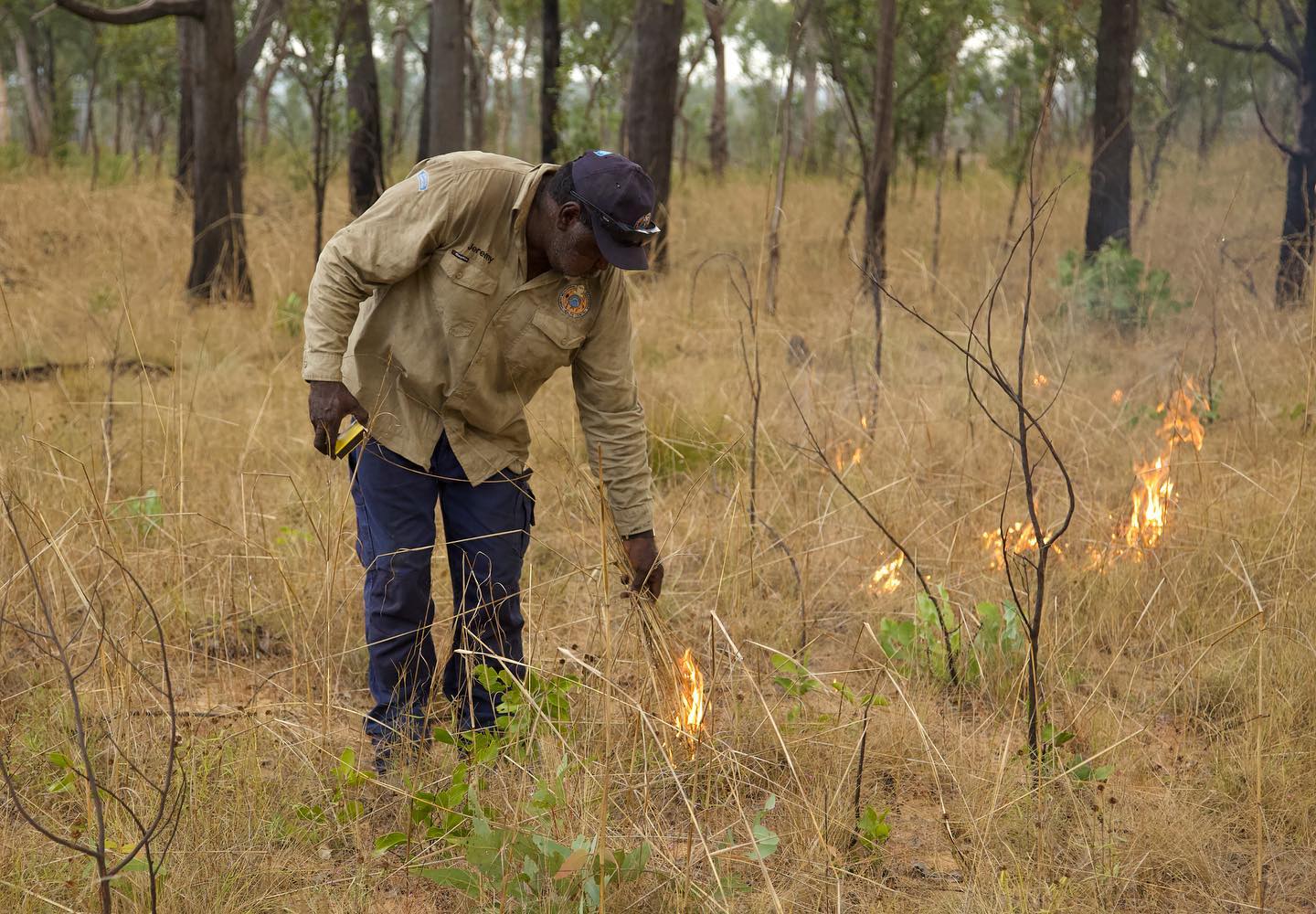
The right way fire
The work began with “a group of old men” who saw country becoming sick and culture, identity and connection being lost. They wanted young people to become more interested in cultural practices.
So they began burning country again, “cultural fire,” or “right way fire.” an Indigenous-led land management practice in Australia that uses traditional knowledge and modern tools to conduct controlled, cool-season burns across desert and savanna regions.
In northern Australia’s savannah country, the practice means caring for land and preventing hot fires. Scientists observed and studied the work. Thompson describes the difference in direct terms: “You’re actually requesting and holding carbon in country because you’re doing a cool fire burn, not a hot fire burn.” In her words, the ash from a right-way fire, what the Western world calls biochar, is “something good for growth.”
“If we get the right fire regime at the right time, then we will have healthier soils,” she says, “which will help us grow better food stocks. Also healthier environments.” She sees a familiar point of connection in Fiji, where she has noticed burning that returns ash to the soil.
The Savanna Fire Method also built a network. At its annual forum in Darwin, Indigenous people, ranger groups and cultural knowledge holders meet to share stories, successes and plans for caring for country. Thompson says the forum grew from 70 to 600 people. The network also developed guidance on rights and consent for Indigenous people negotiating carbon projects.
“Cultural knowledge is a currency”
Thompson’s central argument is that value includes not only carbon, but the knowledge that makes care for country possible. “We didn’t make this mess,” she says.
“Western world made the mess but they are seeking our cultural knowledge now to fix it up, then we need to value what that cultural currency is worth for us.”
She points to the Savanna Fire Method as an example of cultural integrity being recognised in a market. Thompson describes it as the first successful carbon method approved by the Australian Federal Government.
She says a collective in Arnhem Land generates up to $60 million a year in carbon credits through right-way cultural fire. In her comparison, a baseline Western carbon project may receive $35 to $38 per credit, while projects with cultural integrity can receive $50 to $80. She says the figure in Fiji is $5 and argues that value must be understood in context.
“It just gives our other brothers and sisters in the Pacific in particular an idea of the value we can put to our methods of our cultural way of doing country,” she says, “while we’re also strengthening cultural identity into the future.”
For Thompson, a carbon project cannot be separated from rights, consent and land tenure. The projects she describes are 100 per cent Indigenous-owned: “No share for the government, no, no, that’s our rights.” She does not assume Fiji’s land tenure is the same; she raises partnership as a possibility and leaves the question open.
Caring for wetlands and water
Fire is one practice; wetlands are another. Thompson describes blue carbon as restoring coastal wetlands: replanting grasses and protecting areas where saltwater comes in.
She connects the work to Pacific communities confronting rising waters and asks whether people are responding “the right way” or whether other approaches should be considered.
She also describes a method being developed to address hoofed animals, including feral pigs and buffalo, that damage wetlands by digging into the soil. She says those places include springs and sites sacred to cultural knowledge.
On her own country, Thompson says, a project called Nupitji Nupitji cleaned a waterhole, removing two and a half metres of built-up silt. Her account reaches beyond one site: “Our ancestors always kept our waterholes and our waterways clean.”
She wonders what regular waterway cleaning could mean in Fiji, whether it might let water “trickle through the way it should have trickled through.”
“Nupitji Nupitji,” she explains, means “you give me, I give you.” “We give country, country gives us, reciprocal.”
Put the knowledge holders first.
Thompson argues that Indigenous practitioners must help shape decisions about country and climate from the outset. “You don’t have us at the end of it, you have us at the beginning of it,” she says.
After a review of Australia’s carbon market excluded Indigenous participation, she says the process shifted; she became the first Indigenous member of Australia’s Emissions Reductions Assurance Committee, which approves carbon methods.
She draws a distinction between having a youth voice or an elder voice at the table and recognising the wisdom keeper, the person still practising and carrying the knowledge.
“That’s where the value needs to be, is in the practitioner.” Youth, elders, government, and industry all matter, she says, but cultural knowledge holders must come first to inform the work. Women’s knowledge belongs there too: “Women are the givers of life.”
For younger people, her message is direct: “If you’re going to talk about having a strong cultural identity and a connection, then be a practitioner of it. You don’t read it in a book. You don’t watch it through YouTube.” Knowledge is a journey; “you’ve got to wait your turn,” she says, because an order and system must be maintained.
“It’s a reality”
Science can work alongside Indigenous knowledge, Thompson says, but it doesn’t make that knowledge real. She recalls astrophysicists visiting the Seven Sisters Law story etched across five kilometres of escarpment country on her traditional land.
They came, she says, to validate what was already known. “We don’t push it. You just come see, sit with us.” One visitor looked at the star maps and said, “This is a star chart.” Thompson’s response: “Do you think our old people were telling fibs?”
When asked whether major meetings and governments across the Pacific will recognise Indigenous knowledge, she rejects the idea that recognition is merely a hope. “I hope that in 10 to 15 years’ time, it’s not a hope. It’s a reality. It’s a matter of fact.”
She speaks with urgency about how quickly change is happening. And for her, resilience is neither abstract nor distant: “We haven’t gone anywhere. We’re not going anywhere. We’re here to stay.”

