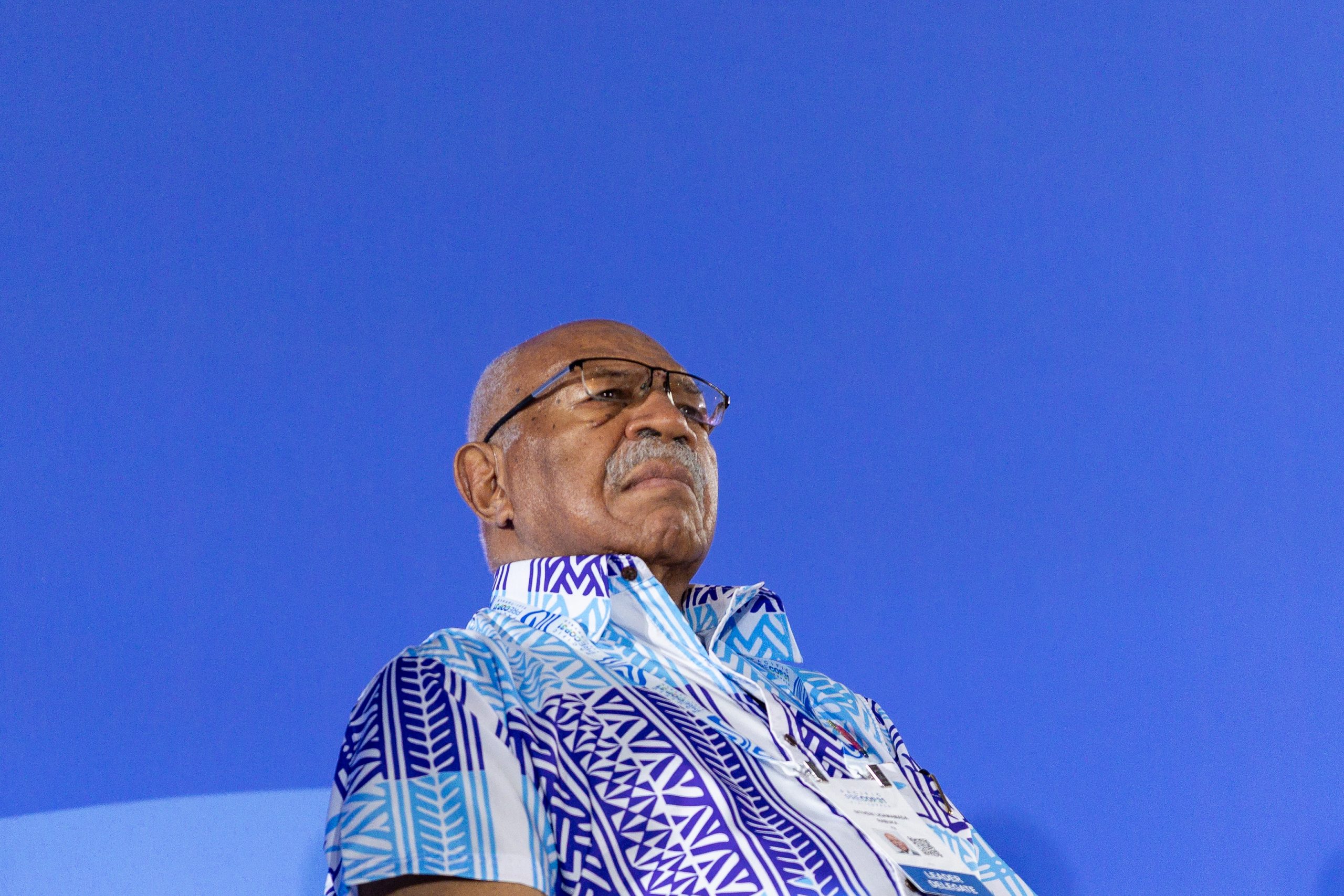
FIJI Prime Minister Sitiveni Rabuka warned that the climate crisis facing Pacific island communities was a warning for the world, urging countries to keep the 1.5-degree goal within reach, direct finance to communities in need and give the ocean a place at the negotiating table.
“The Pacific Ocean is sounding the davui (conch shell) now. And it is not sounding it for us alone,” Rabuka said at a pre-COP31 traditional welcome ceremony, invoking the conch shell’s call to “come together and take heed.”
Rabuka said the effects of warming Pacific waters and El Niño travelled beyond the region, reaching rainfall and harvests on every continent and contributing to floods, drought and fire. “What begins in our waters arrives in yours,” he said.
He urged delegates to see the Pacific not as an object of sympathy, but as a bellwether for challenges to come. “These are not Pacific risks. They are human risks. They are shared risks,” he said, pointing to rising seas, a warming ocean, water shortages and threats to food supplies.
The message linked the region’s climate concerns to its relationship with land and sea. “For us, land, sea and people are not separate things,” Rabuka said.
“They are one, and we call that whole the Vanua.” He said harm to one part affected all, describing that understanding as a way of knowing the world that had sustained Pacific societies for generations.
Rabuka cited Tuvalu as a place where climate change was already tangible. Delegates would stand on its shores in the days ahead, he said, where “the climate crisis is not a forecast” but “the king tide at the door, the salt in the garden, and the hardest of questions: how long can a community stay?”
He called for action while there was still time, naming three priorities: keep 1.5 within reach, ensure finance reaches communities that need it, and give the ocean “the seat at the negotiating table that its role in our climate demands.”
Rabuka opened by describing the Fijian sevusevu, the presentation of yaqona, or kava, as a request to be received. Once accepted and shared, he said, visitor and host become bound to one another by a duty of care.
“I begin with that idea because it describes the relationship we hope to build with you this week,” he said, extending the idea to the Pacific and the ocean.
“We are all guests of this earth. None of us owns it, and none of us can leave it.”
He called on delegates to engage in the spirit of talanoa, “open, inclusive and honest dialogue,” and to be “generous in listening, slow to blame, and focused on finding solutions that serve the common good.”
“You are family.”