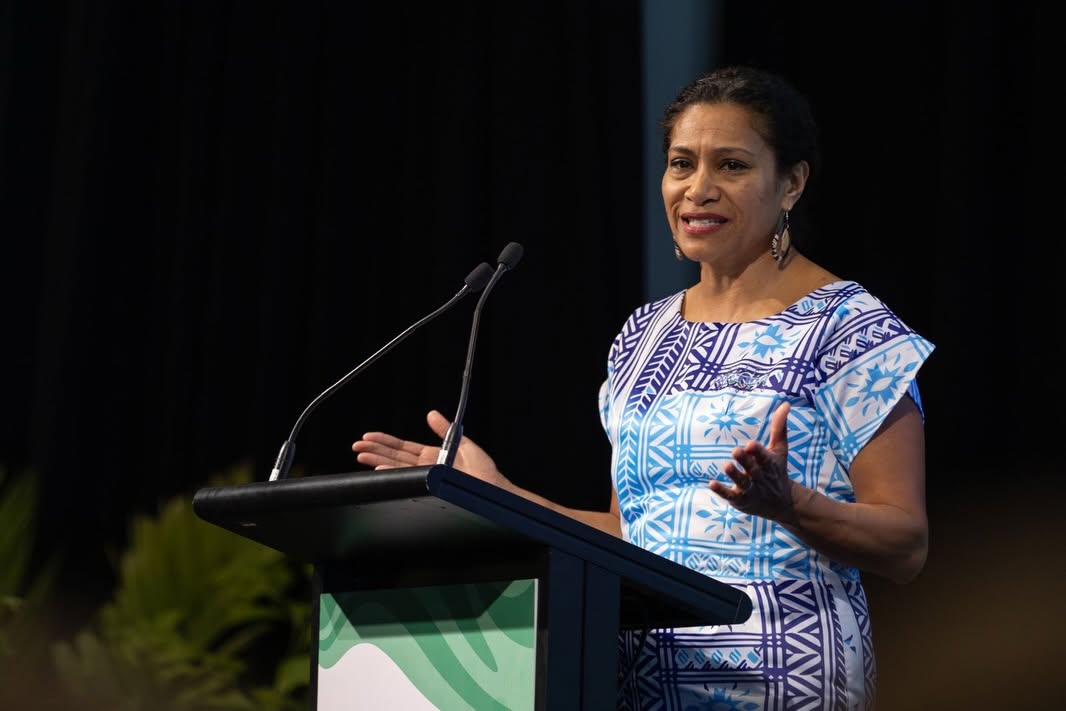
CLIMATE decisions must be shaped by Pacific communities before positions are set, Fiji’s Minister for Environment and Climate Change, Lynda Tabuya, said as she opened a stakeholder programme ahead of COP31, urging leaders to keep the 1.5-degree goal within reach, deliver finance to communities and give the ocean a place in the climate agenda.
“Participation does have value when it changes priorities, partnerships, and decisions, not when people are consulted after the direction has already been set,” Tabuya said at the opening of the Knowledge Exchange “Vale Ni Vanua” at Sofitel Resort in Nadi, Fiji.
She said the week’s test was whether discussions among stakeholders would “change positions” and “unlock the robust outcomes” needed before the programme in Antalya. The prime minister would carry three messages to leaders:
“Keep 1.5 degrees within reach, make finance reach the communities that need it, and give the ocean its rightful place in the climate regime.”
Tabuya said climate finance was not flowing at the speed or scale required, while the 1.5-degree goal remained under threat. She asked participants to show where finance was working or failing, and to describe how long communities waited for seawalls, water systems and solar mini-grids.
“Tell us plainly what further warming would mean for your communities,” she said, calling for accounts of work on renewable energy, green transport and sustainable management of land and resources.
The minister linked those priorities to the experience of island communities, saying her own maritime province was “still not on the way” to renewable energy.
“If we bypass all of that, we have to depend on fossil fuel,” she said. “We don’t have to depend on diesel, go straight to renewable energy.”
She also urged participants to elevate the ocean’s role in the climate crisis, citing coastal erosion, coral health, fisheries and food security.
“The ocean connects everything we hold dear,” Tabuya said. “And for all three, let Pacific Voices lead.”
Tabuya described the Vanua as more than land: “It is the land, it is the sea, and it is bound together as one living whole.”
The Knowledge Exchange, she said, was a place where “everyone belongs,” including those who had travelled from far away to attend.
More than 3,000 people had gathered, she said, and urged them to take part in the discussions. “You have to be present to be heard. You must get a seat at that table and you will be heard.”
She called for sharing “with consent, with attribution, with benefit sharing, and under community control,” and asked attendees to visit the stands and begin conversations. Fiji would report back after COP31 on “the priorities we advanced, what was agreed, what was left open, and how community was considered,” she said.
“You deserve to see the difference you have made.”