A DISCOLOURED leg, severely reduced blood flow and a clot lodged high in the leg near the hip.
What could have been another outpatient consultation quickly became a race against time at Pacific Specialist Healthcare (PSH) Hospital in Nadi.
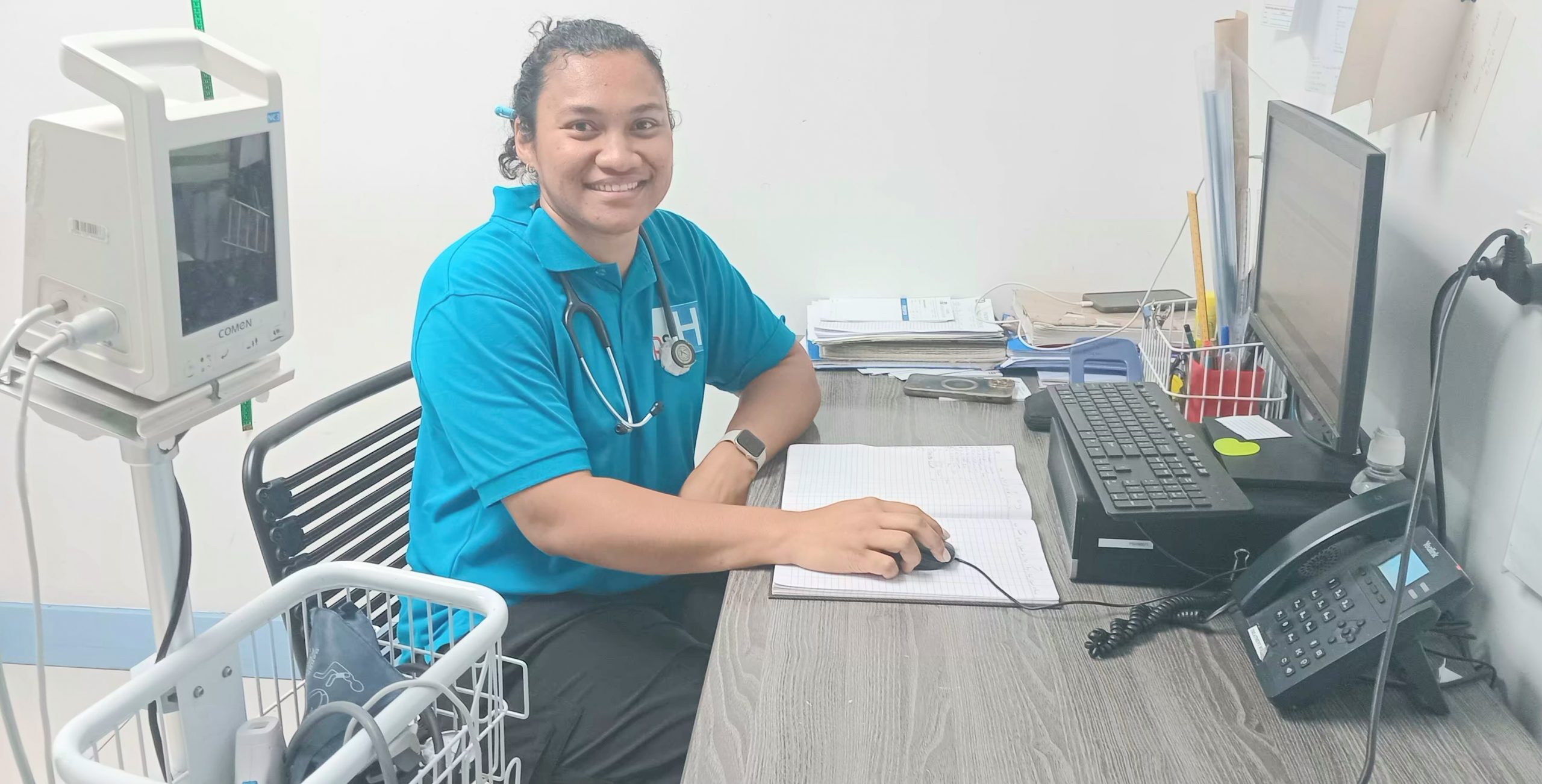
For Head of General Practice Dr Ilisapeci Sasau Qerelevu at PSH Nadi, the emergency began the moment the patient walked through the door.
Her trained “clinical eyes” were already assessing the patient before the consultation formally began.
“When a patient walks in, you’re just thinking from head to toe what are they bringing to the hospital?” said
Qerelevu, from Kabara in Fiji’s Lau Group.
“Sometimes it can be a small headache or a cut, but as soon as they come in, we should have clinical eyes.”
The patient’s condition was rapidly assessed, and the seriousness of the blood clot was recognised. The patient was immediately referred for specialist intervention.
Within about an hour, a stent had been placed and blood flow to the lower limb restored.
For Qerelevu, the case shows why vigilance in an outpatient department can mean the difference between a routine consultation and a medical emergency.
Her all-female GP team — Dr Shayal Devi, Dr Kushboo Kumar, Dr Tima Labaibure and Dr Asenaca Banikau — is trained to look beyond the obvious.
Is a patient holding their head? Touching their shoulder? Limping? Appearing distressed?
These subtle signs can offer the first clues that something more serious may be happening.
PSH’s OPD sees around 60 to 70 patients each day, with two GPs generally sharing the workload. Depending on the complexity of a case, consultations can range from five to 10 minutes to 15 to 20 minutes or longer.
Qerelevu believes that time is crucial.
“When we see them, we see them properly and we have to maintain the standard of a private hospital in the Pacific,” she said.
Another advantage at PSH is that the GP team has immediate, direct access to specialists when patients need further assessment or urgent intervention.
For Qerelevu, medicine begins with listening, observing and recognising what may not immediately be obvious.
At PSH, a patient’s consultation begins before they even sit down.
The doctors are watching.
They are listening.
And they are looking for the signs that could save a life.