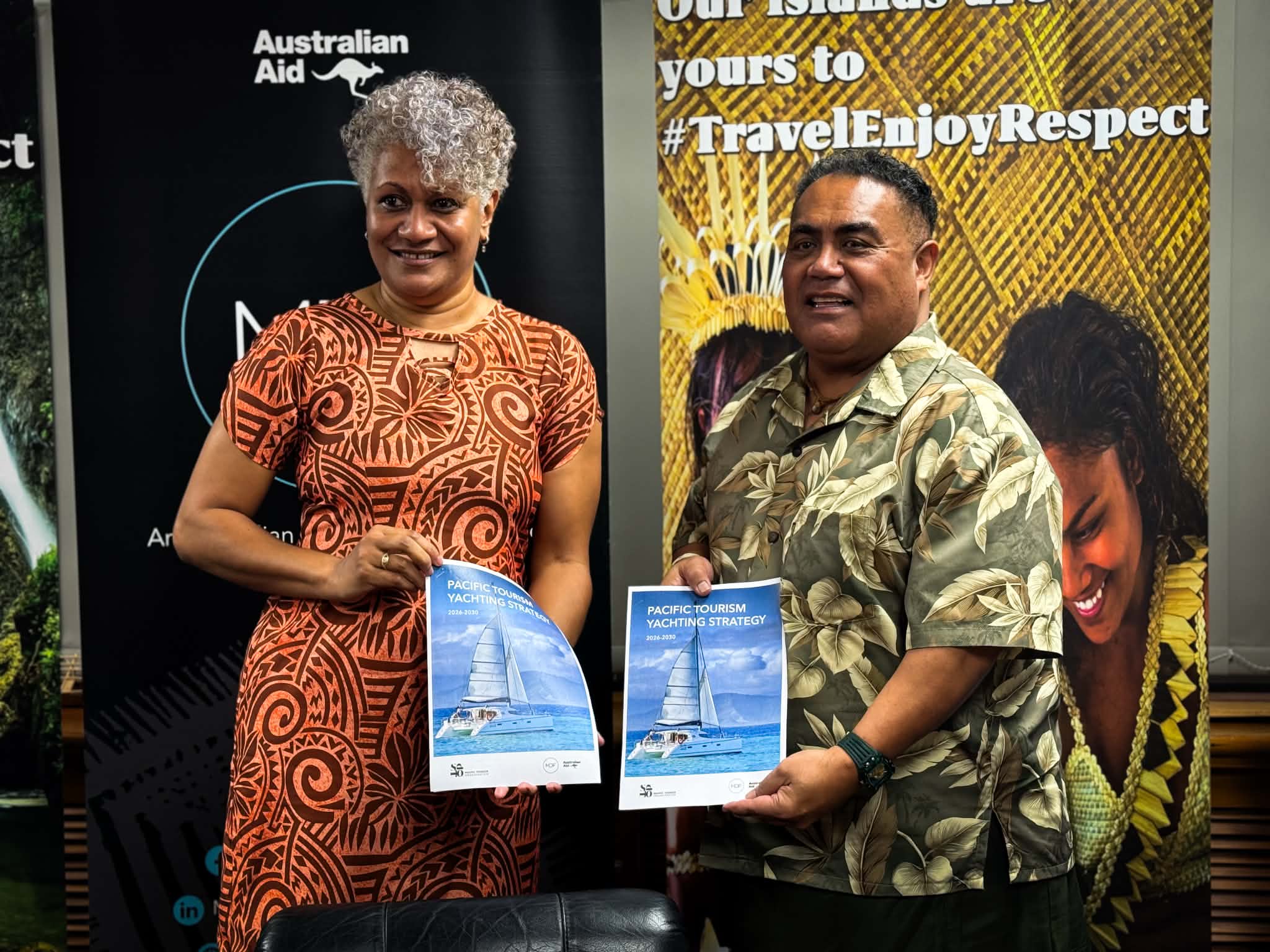
THE Pacific is looking to expand its yachting tourism industry while strengthening regulation, data collection and opportunities for local communities under a new regional strategy.
The Pacific Tourism Organisation (SPTO), in partnership with the Market Development Facility (MDF), has launched the Pacific Tourism Yachting Strategy 2026–2030, following its approval by the SPTO Board.
The strategy provides a coordinated framework to position the Pacific as a world-class and sustainable yachting destination, with five focus areas covering marketing and promotion; policy, regulation and infrastructure; private-sector and SME development; sustainability and community benefits; and regional coordination and partnerships.
MDF Fiji Country Director Kelera Cavuilati said the strategy would help address gaps that have limited recognition of yachting’s contribution to Pacific economies.
One major challenge is the lack of consistent data on yacht arrivals and their economic contribution.
MDF is working with the Fiji Bureau of Statistics to strengthen Fiji’s yacht tourism data system, building on an economic impact study conducted in 2018.
The work is expected to address gaps in data covering yacht departures, length of stay, vessel types, expenditure and charter activity, while improving coordination and data-sharing between relevant agencies.
Cavuilati said yachting was seasonal and spread across different marinas and communities, making it more difficult to capture than tourism arrivals through airports.
She said the economic contribution also extended beyond marinas, with yacht visitors spending on food, seafood, handicrafts, maintenance and other local services. At the same time, some owners and guests also enter the country by air.
The strategy launch follows MDF-supported economic impact studies in Vanuatu, Tonga and Kiribati in 2023.
Those studies found that yachting generated more than US$8.7 million in direct expenditure and over US$18 million in total economic impact across the three countries. MDF said approximately 950 yachts visit the three countries annually.
Cavuilati said Fiji’s experience could provide lessons for other Pacific countries as governments work to improve how yacht tourism is monitored and recorded.
The discussions around the strategy have also highlighted the importance of stronger coordination between agencies responsible for customs, immigration, health, quarantine and tourism.
On maritime security, Cavuilati said MDF has worked with water-control authorities, customs and the Fiji Revenue and Customs Service to digitise clearance processes.
She said yachts must keep their Automatic Identification System (AIS) active, allowing enforcement agencies to monitor vessels operating in Fiji’s waters.
The strategy includes policy and regulatory measures, while national governments and relevant agencies remain responsible for security and enforcement.
SPTO Chief Executive Christopher Cocker said the strategy represented a step towards diversifying the region’s tourism products while ensuring growth remained inclusive, sustainable and community focused.
He said stronger regional cooperation could help Pacific countries attract more yachts and superyachts, increase investment and create opportunities for communities.
MDF’s latest work with the Fiji Bureau of Statistics also aims to establish more reliable, regular yacht tourism statistics that can be incorporated into national tourism reporting. The new strategy is aligned with the 2050 Strategy for the Blue Pacific Continent and the SPTO Strategic Plan 2025–2029. It is intended to guide the sustainable development of yachting tourism across SPTO member countries.