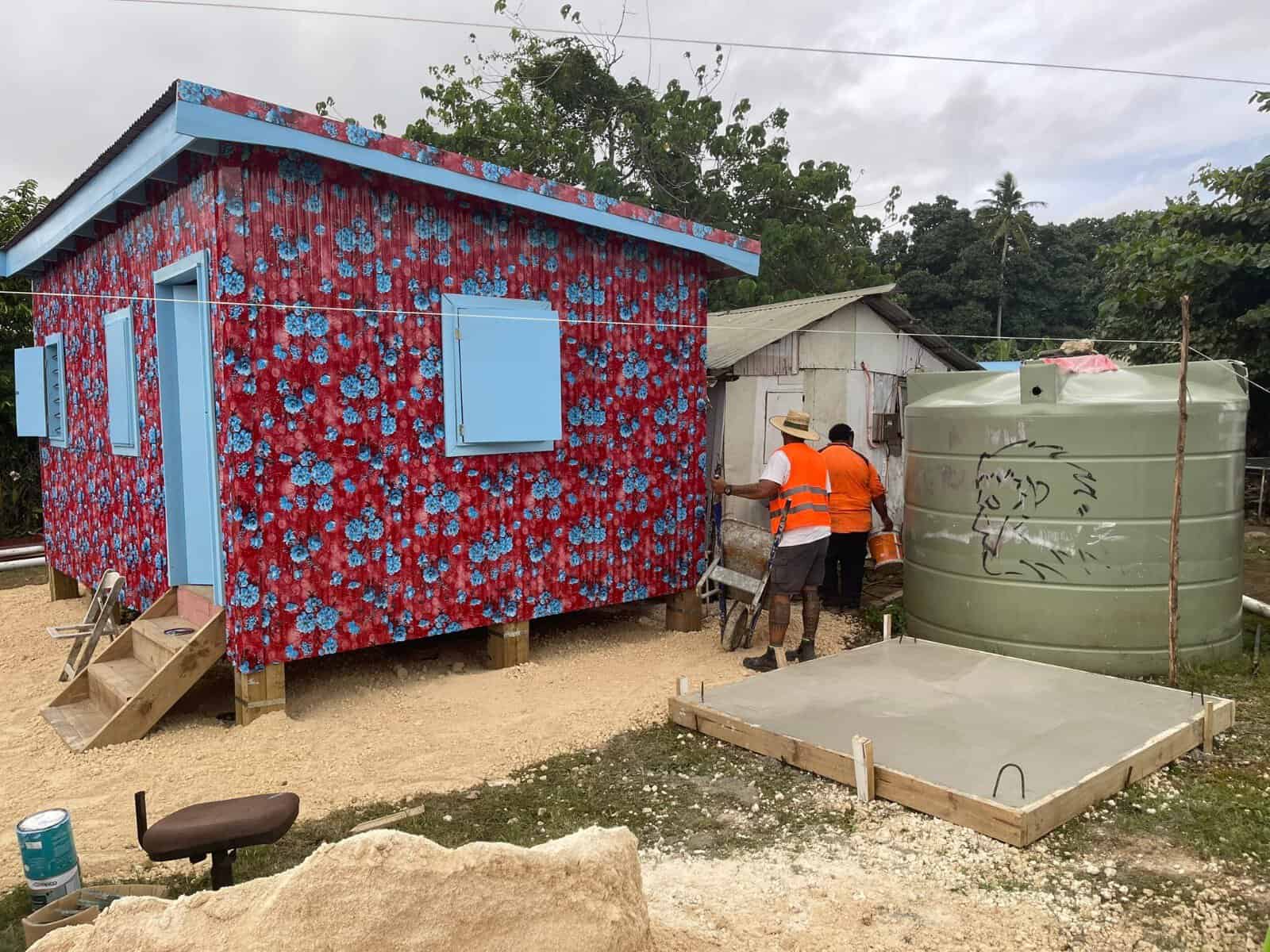
TONGA is strengthening its community-led housing and resilience approach, with Habitat for Humanity and its partners highlighting growing efforts to place communities at the centre of disaster recovery, housing design and long-term planning.
The programme, implemented by Habitat for Humanity New Zealand in partnership with local organisations and government stakeholders, focuses on participatory planning, skills training and inclusive housing solutions across disaster-affected and vulnerable communities.
Habitat for Humanity New Zealand focal officer Katrina Ma’u Fatiaki said the approach reflected lessons from years of rebuilding work in Tonga, particularly following the 2022 Hunga Tonga–Hunga Ha’apai volcanic eruption and tsunami.
She said communities such as Nomuka Island in Ha’apai, which was heavily impacted by the disaster, continued to demonstrate both the scale of recovery needs and the importance of long-term support.
“Rebuilding is not just about houses, it is about lives, safety and restoring dignity for families,” she said.
Fatiaki said recovery efforts have included collaboration with the Tonga Institute of Science and Technology, where carpentry students and tutors supported the construction of new homes for affected families, alongside community participation in rebuilding work.
She said logistical challenges, including transport constraints and access to materials in outer islands, continue to affect recovery timelines, but partnerships have been critical in reaching remote communities.
A key focus of the programme is community participation, where residents identify their own priorities through structured consultations and planning sessions.
Habitat for Humanity New Zealand said these community workshops help identify risks, including climate impacts, housing vulnerabilities, and infrastructure gaps, before communities themselves develop action plans.
The programme also integrates technical skills training, including carpentry, plumbing and vocational pathways, aimed at strengthening both housing outcomes and local employment opportunities.
Fatiaki said inclusion is a central part of the model, ensuring women, youth and persons with disabilities are actively involved in decision-making processes.
She said this includes strengthening accessibility considerations in housing design and ensuring marginalised voices are reflected in community action plans.
“Our goal is to ensure communities are not just recipients of aid, but leaders of their own development,” she said.
Local partners, including Live & Learn Tonga and Talitha Project, have also been working with communities on resilience building, gender inclusion and youth engagement, as well as supporting minor housing improvements in vulnerable households.
The programme has also facilitated housing forums in Tonga over recent years, bringing together government agencies, civil society, the private sector and community representatives to improve coordination in the housing and shelter space.
Habitat for Humanity said the next phase of the programme will expand efforts to strengthen disability inclusion, women’s leadership and youth participation, while linking community-level planning more closely with government systems and national housing policy.
It said the aim is to build more resilient, inclusive and affordable housing solutions that reflect the realities of Tonga’s disaster risk environment and the needs of its communities.