

What do we want? Break the Silence and Stigma on Menopause! When do we want it? Now!
Often, you will hear us calling out our chants on the streets of Suva during our many marches for women’s and human rights, calling for more recognition on issues that affect us. And rightly so, we are women and girls, and we make up half of the population of our country. We bring to the forefront barriers that we often have to confront and to push stakeholders to address the issues that affect us.
One such issue is the lack of conversation, awareness, and response on Menopause, a subject often stigmatised and considered taboo to discuss in our communities. Why? For the very simple fact that in our patriarchal society, women’s sexual and reproductive health and rights often take a backseat to other “priorities” in our households. As was relayed by a panelist in a recent panel discussion we had organised on the issue, “There are high societal expectations on women – we come home and we still have things to attend to, and many times our health and security are not a priority. Women play a huge role in taking care of others, and rarely are we asked, ‘How are you? Are you okay?’”
Menopause is the natural stage in a woman’s life that signifies the end of her reproductive cycle, typically occurring between the ages of 45 – 55 years. Menopause occurs as a result of the gradual loss of ovarian follicular function, and a decline in estrogen levels.
According to the Women’s Health Organisation, the global population of postmenopausal women is growing. In 2021, women aged 50 and over accounted for 26% of all women and girls globally. This was up from 22% ten years earlier. By 2030, it is projected that 1.2 billion women will be in menopause or postmenopause, with 47 million new entrants each year. Additionally, women are living longer.
How does this affect us? Well, for starters, in a country where half of our people are women and girls, how are we preparing our own public health systems to cater to the health needs of women who are undergoing menopause or will, in the near future? How are we addressing or going to address the economic impact of women already or girls that will be experiencing symptoms of menopause at work? How can we help women who often struggle with their mental health during menopause? And even then, not all women experience menopause the same way, with vulnerable communities not being able to access healthcare or the right and relevant information regarding their health and well-being.
In our very own menopause research, published in April this year and titled “The M Word: Ending the Silence! – Fijian Women’s Perceptions and Experiences Journey To and During Menopause”, 18% of the women we surveyed cited that they received little to no information on menopause. More than half of the survey respondents stated a lack of conversation and taboo on the subject as a common societal barrier.
Menopause is not just a medical issue – it is social, emotional, and political. Thus, conversations about women’s sexual and reproductive health—from menstruation to menopause—are urgent, and the silence around such a crucial natural stage of life needs to be removed. From our families to policymakers, health providers, and employers, honest discussions that will help women go through this cycle with dignity and support are needed.
The importance of family support is essential to women’s growth in various spaces, be it leadership, unpaid care work, or women at work. The extension of this support when women are going through these natural stages of life continues to be a challenge. We asked our survey respondents if they have had open conversations with their family or household members about the challenges and impacts of unpaid care work during menopause. Around 56% (37) of respondents stated that NO, they have not had such conversations with their family members.
The urgency of more public discourse on such an underrepresented issue can provide valuable information on the experiences of women in peri- or menopausal stages in Fiji.
This menopause research, produced with the support of the Asian Pacific Resource and Research Centre (ARROW), apart from shifting the spotlight to older women’s SRH needs and issues, also endeavored to uphold the accountability of the Fiji government to international commitments such as the International Conference on Population and Development (ICPD) Programme of Action (PoA) and regional conventions such as the Madrid International Plan of Action on Ageing (MIPAA).
And here is where we throw this work back to 1994, setting the scene in Cairo, Egypt, where the International Conference on Population and Development (ICPD) was held. This landmark event established reproductive rights as human rights and, thus, gender equality, and women’s health— especially sexual and reproductive health—was placed at the center of development. The outcome was a 20-year Programme of Action that set, as a strategy, the empowerment of women to progress sustainability. However, this is 2025—way beyond the 20-year mark—and women are still vulnerable
to negative connotations about their bodies, their sexual health, and their wellbeing.
Here are some findings from our menopause research that we hope will help
us gain a little more insight into the experiences of our women:
- 36% of respondents stated that menopause has had a negative but
manageable impact on their emotional and mental well-being.

Many of the women surveyed had mixed feelings on their opinions about culture and society, with a majority not noticing any specific attitudes about menopause.
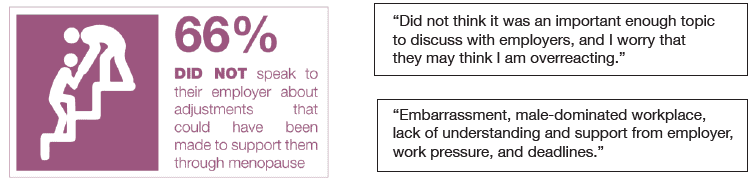
Working Women and Menopause:
A total of 82% of respondents agreed there was a need for a workplace menopause policy.
Support Services:
The availability of accurate and reliable information on menopause that was easily accessible to women ensures the well-being of women undergoing this significant life transition.
So, what do we recommend? First and foremost, FWRM believes that government needs to develop robust programmes and policies that cater to the needs of women, facilitating a smooth transition from the ageing phase to the older stage. This will ultimately ensure their well-being and provide them with valuable support. The ongoing media attention on menopause and related conversations are positive signs that spaces are becoming more comfortable to discuss these once-taboo subjects. We need to begin somewhere.
The projected increase in the population of older women warrants a national plan to address their menstrual health needs. The allocation of more funds in the annual budget for menstrual hygiene products is necessary. These should be provided to hospitals, clinics, and SRHR service providers in Fiji, ensuring easy access for women and girls. And yes, accessibility to disability groups and older women—let’s sit down, or stand up, whatever we need to do—but the onus is on us to open up the conversations and address these issues to ensure that our women and girls—again, half of Fiji’s population—are taken care of. We reiterate, the onus is on us. Let’s talk about it!
For more information on this research, please contact the FWRM office on 331-3156. It is also available on the FWRM website under Research and Analysis.


The Fiji Women’s Rights Movement (FWRM), established in 1986, is a multi-ethnic and multicultural non-governmental organization committed to removing all forms of discrimination against women through institutional reform and attitudinal change. Being a feminist organization, FWRM uses critical feminist analysis in the work we do in addressing gender inequality.