
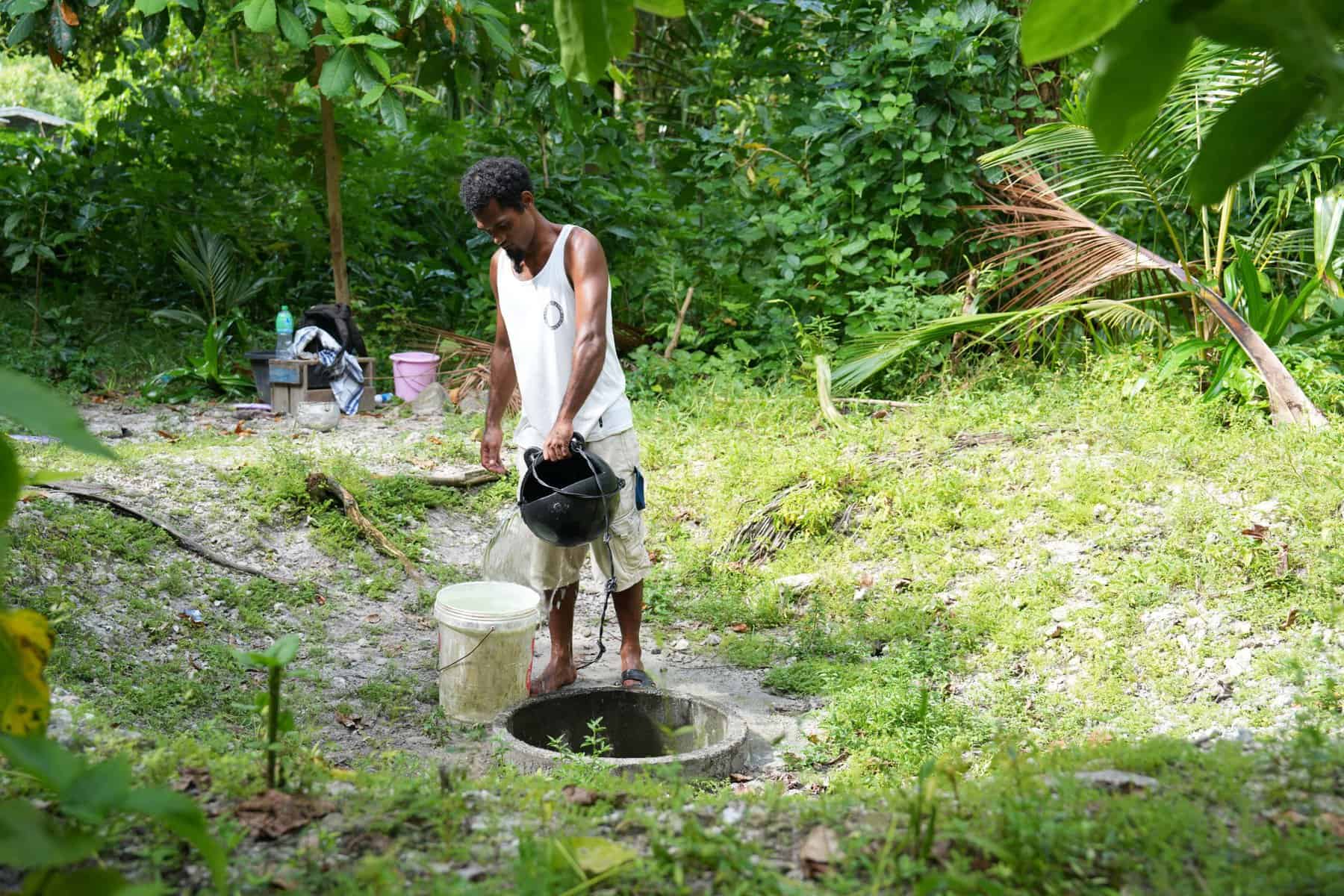
Rising seas, stronger cyclones and coastal erosion are alreadyaffecting lives and livelihoods across Solomon Islands, leaving many communities facing difficult decisions about their future.
One such community is Sikaiana, a remote low-lying atoll in the Malaita Outer Islands with a population of about 300 people.
“When I was growing up, life on Sikaiana was not like this,” explains Tuiao Kapule, the atoll’s school principal. “Today, the tides are higher, saltwater seeps into our land, and our crops can no longer grow as they used to.
“Families are struggling to adjust to the changing environment,” he adds. “Some students are affected by food shortages at home and can’t come to class. Sikaiana is my motherland, but if relocation becomes necessary, I would choose to relocate. Climate change has made living on this island unsustainable.”
Tuiao’s experiences highlight the urgent need to prepare for relocation, as communities across Solomon Islands increasingly face the irreversible impacts of climate change.
In 2022, Solomon Islands Government (SIG) launched the country’s Planned Relocation Guidelines. Developed with support from the International Organization for Migration (IOM), the Guidelines provide the overarching framework for managing, as a measure of last resort, the voluntary, planned and coordinated relocation of communities away from risk-prone areas.
Translating the Guidelines into action, the Korea International Cooperation Agency (KOICA) is supporting, through the project “Strengthening Resilience Against Disaster and Climate Change–Related Fragility in Solomon Islands”, efforts that enhance preparedness and response capacities at the national, provincial, and community levels.
A central component of the project, implemented by IOM, is to help SIG develop Standard Operating Procedures (SOPs) for planned relocation.
The SOPs will define the roles and responsibilities of all key actors, ensuring that communities can be relocated in a transparent, inclusive and dignified manner that safeguards livelihoods and community cohesion.
“KOICA is proud to support Solomon Islands Government in turning the Planned Relocation Guidelines into practical steps that protect lives and dignity. Through the development of SOPs, we aim to ensure that relocations are accountable, rights-based, and inclusive,” said Hankyulsam Cho, Country Director of KOICA Fiji Office.
Following an extensive consultation process with nearly 400 stakeholders, the SOPs have started to take shape, with particular support from national government counterparts. Community participation has been essential to guarantee that the procedures reflect the views and priorities of people on the front lines of climate change.

Provincial Government counterparts have also played a vital role in developing and reviewing the SOPs.
“The SOPs are an important step forward for Solomon Islands, as they will ensure that any relocation is well coordinated, inclusive and accountable. They will protect the rights and dignity of our people, and give communities a voice in shaping their future,” said Patrick Toiraena, Provincial Secretary for Western Province. “We are grateful to KOICA for supporting this process and helping us to be better prepared.”
The SOPs are now in the final stages of review and validation. Once endorsed, government counterparts will be trained to implement them. Further to this, IOM will help SIG in raising public awareness about the Guidelines and SOPs to ensure that affected communities are informed about the processes.
Through these collaborative efforts, the foundations are being laid for a people-centered and rights-based approach to planned relocation in Solomon Islands.