
IT take one cup of oil to produce a diaper and babies create 380,000 dirty diapers a minute.
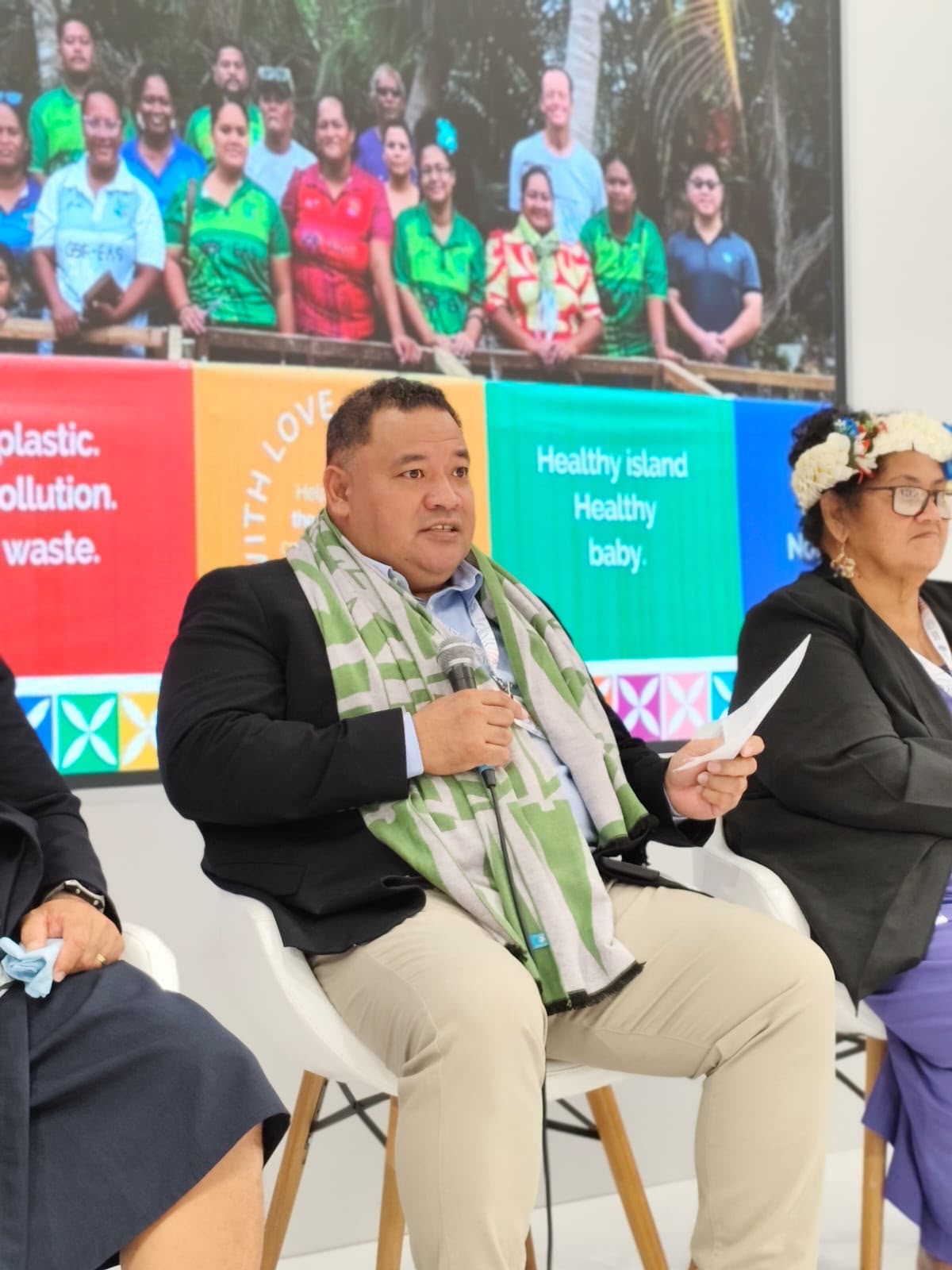
That was the challenge posed by Kim Graham-Nye, co-founder of The Greater Good Diaper Project, at a session titled Necessity is the Mother of Invention at the Moana Blue Pacific Pavilion at COP31.
For Pacific island countries, the problem is particularly acute. Disposable nappies have made life easier for parents, but they have also created a growing waste management challenge for countries with limited land and disposal facilities.
According to research by the Pacific Regional Environment Programme (SPREP) in 2022, nappies account for approximately 27 per cent of household waste in the Pacific, generating an estimated 173,000 tonnes of plastic waste annually.
In Tuvalu, more than one million disposable nappies are used every year.
For the country’s Minister for Climate Change, Hon. Dr Maina Talia, the scale of the problem is difficult to ignore.
“If you get to see our dump site and see all the plastic rubbish in Tuvalu, it’s a nightmare,” he said.
Tuvalu is now tackling the problem at its source through a programme that replaces conventional plastic nappies with compostable alternatives, while creating employment for women and producing compost to improve soil health.
Developed in partnership with The Greater Good Diaper Project, the initiative also introduces an innovative financing model designed to make plastic avoidance financially viable and potentially self-sustaining.
Designing plastic out of the problem
For generations, Pacific families relied on cloth nappies. But as disposable alternatives became more accessible, convenience gradually replaced traditional practices.
SPREP’s Director of Waste Management and Pollution Control, Anthony Talouli, recalled how his own household’s reliance on disposable nappies increased with each of his three children.
“The more money I had, the more nappies I used,” he said.
Talouli said countries including Vanuatu, Tuvalu and Kiribati had previously considered restricting or banning plastic nappies, but the absence of suitable alternatives made such measures difficult to implement. Vanuatu, for instance, halted its planned 2019 ban because substitutes were unavailable.
“We know that plastic is an issue. We know that zero waste is possible. We can achieve that, and also that we need to be brave to be able to make this change,” he said.
The Greater Good is attempting to provide that alternative through nappies made entirely from compostable materials, designed to break down through a locally managed composting system.
For Kim Graham-Nye, the solution begins with changing the product itself.
“If you want to stop plastic pollution, the most obvious answer is to stop making stuff out of plastic, you know, when you can,” she said.
The programme is built around three principles: redesign, rethink and regenerate. This means eliminating plastic through alternative materials, placing women at the centre of the collection and delivery system, and returning used nappies to nature as nutrient-rich compost.
The environmental benefits are measurable. For every 100 babies enrolled, the programme eliminates approximately 700 kilograms of plastic waste each week, produces around 104 kilograms of compost and creates four part-time jobs for women.
In Tuvalu, the initiative is already reaching approximately 600 babies.
Women at the centre of the solution
On the ground, local women manage the delivery and collection of nappies, ensuring used products are returned for composting rather than ending up in landfill.
For Lina Losa Peleti, the Tuvalu country manager for the project, the initiative is personal.
A mother of five and grandmother of 24, she remembers when cloth nappies were the norm.
“When I was having my children, the five of them, we were using cloth at that time. There was no such thing as plastic,” she told the panel.
But the introduction of disposable nappies has created a problem she now sees in her own community.
“When you look at it, it’s becoming a problem. It’s spoiling, polluting the environment. It’s going into the sea, and it’s going everywhere,” she said.
Peleti leads a local team responsible for collecting, weighing and composting the nappies. They have established five composting boxes, using green waste, a locally prepared inoculant and seawater to support decomposition.
Temperatures inside the boxes have reached as high as 69 degrees Celsius, helping break down the materials. Under favourable conditions, the process can take approximately four to five weeks.
The resulting compost is being used to establish vegetable gardens, offering an additional benefit for Tuvalu, where poor soil fertility makes food production difficult.
Minister Talia said this was particularly important for the country.
“For us, it takes the whole family to go, plough the land and do planting. Planting is an issue for us,” he said.
The initiative has also generated interest beyond Funafuti. During community consultations involving more than 300 babies, 94 per cent of mothers, single parents and grandparents surveyed expressed willingness to use the compostable nappies.
Leaders from Tuvalu’s outer islands have also expressed interest in bringing the programme to their communities.
Making plastic avoidance pay
Beyond the environmental benefits, the programme’s other innovation is its approach to financing.
Compostable materials are more expensive than conventional plastics, and the collection service adds to operating costs. However, The Greater Good sells its nappies at price parity with conventional brands such as Huggies, ensuring parents do not pay more for choosing the environmentally friendly option.
The difference is currently supported through philanthropic funding, but the organisation is working towards a model that rewards the prevention of plastic pollution rather than simply financing its clean-up.
“Plastic is artificially cheap. No one pays for its cleanup. The manufacturers don’t pay, but we all kind of pay,” said Dr Jason Graham-Nye, co-founder of The Greater Good.
The project is exploring the use of Alternative Material Certificates, developed by PCX Solutions in Singapore. Unlike conventional plastic credits, which generally support the recovery of plastic after pollution has occurred, these certificates recognise plastic that has been avoided through the use of alternative materials.
“We get paid for every tonne of plastic that was never created,” Dr Graham-Nye explained.
The Greater Good is the first project to use this certificate mechanism, which aims to make plastic avoidance measurable and investable.
The financing proposal also involves a US$50 million outcome-based Circular Transition Bond being developed with a global financial institution.
To unlock the bond, the project is seeking US$1 million in commitments from philanthropic donors and sovereign partners to purchase verified plastic-avoidance certificates. Approximately US$500,000 has already been secured through letters of intent.
The project would receive financing upfront to carry out its work. Once the plastic avoided has been independently verified and certificates issued, donors would make their payments to repay the bondholder.
This means donors only pay once the environmental results have been independently demonstrated, while the project gains access to upfront capital.
For the Pacific, the approach could open another avenue for attracting private investment into locally led environmental solutions, reducing reliance on traditional grant funding.
A model for the Blue Pacific
The ambition is to expand the programme beyond Tuvalu, with Samoa, Vanuatu and Fiji identified as potential next destinations.
For Minister Talia, the initiative demonstrates why Pacific countries must move beyond presenting their vulnerabilities at international climate negotiations and showcase practical solutions emerging from their communities.
“These are things that we can do locally in order to respond to the issue of the climate crisis, respond to the plastic issue that we continue to face in Tuvalu,” he said.
The project is also expected to feature as a demonstration initiative during Tuvalu’s planned international meeting on transitioning away from fossil fuels, which it will co-host with Ireland in July 2027.
Minister Talia said the initiative would help demonstrate how local partnerships can contribute to the transition, including by reducing dependence on petroleum-based products.
After attending more than 10 COPs, he said the need to keep pressing for meaningful climate action remained.
“We don’t have to be complacent coming to a COP. We have to be frustrated all the time when we come,” he said.
But Tuvalu’s nappy programme offers something beyond another call for action: a practical example of what communities can achieve when innovation, local leadership and financing come together.
It is a solution that starts with something as ordinary as a baby’s nappy, but its potential reaches much further eliminating plastic at source, creating livelihoods for women, improving soil health and opening new pathways for environmental investment.
For Tuvalu, the challenge is turning a growing waste problem into an opportunity. For the wider Pacific, it could be a model worth replicating.