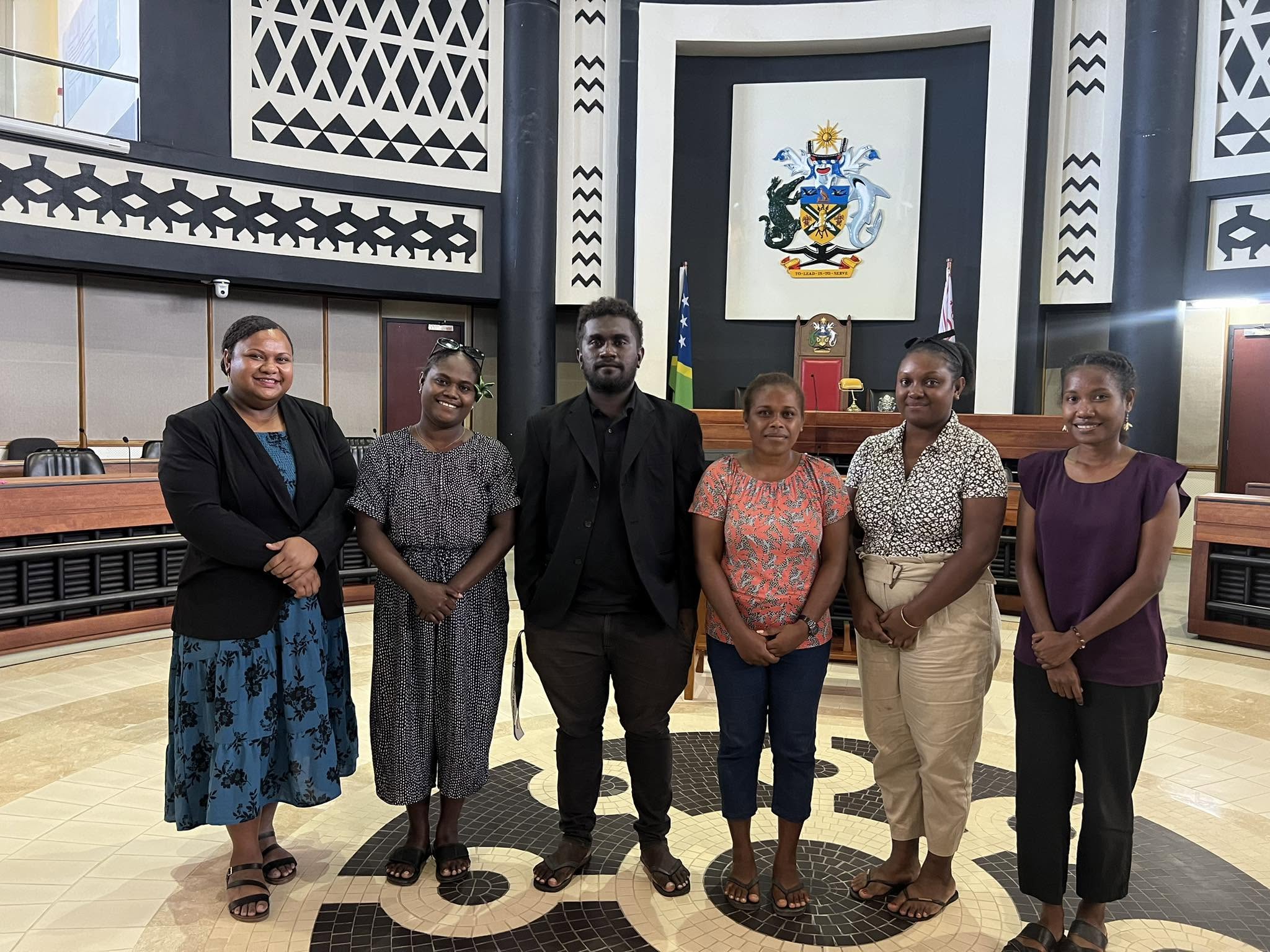
SINCE 2024, the Solomon Islands Young Women’s Parliamentary Group has been strengthening our capacity in human security and peacebuilding because we know that peace is not built only in formal negotiations or government offices.
It is built in markets, communities, homes, churches, schools and parliamentary committee rooms where people’s daily realities must shape national decisions.
As young women who have grown up with the legacy of armed conflict and political crises, we understand that stability cannot be taken for granted.
We also understand that lasting peace requires more than the absence of violence.
It requires security in everyday life: safe public spaces, reliable livelihoods, food security, climate resilience, accessible services and meaningful participation in decisions that affect our future.
That is why parliamentary processes matter.
When communities—especially women, young people and persons with disabilities—are involved in shaping parliamentary submissions, committee consultations and national policy discussions, laws and policies become more responsive to the realities people face every day.
Yet women remain significantly underrepresented in formal leadership and parliamentary roles in Solomon Islands, despite their central contribution to economic and social stability.
This imbalance limits the ability of policy makers to respond effectively to economic insecurity, climate pressures and community-level risks.
Our assessments in the 2025 Pacific Women Mediators Network Human Security Mapping Report provide clear evidence from the lived realities of women market vendors in Honiara.
Their experiences show that resilience requires the systematic inclusion of women in decision-making processes at both local and national levels.
Women market vendors carry operational knowledge that policy makers cannot afford to overlook.
Their insights can improve market safety and functionality, strengthen economic stability and food security, inform climate adaptation and risk mitigation, and increase the legitimacy and effectiveness of governance institutions.
In our consultations and committee briefs, persons with disabilities have also been part of the conversation. Their participation has highlighted a simple but often neglected truth: accessibility is not an optional add-on to peace and security work. Equal participation is essential if national policy is to serve the whole country.
The Solomon Islands Young Women’s Parliamentary Group has worked to connect women at all levels to national issues through the parliamentary process.
Through capacity building, mentorship, direct engagement with parliamentary committee hearings and civic outreach, we are helping ensure that women’s voices are not only heard but are shaping policy outcomes.
We have also advanced dialogue with national policy makers through regular briefs with Members of Parliament, parliamentary committees and government officials.
Because many members of the group work within parliamentary structures, we are able to use existing channels to make the concerns of young people and women visible in decision-making.
These structured engagements are opening new channels for dialogue, accountability and influence.
As we continue to build our knowledge and capacity in peacebuilding and mediation, we must deepen engagement with national security actors. Solomon Islands has made commitments to gender equality, the Women, Peace and Security agenda and treaty obligations under CEDAW.
These commitments must be translated into inclusive, participatory processes that result in stable, resilient and responsive governance systems.
The opportunity before us is clear. If Solomon Islands wants stronger peacebuilding and better human security outcomes, it must invest in bridging the gap between communities, Parliament and policy.
Women, young people and persons with disabilities should not be treated as beneficiaries of decisions made elsewhere. They must be recognized as leaders, experts and partners in defining peace and security for the nation.