
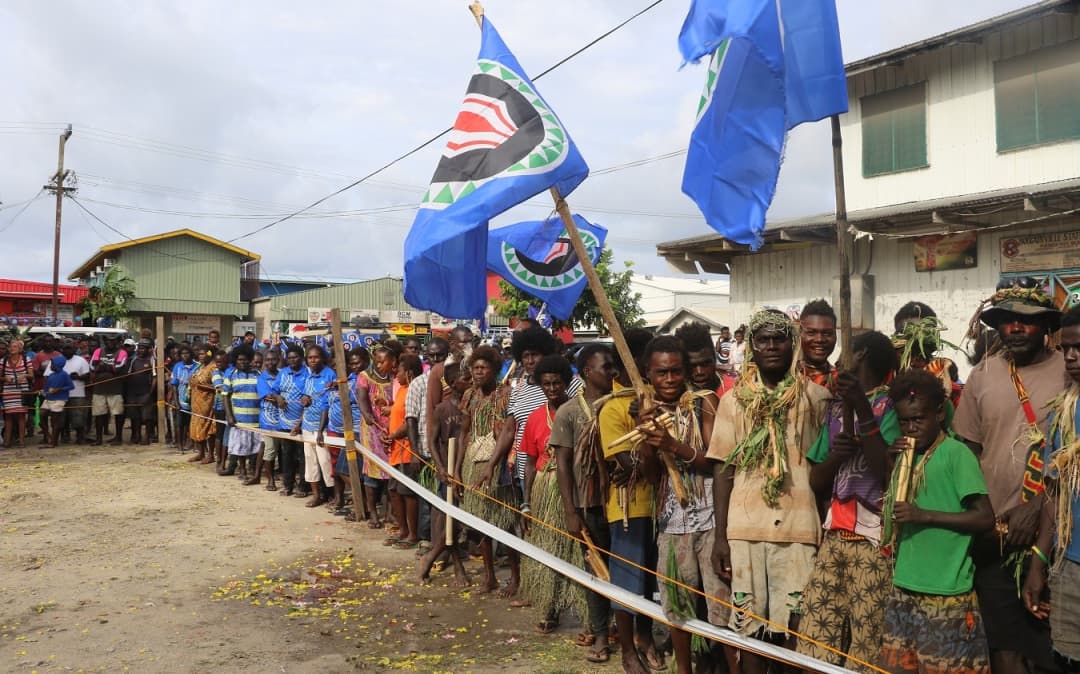
PAPUA New Guinea’s parliament has begun a landmark debate on how to respond to Bougainville’s 2019 independence referendum, which produced a 97.7 per cent vote for independence, as Prime Minister James Marape urged lawmakers to seek a peaceful, mutually acceptable outcome while protecting national unity.
“We have no choice but to deal with this issue,” Marape told parliament, describing the debate as a defining moment for Papua New Guinea and Bougainville.
He said the referendum result clearly expressed Bougainvilleans’ wishes and must be treated with seriousness and respect through the constitutional process.
The referendum, held from November 23 to December 7, 2019, offered a choice between independence and greater autonomy.
Marape said it was non-binding, and that the constitution provides for post-referendum consultations between the national government and the Autonomous Bougainville Government before parliament considers the matter.
“Section 342, Subsection 1, is a timeless bridge between the past and the future,” he said, referring to the constitutional provision as a basis for continued consultations towards an agreed outcome.
Marape said members would speak on the issue on Thursday and Friday, and Parliament would take it up again in November before a vote. The vote’s outcome will be formally sent to the Bougainville House of Representatives, he said.
He said lawmakers needed time to consider the historical, constitutional and national implications, and that he would wait to make his concluding contribution until members had spoken.
“Each of us must speak for Bougainville and for country. And we must find a win-win solution,” Marape said.
Bougainville’s political status is tied to the peace process that followed a conflict beginning in the late 1980s.
The 2001 Bougainville Peace Agreement established arrangements for autonomy, weapons disposal and a referendum on the region’s future political status.
Marape acknowledged the patience of Bougainville’s people and leaders following the crisis, which he said claimed thousands of lives and left lasting scars on communities.
“I want to firstly register my word of appreciation to our brothers and sisters in Bougainville for their patience, their tolerance and their understanding,” he said.
Marape cited the work of successive national and Bougainville leaders, including former prime minister Mekere Morauta, former Bougainville president John Momis and current president Ishmael Toroama. He also referred to consultations held in Kokopo, Wabag and elsewhere as efforts to strengthen dialogue and cooperation between the two governments.
The prime minister said parliament must weigh Bougainville’s aspiration for political independence against its responsibility to safeguard Papua New Guinea’s sovereignty and unity.
He said the country’s cultural, linguistic and geographical diversity made the decision especially consequential.
“My challenge as Papua New Guinea Prime Minister is to hold this diverse nation’s sovereignty together,” he said.
“This diversity makes us blend into a symphony of one nation, one people.”
Marape called for continued dialogue and patience, saying historical grievances or political differences should not undermine the peace achieved over many years.
“As we work through this, let’s ponder on some of this discussion and let’s find something that doesn’t hurt Bougainville’s aspiration for self-determination, but at the same time assists me and future Prime Ministers the ability to hold this diversity called Papua New Guinea together,” he said.
He urged parliament to approach the debate with understanding and prayer, saying the issue had profound implications for Bougainville, Papua New Guinea and future generations.


