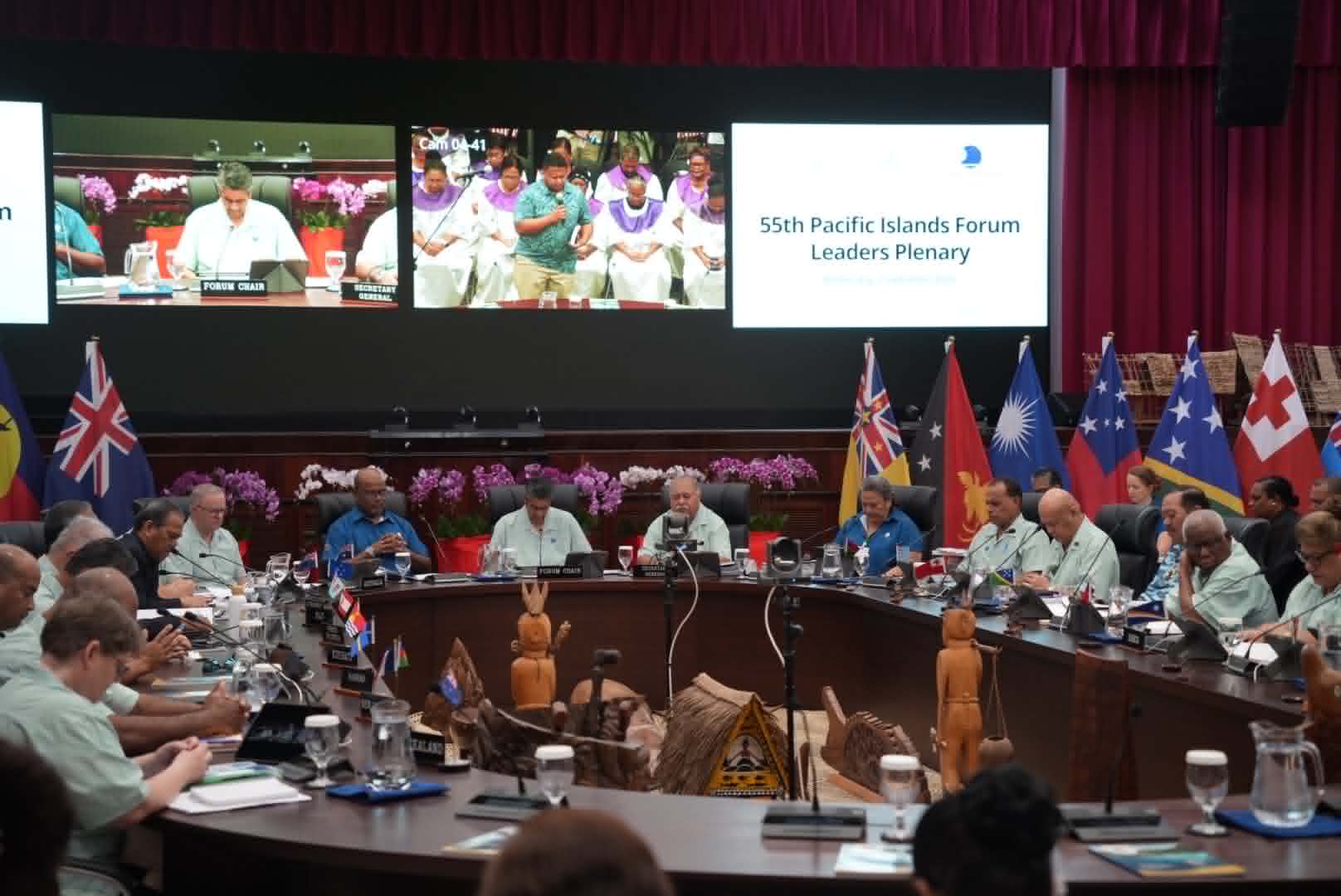
IN Koror, Palau, Pacific leaders have been urged to move beyond regional commitments and deliver practical outcomes as the 55th Pacific Islands Forum Leaders Plenary Meeting gets underway.
Opening the plenary, Forum Chair and President of Palau, Surangel Whipps Jr, said the region faces increasingly complex challenges that require stronger regional coordination, leadership and unity.
President Whipps said leaders had spent the previous day listening to the perspectives of the region’s wider family, including regional agencies, civil society, the private sector, associate members, observers and international partners.
“Those discussions provide an important context for our deliberation today,” he said.
“The responsibility now rests with us as leaders to provide the political direction.”
He said the Pacific was operating in a rapidly changing environment, with challenges becoming increasingly complex.
“But as a collective, there are opportunities to draw on our comparative advantages to find common solutions and ensure the strategic importance of our Pacific, and that it continues to grow,” President Whipps said.
He stressed that achieving this would require greater regional leadership, stronger coordination and, above all, unity of purpose.
“Our challenge now is one of delivery,” he said.
President Whipps said this challenge was reflected across the agenda before leaders, including political leadership and regionalism, peace and security, economic development, the well-being of Pacific people, climate change, oceans, technology and connectivity.
He called on leaders to use their deliberations to establish clear outcomes and provide strategic direction to the region’s agencies.
“I trust that through our deliberations today, we will be clear about the outcomes we see, the direction we give our regional agencies, and the advocacy that we want to support,” he said.
He also emphasised the importance of the Forum’s collective voice in advancing the Pacific’s priorities internationally.
Forum Secretary General Baron Waqa said the plenary agenda represented the culmination of work undertaken through the Forum’s regional processes over the past year.
He said the issues before leaders had progressed through sectoral ministerial meetings, the Forum Officials Committee, the Forum Foreign Ministers Meeting and the wider regional architecture.
“As we move through the agenda, leaders will also hear from our PROP heads on relevant items, drawing on the expertise of our regional agencies and their role in supporting the implementation of your decisions,” Waqa said.
He said some matters were before leaders for endorsement, while others required strategic guidance.
On other issues, he said, regional processes had reached their limits and political direction from leaders was now required.
“Some matters are before you for endorsement, others require strategic guidance, and on some issues, our regional processes have taken us as far as they can, and political direction is now required,” he said.
Waqa acknowledged that not all Forum members could attend the plenary because of pressing national commitments but said their views would be conveyed through their delegates.
He reaffirmed the Secretariat’s readiness, together with the Council of Regional Organisations of the Pacific (CROP) agencies, to support leaders and implement their decisions.
“There are many challenges that we face, but we are always assured by the commitment and unity of our region,” Waqa said.
“The Secretariat, together with our CROP agencies, stand ready to support that work and to give effect to your direction.” The plenary is expected to set political direction on key regional priorities and determine the outcomes and actions to be taken forward by Pacific regional agencies.