
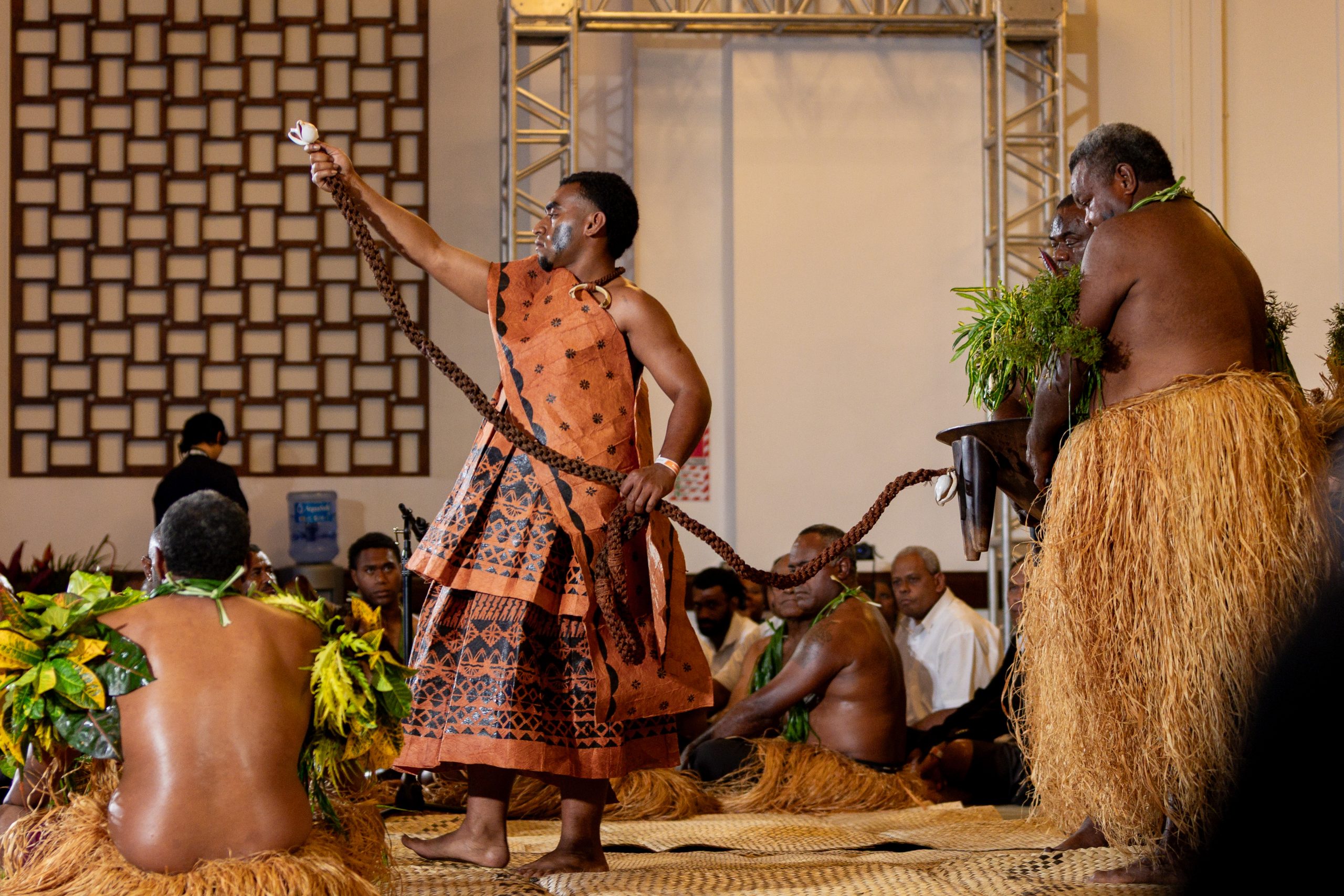
PACIFIC conservation efforts will fail to endure unless Indigenous communities help decide how ocean projects are designed, governed and funded, Dr Winifereti Nainoca said, warning that outside proposals can miss local priorities and leave communities with projects they did not ask for.
“Do not come with a proposal already done,” said Nainoca, a Fijian conservation specialist, urging organisations to consult communities and capture their needs before projects begin.
She described seeing machines supplied to a community that wanted improved boreholes instead.
Nainoca urged funders to “co-design, co-implement, co-end, and then you leave,” saying local communities would carry on when a project made sense to them. She also warned against tokenistic engagement.
Justin Mohamed, Australia’s inaugural Ambassador for First Nations People, said Indigenous partnership and leadership should guide the Pacific’s ocean and climate work.
He said customary authority and Indigenous knowledge must be recognised and Indigenous peoples and local communities empowered as partners in design, governance and delivery.
Mohamed cited Australia’s Indigenous Ranger Programme as an example of Indigenous-led conservation, saying traditional owners govern and manage sea-country protected areas.
He said 19 such areas protect more than 9.3 million hectares of Australia’s marine and coastal environments.
In Fiji, traditional and community leadership is also tied to restoration and livelihoods. A traditional leader described planting 20 hectares of mangroves across four villages and restoring 26 hectares of forest, while identifying a need for revenue streams for community forest-carbon projects.
Alumita Talei Sekinairai, a University of the South Pacific PhD student, presented a draft framework linking traditional and international ocean governance.
She said Pacific Ocean governance begins with relationships among people, ancestors, the Vanua and the ocean, and proposed bringing customary authority, traditional ecological knowledge, community participation, science, finance and technology together.
Acting British High Commissioner to Fiji Steph Lysaght called for plain language about climate risks, saying “resilience” can obscure consequences such as lost homes, livelihoods and lives.
He said listening to communities was essential to understanding what needed to be done.


