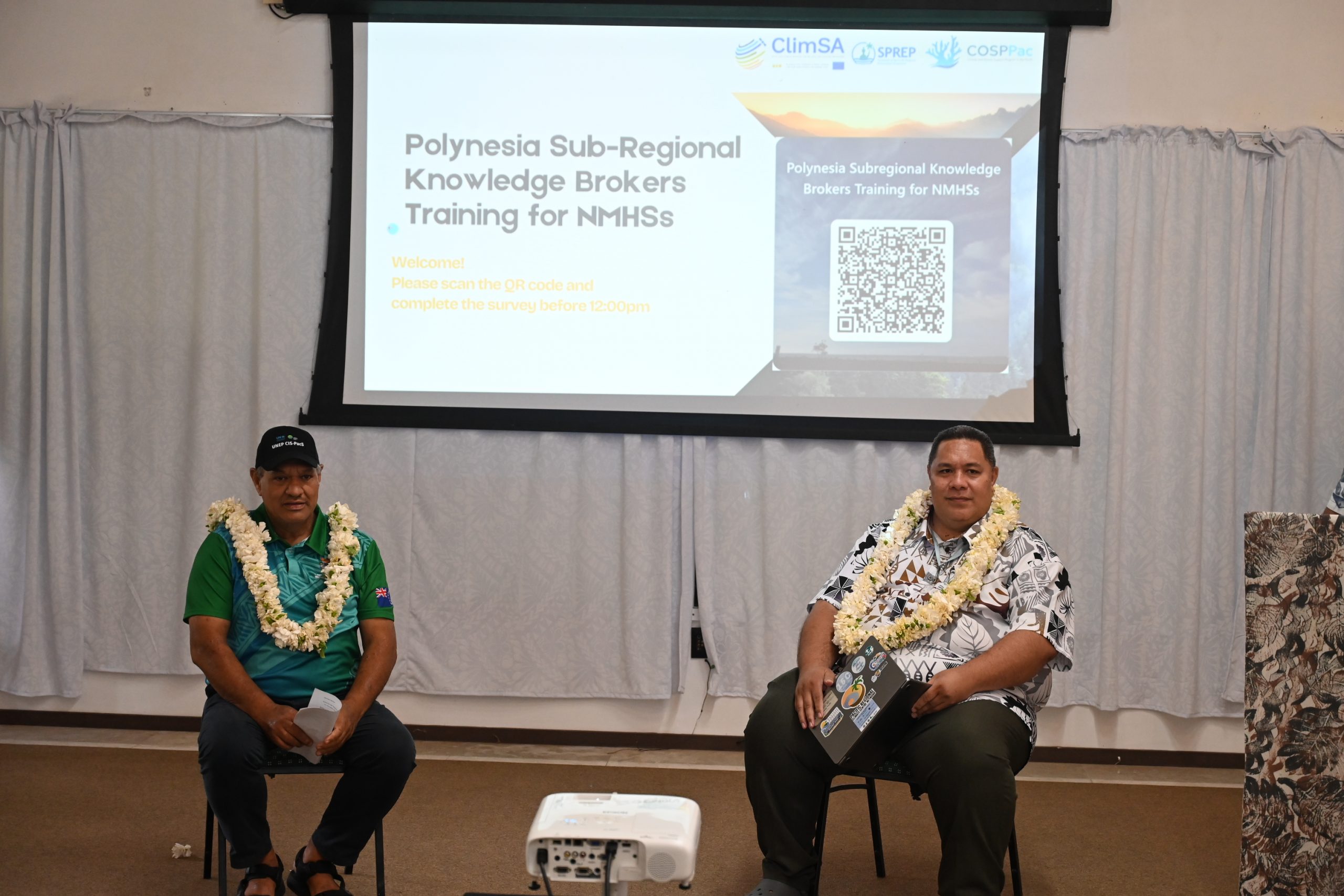
METEOROLOGICAL services and media representatives from Fiji, the Cook Islands, Tuvalu and Tonga are meeting in Rarotonga for five days of training to improve how climate information reaches communities and supports decisions across the Pacific.
The Polynesian Sub Regional Knowledge Brokers in Climate Services Training brings together national meteorological and hydrological services, regional and national media, development partners and invited colleagues.
Its central challenge, speakers said, is turning accurate, timely forecasts and climate information into knowledge people can use.
“Accurate and timely climate information is essential, but the true value of this information lies in how effectively it is communicated and used,” said Sunny Seuseu, climate prediction services coordinator at the Secretariat of the Pacific Regional Environment Programme (SPREP).
Pacific island nations face growing challenges from climate variability, tropical cyclones, droughts, marine heatwaves and other extreme weather events, Seuseu said.
He urged participants to strengthen links between meteorological services and the people and sectors that rely on climate information.
“As media or professionals, we are not only providers of data and forecasts; we are bridges between science and the community, governments, and sectors that rely on this information to make informed decisions,” he said.
The training is intended to help participants share experiences, challenge ideas and build partnerships, with lessons carried back to their services and applied across Polynesia and the wider Pacific.
Seuseu said stronger climate services and early warning systems could help make the region safer and more resilient.
“Every warning issued, every climate outlook shared and every relationship built with our stakeholders has the potential to protect lives, support livelihoods, and strengthen the resilience of our communities,” he said.
Maara Vaiimene, director of the Cook Islands Meteorological Service, welcomed participants on behalf of the service and the Cook Islands government.
He thanked SPREP, the European Union, facilitators, organisers and participants for their commitment and partnership.
“The knowledge gained here should not remain within this room,” Vaiimene said.
“It should be taken home, applied in our services, and translated into real benefits for the people we serve across Polynesia and the Pacific.”
Vaiimene officially opened the training, calling for work as “one Pacific family” to ensure no community is left behind as the climate changes.