
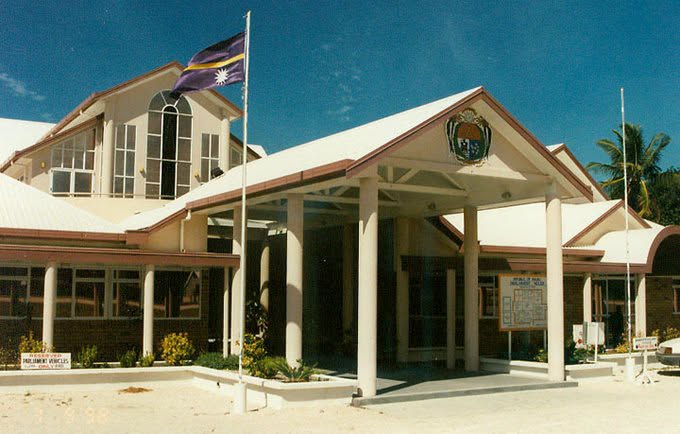
NAOERO has become a parliament without a formal opposition after all 19 members of parliament joined President David Adeang’s administration to form what the government describes as a “united government”.
The Micronesian nation announced the development on Tuesday, describing it as a historic moment and the first time since independence in 1968 that all MPs have come together to support one government.
Adeang said the move represented unity, stability and a shared commitment to the country’s future.
“Today, we stand together as one government, united in purpose and committed to serving the people of Naoero,” he said.
Naoero, formerly known as Nauru, has a population of about 12,000 and does not operate under a formal political party system. MPs contest elections as independents across eight multi-member constituencies and serve four-year terms.
The previous two parliaments, elected in 2019 and 2022, each had six opposition MPs.
Adeang, 56, was re-elected unopposed as president in October 2025 during the formation of the 25th Parliament. With all 19 MPs now supporting his administration, he is expected to govern without a formal parliamentary opposition until the next general election, scheduled for 2029.
As part of the government’s latest changes, two new Deputy Ministers have also been appointed, with their portfolio responsibilities announced during a ceremony attended by Adeang, Vice President Lionel Aingimea, Cabinet Ministers and government officials.
Deputy Minister Pyon Deiye has been assigned responsibility for the Naoero Police Force, Justice and Border Control portfolios.
Deputy Minister Jason Bingham Agir will oversee Eigigu Holdings Corporation and the Ministry for Sport.
Aingimea said the appointments represented another important step in strengthening the Government Caucus and Cabinet.
The President said his administration remained committed to exploring new opportunities and making decisions that would strengthen the country’s future.
“Our future decisions must continue to strengthen essential services, protect our national resources and create a sustainable future that does not leave the next generation carrying the burdens of today,” he said.
The political development follows other significant changes under Adeang’s administration, including the country’s decision earlier this year to adopt Naoero as its official name, replacing Nauru.
Adeang formally introduced the name to world leaders at the United Nations General Assembly in September, describing it as a reflection of the nation’s ancestral heritage, language and identity.
He said the traditional name carried the memory of Naoero’s ancestors and expressed national pride and patriotism.

