
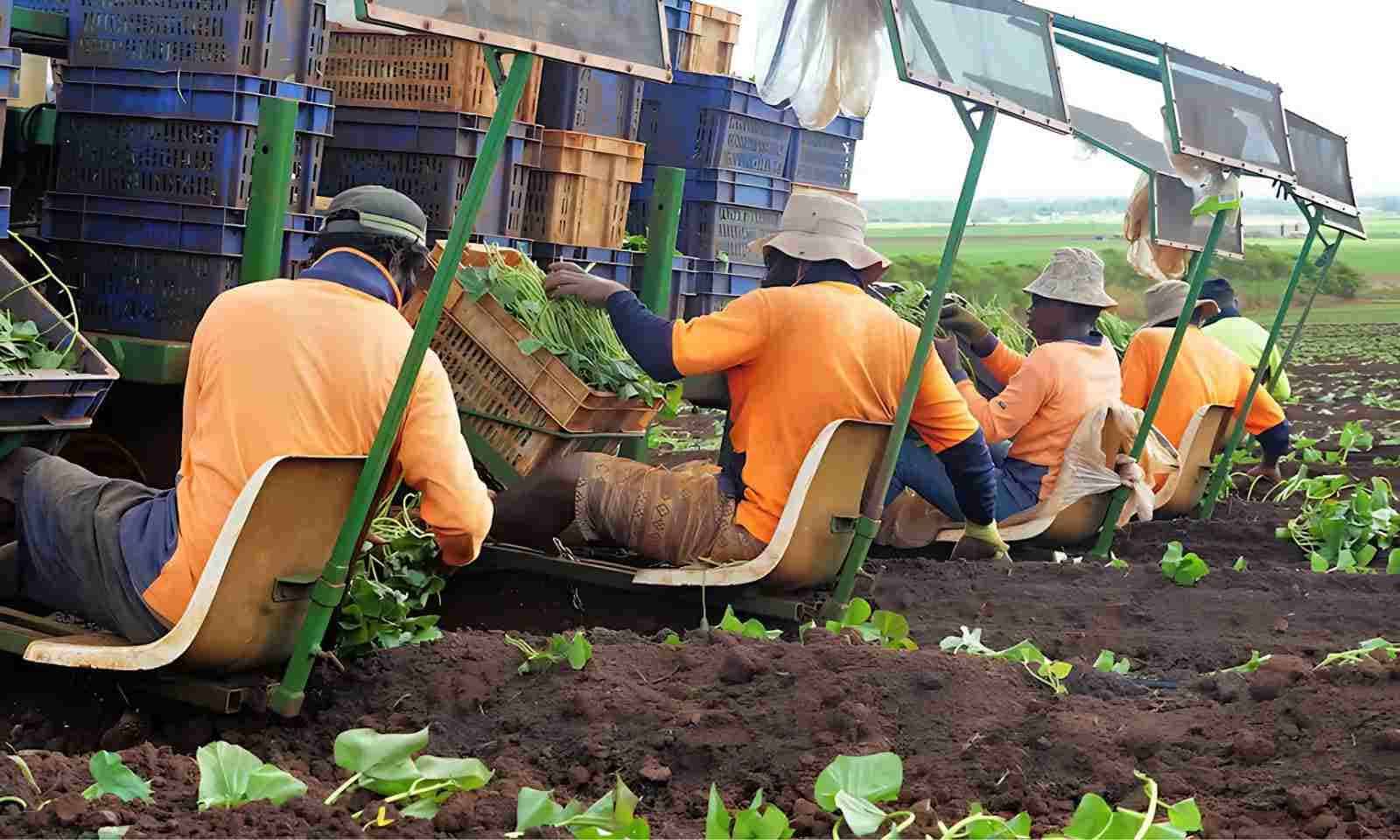
THE Pacific Australia Labour Mobility (PALM) Scheme generates substantial economic value primarily within Australia, with only a fraction of benefits reaching Pacific Island nations.
The scheme contributed approximately $AUD806 million to Australia’s economy over four years, while only about $AUD184 million was sent back to Pacific Island countries and Timor-Leste.
This means for every dollar remitted to the Pacific, Australia retains about four and a half dollars in value.
The new Australia Institute podcast shows why an amnesty is needed to address the estimated 7,000 cases of people who have “disengaged” from the Pacific Australia Labour Mobility scheme.
Speaking on the podcast, senior lecturer in Sociology at the Australian National University, Dr Matt Withers, explained that this value includes $AUD289 million in direct profits for employers and $AUD154 million in taxable contributions during the same period.
“The economic gain supports local industries and communities in Australia, highlighting the scheme’s domestic importance,’’ Withers said.
“The disproportionate distribution raises questions about the fairness and balance of benefits between Australia and the Pacific.”
Pacific workers’ earnings and remittances lead to visible improvements in their home communities, such as increased construction and small business development in Vanuatu.
Former worker John from Vanuatu noted that many half-built houses in villages are owned by current PALM workers abroad.
Enoch, a PALM participant, started a bungalow business using his Australian earnings, which now reduces local fishing pressure.
These remittances support local economies and help preserve natural resources, showing positive community impact.
However, the economic benefits to the Pacific remain limited compared to the gains retained in Australia.
Worker Exploitation and Vulnerabilities
The PALM Scheme creates conditions that expose workers to exploitation and modern slavery risks due to visa restrictions and poor protections.
PALM workers are tied to a single employer, and losing that job means they must leave Australia, creating dependency and vulnerability to exploitation.
Thomas Costa from Unions NSW highlighted that this visa restriction traps workers in precarious labour conditions.
“The inability to change employers fosters exploitation, including underpayment and poor working conditions.
“This structure mirrors exploitative guest worker programs globally, increasing risks of forced labour and debt bondage.
“The single-employer visa rule is a key driver of worker abuse and needs urgent reconsideration,” he said.
The New South Wales Anti-Slavery Commissioner, Dr James Cockayne, linked the PALM Scheme to indicators of forced labour, deceptive recruiting, and possible sexual servitude.
His 2024 report flagged PALM visas as a modern slavery risk under both Commonwealth and state laws.
“The scheme’s focus on short-term labour inputs ignores workers’ human rights and long-term well-being, and the lack of access to unions, social protections, or pathways to citizenship intensifies workers’ precarity.”
These findings underscore the urgent need for legal and policy reforms to protect migrant workers.
Social and Community Consequences in the Pacific
While the PALM Scheme brings income, it disrupts village life and community cohesion in Pacific Island nations.
Large numbers of working-age people leave villages for Australia, causing labour shortages and reduced community participation.
The shift alters village economies and ways of life, creating long-term social challenges, and the loss of young workers affects both cultural continuity and local development.
Imelda Davis, an Australian South Sea Islander advocate, stressed the historical parallels between past exploitation (blackbirding) and current PALM conditions.
She connected her grandfather’s forced labour history to today’s migrant worker struggles.
“These legacy fuels ongoing activism demanding better treatment and recognition for Pacific workers, and the historical context adds moral urgency to addressing current abuses in the PALM Scheme.
“It highlights how Australia’s labour migration policies impact Indigenous and Pacific communities alike.”
Worker Living Conditions and Financial Pressures
PALM workers often face poor living conditions and excessive deductions from wages that reduce their net income.
Many workers live in substandard accommodations, like overcrowded caravans with safety hazards, while paying inflated rents.
Imelda Davis recounted that workers lived with snake infestations and rust while being paid top dollar.
“Transport costs to work sites consume up to $190 per week, significantly cutting take-home pay.
“These financial burdens exacerbate economic hardship despite earning Australian wages, and overcharging and unsafe housing worsen workers’ quality of life and increase vulnerability.
Workers frequently endure long hours for low pay, sometimes leaving with as little as $80–90 per week after deductions.
The financial strain undermines the scheme’s intended economic benefits for participants, and this mismatch between effort and reward fuels disillusionment and attrition among workers.
Policy and Oversight Perspectives
Government and expert voices call for a more humane and regulated approach to the PALM Scheme to protect workers and balance benefits.
Vanuatu Labour Commissioner Muriel Meltonoven emphasised workers must be treated as human beings, not commodities.
She acknowledged that workers sustain Australian farmers but deserve care and protection in return.
“This reflects a shift from purely economic to ethical considerations in labour policy.
Meltonoven’s stance supports calls for stronger oversight and better workers’ rights, signalling growing pressure from Pacific governments for reforms to the scheme.
The Australia Institute’s Postdoctoral Research Manager, Dr Morgan Harrington, whose research and interviews are highlighted on this podcast, highlights the need to rethink visa inflexibility and to improve workers’ rights and living conditions.
He found widespread exploitation concerns, including underpayment and abuse.
The scheme’s current design risks damaging Australia’s reputation in the Pacific region.
His findings support advocacy for policy changes to reduce exploitation and enhance fairness.