
LAND availability remains a critical challenge to the Pacific’s humanitarian disaster response effort.
Only seven of 14 countries involved in the response have confirmed they have land available.
Under the Pacific Humanitarian Pathway (PHWP) program, warehouses should be built in 14 countries to allow timely and efficient responses during humanitarian disasters using pre-positioned supplies.
The warehouses will be critical because they reduce the response time in countries which must often wait for weeks for drugs, food, and emergency shelter to be flown in from donor nations.
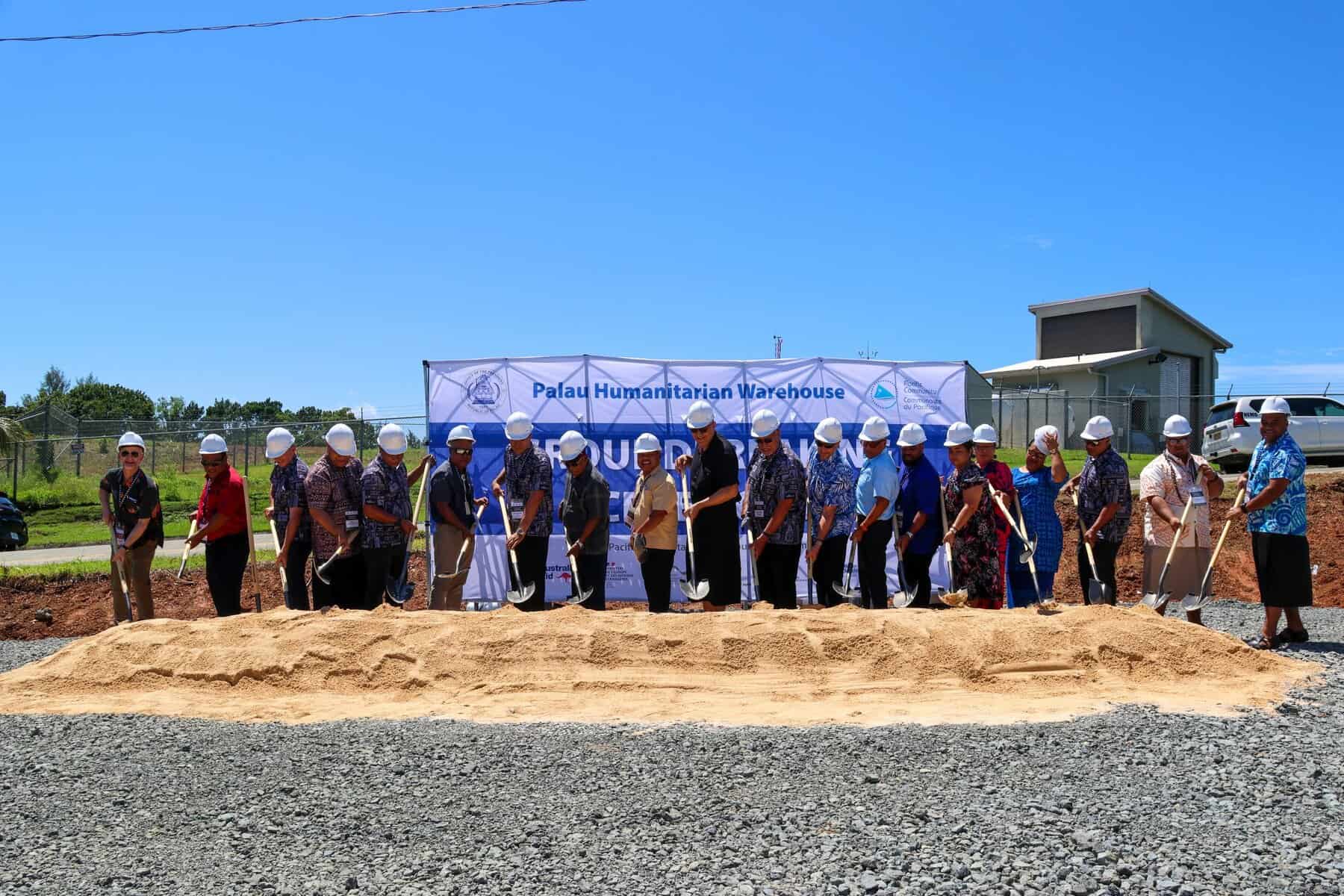
This month, the construction phase of Palau’s national Humanitarian Pathway marked a key step in regional disaster response readiness.
The Palau government’s commitment to provide land for the humanitarian warehouse cleared the major hurdle in infrastructure setup, making Palau the second country to begin construction under the Pacific Humanitarian Pathway (PHWP) program.
“This progress reflects the program’s start in 2022 and demonstrates steady advancement in physical readiness for disaster response,” said Dr Paula Vivili, Director-General of the Pacific Community.
“The warehouse will serve as a regional logistics hub to improve emergency supply delivery across Pacific nations.
PHWP’s collaborative model integrates multiple partners across UN agencies, regional organisations, and civil society to support the program’s success jointly.
He said this partnership approach addressed previous fragmentation in disaster risk management.
“It enables resource sharing and streamlined coordination in warehouse operations and supply chain management,’’ Vivili said.
“The integration supports the aim of faster, more efficient humanitarian responses in the Pacific region.
“The program plans to replicate Palau’s warehouse commissioning in other countries as construction milestones are reached.”
The PHWP initiative embodies a strategic shift toward integrated, multi-stakeholder DRM infrastructure in the Pacific and bringing together state leaders, ministers, humanitarian partners, and traditional authorities highlights the program’s broad political and social backing.
This inclusive approach strengthens commitment and accountability across governance levels.
The strategy reflects lessons learned from prior fragmented responses and aims to build resilient regional systems.
Palau’s advancement serves as a benchmark for other nations, encouraging collective action in disaster management efforts.