 2024 – 2026
 2020 – 2023
 2017 – 2019
 Catalogue
IT’S a long way from Funafuti to Havana, but the Pacific island state of Tuvalu has joined other developing countries to support Cuba, as the Caribbean nation suffers under an expanding US blockade.
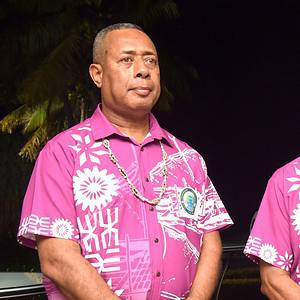
Standing before the UN General Assembly in September, Tuvalu Prime Minister Feleti Teo said his nation “remains troubled by the long standing unilateral economic measures imposed on Cuba.”
“These restrictions continue to inflict hardship on the Cuban people, contravene the human-rights commitments of the United Nations, and run counter to the cooperative spirit of the 2030 Agenda for Sustainable Development,” Teo said.
“The continuation of those economic sanctions deprives Cuba of essential development partnerships and support needed for recovery and future progress, and we call for the lifting of those sanctions.”
Teo’s call was echoed by other Pacific leaders addressing the UN’s annual opening session.
President David Adeang of Naoero, formerly Nauru, said that “a friend I speak for today has been waiting for justice….For thirty-three consecutive years, this Assembly has called for an end to the embargo against Cuba. Naoero reiterates that call, and we encourage dialogue grounded in full respect for sovereignty.”
Ambassador Odo Tevi, Vanuatu’s Permanent Representative to the United Nations, stressed that “the imposition of coercive economic measures, including unilateral sanctions, against developing countries is unfair and unjust….In this respect, we consistently call for the uplift of the economic embargo on the Republic of Cuba.”
This show of solidarity reflects the growing ties between the Pacific and a socialist nation once scorned as a Russian proxy in the islands.
Today, Cuba trains hundreds of Pacific medical students, sends medical workers around the region and collaborates with Pacific nations as a member of Alliance of Small Island States, AOSIS, and the UN Special Committee on Decolonisation.
Today, however, Havana’s call for South-South solidarity is escalating, as Cuba faces an energy and humanitarian crisis under new sanctions and a fuel blockade imposed by US President Donald Trump.
November’s US mid-term elections saw a massive rebuke to President Trump’s domestic and international agenda.
Voters hit by the economic impacts of the war in Iran were angered by the breach of his campaign promise to end “forever wars”, turning away from the Republican party in droves.
But despite the dominance of the Democrats in the US Congress, Trump continues to muse about foreign interventions during his two remaining years in office.
“I wanna get Cuba done before I leave,” Trump said on 12 November.
“Frankly, I’d love to be able to do it for the people, for the Cubans that came and were treated really badly, and they came to America.”
The current US Secretary of State, Marco Rubio, is also fixated on toppling the Cuban government.
The Florida politician is the son of Cuban exiles (despite his claim they fled Fidel Castro’s 1959 revolution, they left the country in 1956, as economic migrants under the Batista dictatorship). Rubio has long promoted hawkish policies against Cuba, seeking to overthrow the government in Havana.
Now, with support from President Trump, Rubio may finally be unleashed to act.
“We have a very good, talented guy for Cuba named Marco,” Trump said.
“Because Marco Rubio, his parents are from Cuba, as you probably know, and he would love to do that.”
When he was first elected in 2016, Trump placed Cuba on the US list of state sponsors of terrorism.
Since his re-election in 2024, he has reiterated criticism of Cuba’s human rights record and placed renewed emphasis on security in the Western hemisphere.
Under the Trump administration’s 2025 National Security Statement, the US government has proclaimed “we will deny non-Hemispheric competitors the ability to position forces or other threatening capabilities, or to own or control strategically vital assets, in our hemisphere.”
The president has trumpeted his so-called “Donroe Doctrine,” echoing the 1823 declaration by US President James Monroe that the Western Hemisphere was off-limits to European interference.
Monroe argued that any actions in Latin America by European powers would be viewed as a hostile threat to American security. Fast forward a century and the policy is now directed against China.
The challenge to US power is local, not external. Since 2024, electoral victories by progressive candidates in Mexico, Uruguay and now Brazil have challenged Trump’s vision of US hegemony.
In response, the Trump administration has ramped up pressure on Left-wing governments in Venezuela and Cuba, seen as the source of “ideological infection” in Central and Latin America.
Last January, President Trump launched Operation Absolute Resolve, a military assault on Caracas to seize Venezuelan President Nicolás Maduro.
He then imposed an oil blockade on Cuba, damaging the island’s electrical grid and triggering a humanitarian crisis.
Trump also signed an executive order declaring Cuba an “unusual and extraordinary threat” to the United States and banned all oil exports to Cuba from Venezuela.
The United States has also reinforced longstanding extra-territorial measures against companies that trade or invest in Cuba, introducing secondary sanctions against companies, banks and suppliers that operate in Cuba, backed by the threat of extra tariffs on any country that supplies Cuba with fuel.
In May, Trump raised the possibility of US military intervention in Cuba, and last month Secretary of State Marco Rubio called on people who “seek to create positive change in Cuba” to “seize this opportunity to create the change you desire through a discrete [sic] partnership with the CIA.”
As the Cuban government braces for more economic sanctions, and even possible military action, they are trying to manage the humanitarian crisis caused by fuel and food shortages.
In a report to the United Nations last July, UN Special Rapporteur on unilateral coercive measures Alena Douhan noted that “the overarching unilateral coercive measures imposed on Cubans and the overcompliance by various actors have a devastating effect on the entire population, especially persons living in poverty, women, children, older persons, persons with disabilities and persons with chronic diseases.”
Speaking at the UN General Assembly in September, Cuba’s Foreign Minister Bruno Rodríguez Parrilla claimed that infant mortality has doubled under the US blockade, and “70 per cent of the Essential Medicines List is lacking.
Around 100,000 persons of them more than 12,000 children, are awaiting surgery.”
Last month, the United Nations General Assembly considered its annual resolution calling for an end to the 64-year-old economic restrictions imposed on Cuba by the United States. The resolution passed, with 130 in favour, 17 against and 25 abstentions.
In a worrying sign for the government in Havana, however, the vote showed a decline in support compared with similar resolutions in recent years. In 2024, the vote was 187–2 with only the United States and Israel opposed.
Last year, the vote was 165 in favour with seven opposing.
The United States has been pressuring Caribbean and Latin American states to break ties with Cuba.
Last month, US Ambassador to the United Nations Mike Waltz condemned corruption and political repression in Havana, stating “History is watching. Vote no on this resolution. Stand with the Cuban people.”
As US and Cuban diplomats shoved each other and shouted insults on the floor of the General Assembly, Cuba’s UN Ambassador Ernesto Soberón Guzmán launched a scathing attack on his US counterpart.
“Mr. Waltz, since you have taken to acting like an inquisitive little elephant, I must ask: why is Cuba unable to import fuel freely, as any other nation can?” Soberón asked.
“Why are threats of tariffs, as well as secondary and extraterritorial sanctions, levelled against anyone who dares to engage in commercial activity with our country? You must finally come to understand, you imperialists, that Cuba is neither a colonial possession of the United States nor a defeated enemy.”
In response to the US blockade, Cuba is looking for greater support from other nations, including Small Island Developing States, or SIDS, in the Pacific. Today, SIDS make up 20 per cent of the UN membership and Cuba has strengthened ties to the Pacific through the Alliance of Small Island States, AOSIS.
Over recent decades, the Cuban government has worked with Pacific nations like Fiji around the loss of trade subsidies for the export of sugar and campaigned together for development and climate funding at the annual COP climate negotiations.
In 2013, at the Pacific Islands Forum in the Republic of Marshall Islands, Forum leaders agreed to grant Cuba the status of “dialogue partner”, alongside major powers like the United States, China, France and Japan (ironically, an application for partnership status from Spain, Cuba’s former colonial power, was deferred that year, due to anger over Spain’s role in aggressive EU fishing operations in Pacific waters).
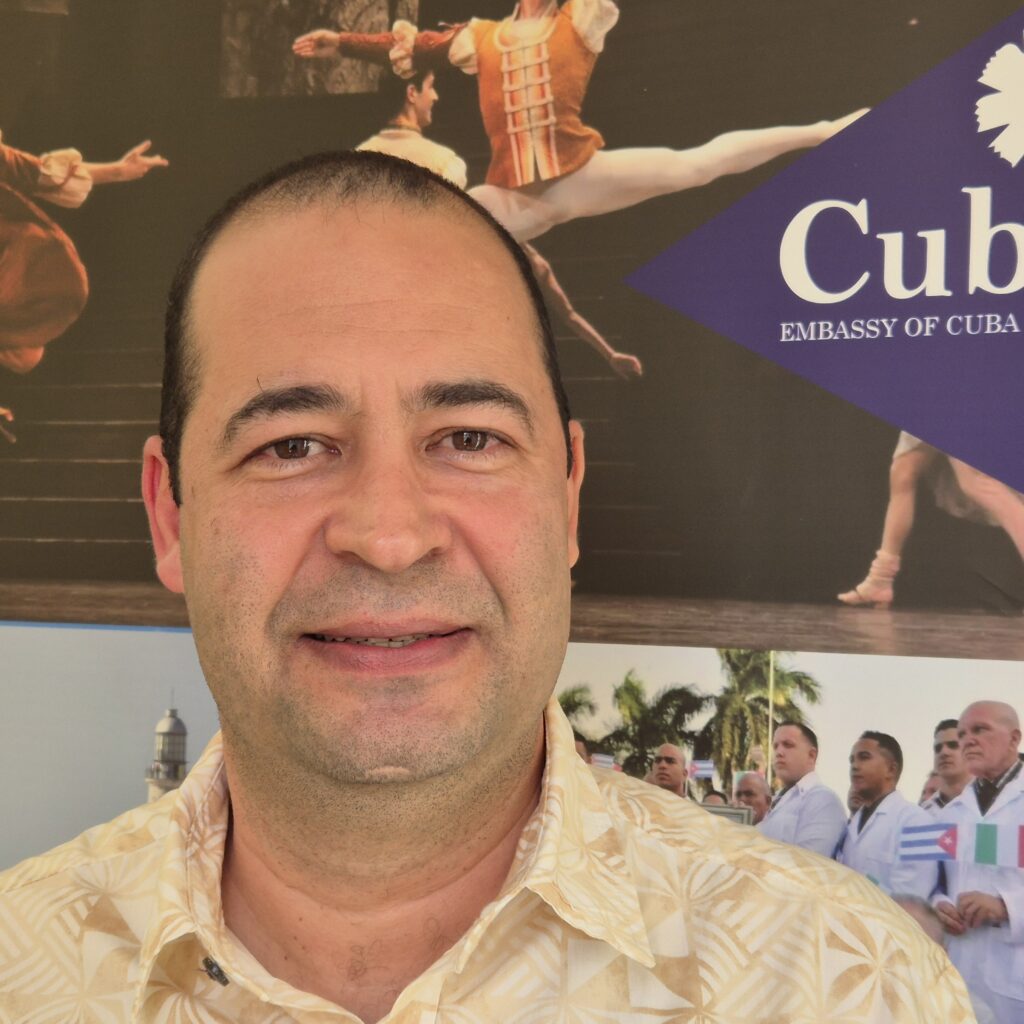
The following year at the Forum in Palau, María del Carmen Herrera Caseiro – Cuba’s non-resident Ambassador to the Pacific Islands – presented her credentials. In 2017, Cuba established an embassy in Suva, Fiji, currently headed by Ambassador Néstor Torres Olivera.
In an interview, Ambassador Torres said that “as a small island with limited resources, we must join forces with similar countries that face similar challenges like climate change.
We must also act on what is happening now in the world, in the Middle East, which also affects the small countries.”
“Cuba has a very strong relation with the Pacific Islands, and the core of this relationship is the health,” he said.
“We’re very proud that we have graduated in Cuba over 240 students from the Pacific Islands, and they are serving now in their countries, working very hard in their communities, in those poor areas.”
The Escuela Latinoamericana de Medicina, or ELAM, is an international public medical university in Havana, training doctors and medical officers with a focus on primary and preventative health.
Along with students from developing countries in Africa, the Middle East and Latin America, 245 Pacific students have now graduated: Solomon Islands (104 students), Kiribati (33), Fiji (33), Tuvalu (22) Vanuatu (21), Tonga (14), Palau (13), Naoero (4) and Cook Islands (1).
Timor-Leste has relied on Cuban training for its health sector, sending nearly 1,000 students to ELAM.
Despite the complex economic crisis facing Cuba under the current US blockade, the annual offer of medical scholarships for young Pacific Islanders remains in place.
“This year, we offered 12 new scholarships for medical students in Cuba” Ambassador Torres explained. “Our scholarships are for poor people who want to become a doctor, and we give them that chance to go to Cuba to pursue that dream. While our main focus in the Pacific Islands is South-South cooperation, specifically in the health system, we also try to promote and market products from the Cuban biotechnology.”
Since the opening of the embassy in Suva, Torres has held discussions with Forum Island health officials to promote Cuban-developed drugs like Neuralcim (a medication that can slow down the progression of Alzheimer disease) or Heberprot-P (an injection that accelerates deep tissue healing to treat severe diabetic foot ulcers and prevent amputations).
Ambassador Torres said the embassy in Suva was also holding talks with Fiji Sugar Corporation on potential collaboration in scientific research, exchange of technical knowledge, and the utilisation of sugarcane byproducts. Another sector for collaboration is high-performance sports coaching, in areas of common competitive strength like weightlifting and boxing.
This collaboration, however, is hampered by the current fuel crisis in Cuba, and the looming threat of intervention from the United States.
“For the last seven months, there has not entered one single oil tanker to the country, can you imagine that?” Torres said. “The island has black outs that last for over 40, 50 hours. The hospitals are not running in the full capacity. There are thousands of people waiting for surgery, because not all the hospitals have a generator. Food production is another big issue in the country, because of lack of transportation to the factories.”
“The situation is very tough,” he said. “They are looking to suffocate the Cuban people, squeezing our economy to push the people to go to the street, to irritate the people because of the economic situation on the island, and maybe also to provoke a civil war, an internal civil war.”
The US mid-term elections saw a stunning rebuff to President Trump and the MAGA movement. But with two years remaining in office, Trump still retains control of most foreign affairs powers. Launching the war on Iran, he was willing to ignore the US Congress and its constitutional role endorsing new military operations. So Cuba remains in the firing line, and is looking to other SIDS to take up the call for an end to blockade and sanctions.