
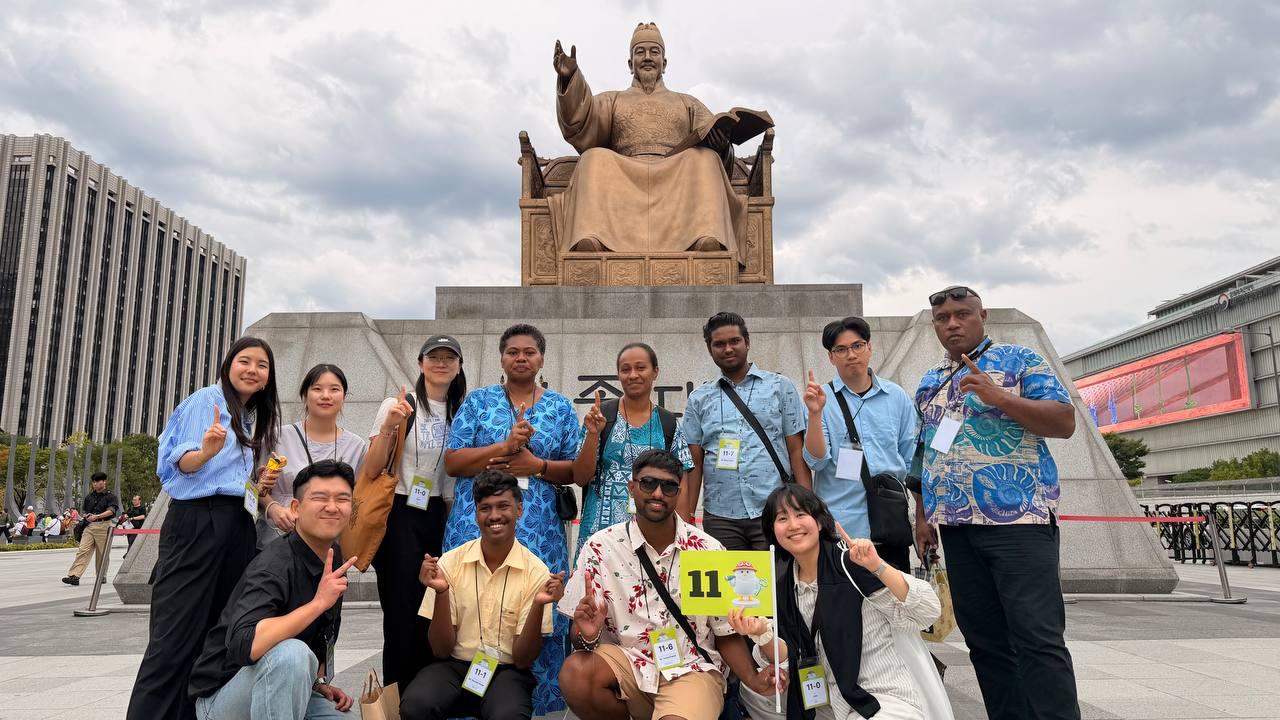
A FIJIAN youth leader is calling for young people to take a leading role in building peace after joining youth representatives from 43 countries at an international programme in Seoul, South Korea.
National Youth Council of Fiji chairwoman Laisani Sepo was among participants at the International Youth Peace Program, held from September 17 to 19, which challenged young people to turn lessons from war, culture and faith into practical peacebuilding initiatives in their communities.
Organised by Heavenly Culture, World Peace, Restoration of Light (HWPL), the programme brought together 100 young people under the theme “We, the Living Legacy of Peace”.
For Sepo, the experience offered a closer look at the human cost of conflict and the responsibility of young people to prevent future violence.
During a visit to the War Memorial of Korea, delegates explored exhibitions on the Korean War, the role of the United Nations and the experiences of those affected by conflict.
“The young ones were trying to protect their areas and willing to give up their lives even though they saw the risk, the death in front of them,” Sepo said.
“It takes strong willpower to keep moving forward despite the challenges and criticism we may face in building peace.”
The programme was structured around three stages — Discover, Learn and Act — encouraging participants to reflect on the consequences of conflict, understand different cultural and religious perspectives, and develop practical plans for their communities.
Visits to Insadong, Gwanghwamun and Gyeongbokgung Palace exposed participants to South Korea’s cultural heritage and prompted discussions on inheritance, respect, responsibility, change and harmony.
Delegates also took part in a roundtable discussion on the role of young people in promoting peace and preventing religious and ethnic differences from being used to justify violence.
They examined peace-related teachings from Buddhism, Confucianism, Christianity, Islam and Hinduism, before developing regional strategies and individual action plans for next year.
The discussions reinforced the message that young people must be recognised as active contributors to peacebuilding rather than leaders whose responsibilities begin only in the future.
Andrew Junior Mwima, chief executive of the Mental Health and Anti-Drug Abuse Organisation, said young people who were often drawn into armed conflicts should also be at the forefront of efforts to prevent them.
“Youths are not the future leaders. We are the leaders of today,” Mwima said.
HWPL secretary-general Kang Tae-ho said the programme aimed to ensure participants translated their experiences into action when they returned to their respective countries.
“Peace is not a legacy we inherit, but a legacy we must pass on to future generations forever,” he said.
“I hope participants will take the answers they found in Korea and turn them into action in their own countries.”
HWPL is a non-governmental organisation with special consultative status at the United Nations Economic and Social Council.
For Fiji, Sepo’s participation brought a Pacific youth perspective to an international discussion on peace, leadership, and the next generation’s responsibility to build more peaceful communities.


