
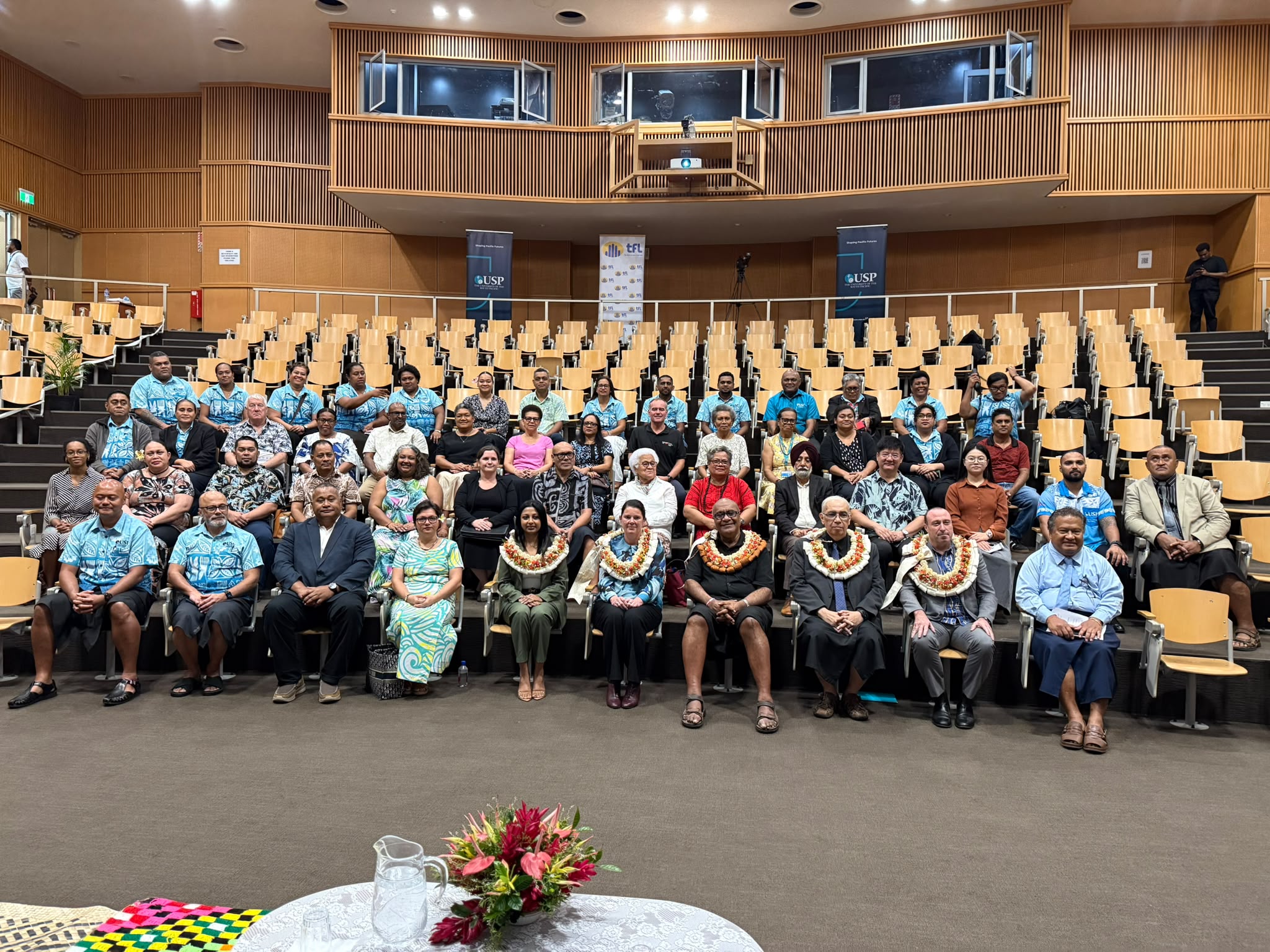
FIJI has opened a new digital skills hub at the University of the South Pacific, aiming to train workers in artificial intelligence, networking and cybersecurity as the government seeks to position the country as a digital hub for the wider Pacific.
The facility, a partnership between Cisco, USP and Telecom Fiji, will connect to learning sites in Samoa and Vanuatu, extending its reach beyond the university campus.
Cisco country manager Jessica McFadden said the hub would give students and the wider community hands-on experience with network infrastructure, automated threat detection and collaboration technology.
“It is a bridge between academic potential and real-world opportunity,” McFadden said, adding that the Cisco Network Academy had supported more than 9,500 students in Fiji since its inception.
She said the facility would provide a pathway to industry-recognised certifications and workforce skills.
The opening comes as Fiji faces a gap between expanding digital connectivity and the skills needed to use and protect it.
Deputy Prime Minister Manoa Kamikamica said digital literacy stood at 48 per cent, while more than 85 per cent of Fijians used the internet. He said the government aimed to extend 5G coverage to half the population by 2030.
Kamikamica said cybersecurity risks, including ransomware, data theft, phishing, scams and business email fraud, were rising across the Pacific, with criminals using artificial intelligence to produce deepfakes and disinformation.
He said Fiji had strengths in its cybercrime legal framework but still faced gaps in awareness, standards and skills.
Fiji’s national strategy.
Kamikamica described the hub as part of Fiji’s national digital and security plans, not simply a new campus facility. He said the government’s strategies ultimately raised the same question: “Do we have the people?”
He said Fiji had established a 24-hour government security operations centre and committed to a regional cybersecurity centre of excellence, while the country competed with overseas employers for skilled workers. “If we do not grow our own, we will not keep it,” he said.
The hub will focus on artificial intelligence, networking and cybersecurity. Kamikamica said the government was working toward 1,000 kilometres of domestic fibre, wider 5G coverage and satellite services for remote areas, requiring engineers across the islands.
He also tied digital skills to jobs and investment. Fiji’s business process outsourcing sector employed more than 8,000 people, he said, while the government’s strategy set an ambition of 40,000 digital-economy jobs and more than $100 million in U.S. dollar investment.
Kamikamica urged the hub’s leadership to reach students from rural, outer-island and maritime communities, and said access should include women, people with disabilities and other underrepresented groups.
He called on employers to hire and mentor graduates, and told the university and its partners to measure success by whether graduates were working and thriving.
“Treat it as the launching pad, not a classroom,” he told students. “The Pacific will need you. And Fiji will need you to build your future here.”
The government’s 2030 targets include putting 80 per cent of government services online, reaching 50 per cent 5G coverage and creating at least 40,000 digital jobs, Kamikamica said.
“Not one of those targets will be met without skilled people.”
Australia ties training to wider Fiji partnership
Roberts said Australia would commit $28 million to support Fiji’s role as a regional digital economy leader, including technical and vocational education and training centres of excellence in Suva.
He said the effort would work with existing organisations rather than replace current training.
He also said a treaty signed in July by Australian Prime Minister Anthony Albanese and Fiji Prime Minister Sitiveni Rabuka included an additional $AUD1.5 billion in resources for Fiji over 10 years. Roberts described the agreement as supporting Fiji’s regional role and bilateral ties.
Roberts said Fiji was becoming a digital hub for the Pacific, citing what he estimated were seven submarine cables entering and leaving the country.


