 2024 – 2026
 2020 – 2023
 2017 – 2019
 Catalogue
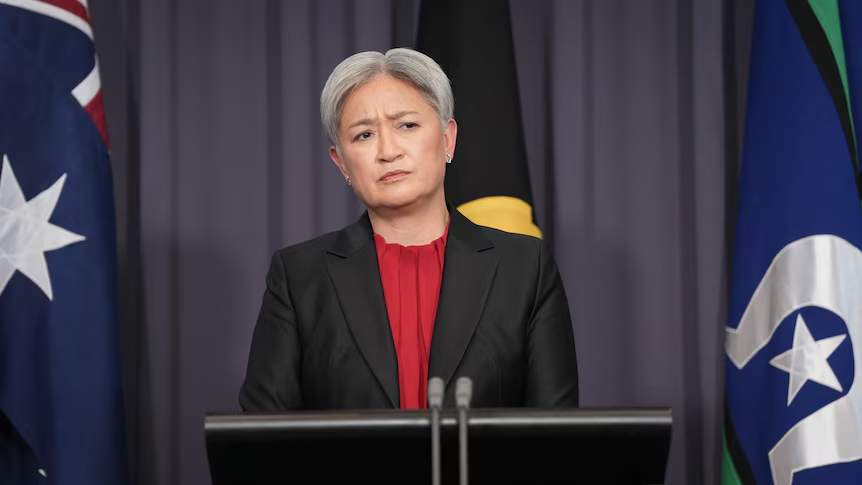
AUSTRALIA has placed the Pacific Islands at the core of its foreign policy strategy, backing bilateral security treaties, regional infrastructure, and climate finance as strategic competition intensifies across the Indo-Pacific.
In a major foreign policy statement in Canberra, Foreign Minister Penny Wong said the Albanese Government has made the Pacific its foremost international priority since taking office in 2022, linking Australia’s own stability directly to the resilience of its island neighbours.
“Our security begins in our region; that is why it is our first foreign policy priority,” Wong said.
Canberra has expanded its diplomatic footprint through a wave of bilateral agreements covering security, mobility, and economic ties.
These include the Pukpuk Treaty with Papua New Guinea—which entered into force in July 2026—alongside the Ocean of Peace Alliance with Fiji, the Falepili Union with Tuvalu, the Nauru-Australia Treaty, the Nakamal Agreement with Vanuatu, and a comprehensive pact with Solomon Islands.
“These agreements are a result of our unflagging diplomatic efforts and the reliability and credibility we have with our Pacific partners,” she said.
Infrastructure, Climate, and Security
To tackle climate change which is recognised by Pacific leaders as the region’s primary security threat Australia contributed $AUD100 million ($USD66 million) in foundational funding for the Pacific Resilience Facility.
Through the Australian Infrastructure Financing Facility for the Pacific, Canberra has also committed $AUD2.1 billion in 2026 across 67 projects in 13 Pacific countries and Timor-Leste, including 36 off-grid renewable energy initiatives and more than 10,300 kilometres of undersea telecommunications cables.
On regional security, Australia has pledged $AUD400 million ($USD265 million) to the Pacific Policing Initiative and $AUD600 million ($USD398 million) to the Pacific Islands Forum’s Waqa Moana programme to combat transnational drug trafficking.
Two-way trade in goods and services between Australia and the Pacific has also risen by 20 per cent over the past year, while over 75 cents of every Australian aid dollar now flows to the Indo-Pacific.
A Pacific-Led Vision
Guided by four pillars—region, relationships, international rules, and resilience—Wong emphasised that Canberra’s approach aligns with the Pacific Islands Forum’s Ocean of Peace vision.
“Our work reflects the principle that guides our engagement: Pacific-led, Australia-backed,” she said.
Amid heightened US-China rivalry and economic coercion, Wong reaffirmed Australia’s commitment to a sovereign region “where no country dominates, and no country is dominated.”