
FOR Pacific communities, the question of keeping global warming below 1.5 degrees Celsius is also a question about what happens beneath the water: to reefs, fisheries and the ocean systems on which island life depends.
Katherine Millage, a marine scientist with the National Geographic Society’s Pristine Seas team, said climate discussions need to give the ocean more space.
“Especially as we’re talking in the Pacific context, the oceans are so critically important,” she said. “And I think this often gets outweighed in climate conversations.”
Pristine Seas began working in the Pacific in 2023. Pristine Seas began engaging with governments, communities, and other stakeholders in Fiji and Tuvalu in 2024, followed by expeditions in Tuvalu in 2025 and in Fiji, including Kadavu, the Yasawas, and the Great Sea Reef region.
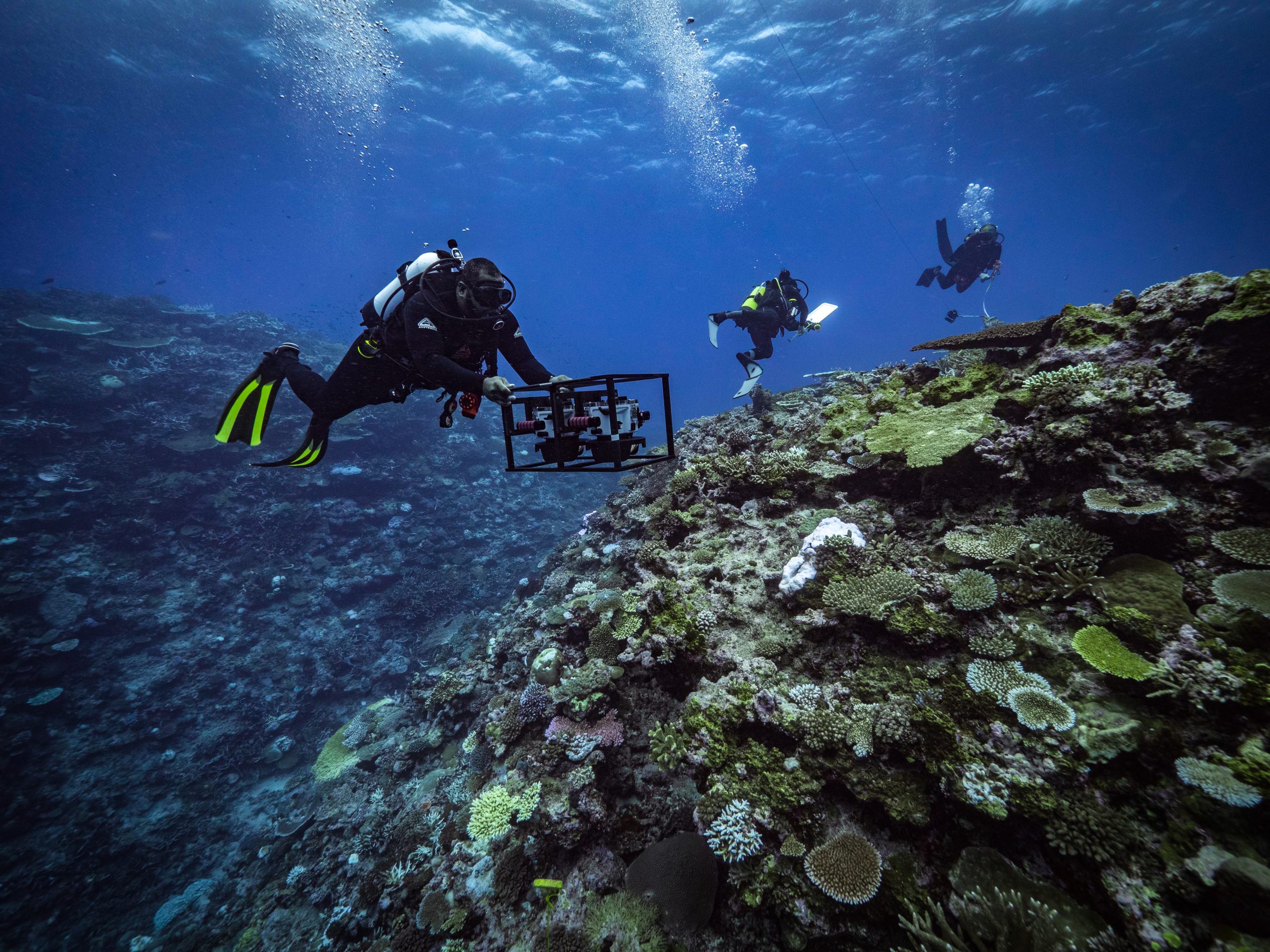
The work aims to document biodiversity: which species are present, how many there are, and what roles they play. Researchers survey seabirds, marine mammals, and sea turtles at sea or on land, while divers study fish, invertebrates, and corals. Remote cameras, including baited underwater video systems, help researchers examine habitats and predator populations such as sharks.
The findings can take about a year to process. When the data is ready, Millage said, the team returns to present it to governments and other stakeholders to inform marine spatial planning, national action plans, and conservation priorities.
In Tuvalu, researchers observed “really widespread coral mortality” at a level the team had not expected, she said. The government responded positively, despite the difficult finding.
“Findings like this really underscore the importance of protection,” Millage said. “The more information, be that science or traditional knowledge, is really the best way that governments have to manage their resources.”
Beyond the reef
Millage said climate discussions about the ocean should not stop at coral reefs and mangroves. She said the deep sea, pelagic waters, and areas beyond national jurisdictions also belong in the picture, describing the deep sea as “very alive parts of the ocean.”
She also pointed to the ocean’s connectivity. Currents, tides and winds move through a system in which “most parts of the ocean” are connected, she said.
On the 1.5-degree goal, Millage said she was optimistic it could be reached, adding that “the lower we can keep that number is obviously going to be better.”
She said the future of ocean health should not be framed only in despair. Coral reefs, she said, can recover after disturbances with protection and responsible fisheries.
“The conversation about future ocean health I don’t think is negative,” she said. “There’s a lot of cases to be made for optimism.”
For the Pacific, she said, that optimism depends in part on treating ocean health as central to climate policy. “If I had one piece of advice or one thing that I’d like to see happen at the COP31,” she said, “it is really for this dialogue about ocean health as a component of a healthy climate to really take centre stage.”