
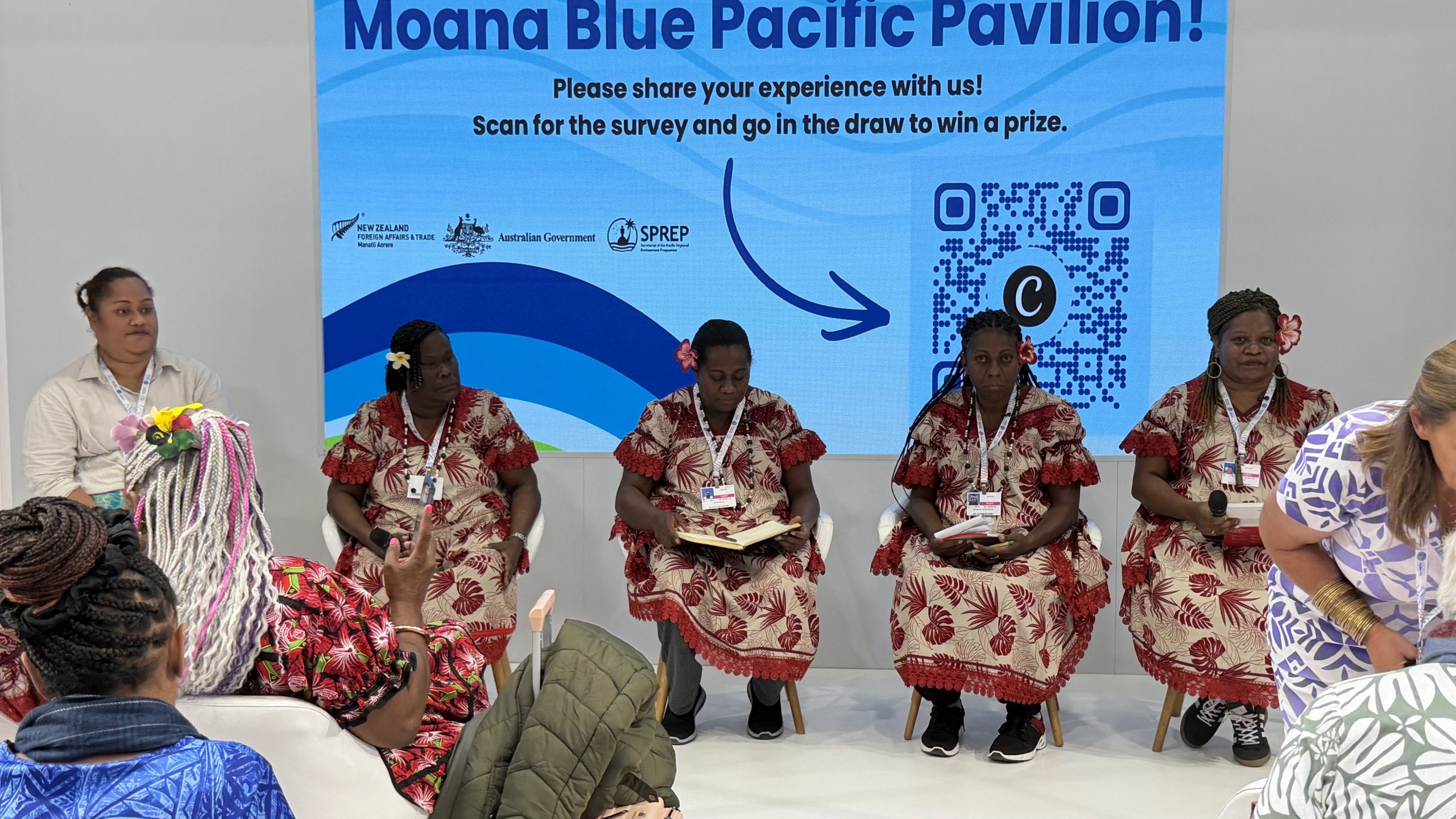
WHEN disaster warnings are issued in Vanuatu, a network of women is helping ensure the information reaches communities beyond those with access to mobile phones, and translating technical forecasts into practical advice that families can act on.
The women-led initiative, known as Women Wetem Weta, uses mobile technology and community networks to share early warnings, prepare households for disasters and relay information from villages to government authorities.
ActionAid Vanuatu Country Manager Flora Vano explains that women consistently identify access to timely and understandable weather information as a major gap in disaster preparedness.
“A lot of the women did not receive the information from the Meteorology Office. The language that was spoken was too scientific, too technical for normal women in the community in the village to know what a cyclone is, what is all this strength, you name all the scientific words,” she said.
“We are not used to that. We know our crops, we know our weather, we know our kids, we know our home, and we are indigenous. So some of that language doesn’t work for us.”
The system was presented at the Moana Pavilion on the first day of COP31 focusing on women leading climate adaptation and resilience through technology and innovation.
ActionAid Vanuatu serves as the coordination hub, working with correspondents across five islands and a mobile phone network involving approximately 5,000 women.
The initiative also works with telecommunications providers, the Meteorology Office, the Climate Change Department and the National Disaster Management Office to ensure warnings are accurate, accessible and relevant to communities.
Rather than simply distributing technical forecasts, the women work with authorities to simplify messages and communicate what households need to do to prepare.
Vano said, “The network also provides a two-way communication channel, allowing women to share information from their communities with government agencies.”
“We also have NDMO, so when we are doing the early warning preparedness, the government have their own policy,” she said. “Now the policy just don’t sit there on paper. We translate the policy on the ground because we are living in our communities. We know our hazard. We know our terrain.”
The system extends beyond women who own mobile phones. Community focal points and local leaders relay messages to households, ensuring women without phones can also receive warnings.
Janet Latikknu, a community mobiliser with WITTT, explains that six correspondents had been trained to prepare SMS messages of up to 160 characters for distribution through the network.
“These messages are sent to community taskforce leaders, who then share them with local women and household representatives,”Latikknu said.
The network also allows women to report emerging threats, including damage to gardens and agricultural pests, by sending photographs and information to the coordination hub and relevant government departments.
The initiative has also been used during other emergencies, including the COVID-19 pandemic, when the network helped distribute public health information to communities.
Its importance has grown as Vanuatu faces increasingly frequent and overlapping disasters.
The programme also incorporates women and girls with disabilities through a dedicated network known as Women I Toktok Tugeta Sunshine.
“Nothing about us without us” and “leave no one behind” were among the key messages emphasised by the disability network.
The group’s leadership was also demonstrated during the response to the Port Vila earthquake, when its members helped provide information about people with disabilities and guided response efforts within their communities.
Vano said, “The initiative had also demonstrated the economic value of investing in disaster preparedness.”
Research presented during the session indicated that every US$1 invested in multi-hazard early warning preparedness could save US$4.40 in humanitarian response costs.
She said, “The system was helping communities receive information earlier, understand the risks and take action before disasters struck.”
For the women involved, the initiative has established a direct link between local knowledge, technology and government disaster response, with communities playing an active role in both receiving and sharing information.