AS more than 80,000 delegates gather in Antalya, Türkiye, the Pacific is entering another critical round of climate negotiations with a clear message: implementation cannot come at the expense of ambition, and the world must not abandon the 1.5°C goal.
COP31 is being framed as an Implementation COP, with host Türkiye and Australia, which is leading the negotiations, seeking to put greater emphasis on turning climate commitments into action.
But for the Pacific, implementation must begin with a fundamental question: how does the world deliver a livable future for countries already experiencing the consequences of climate change?
In his opening remarks, COP31 President-Designate Murat Kurum said protecting humanity’s future was what had brought the world to Antalya, calling for countries to move beyond promises and ensure that decisions translate into meaningful outcomes.
“Sharing that calendar means sharing responsibility,” he said.
“Together with Australia, we are ready to ensure the Pacific is heard and to help find solutions to the challenges facing vulnerable countries.”
Kurum warned that delaying investments in resilience and adaptation finance would only increase the costs of climate change, with future disasters and humanitarian crises becoming more difficult to manage.
“Postpone an investment in resilience today, and tomorrow we may face the cost of a disaster. Fail to deliver adaptation finance today, and tomorrow’s humanitarian crisis may be worse,” he said.
“Let our promises deliver results. Let our decisions unlock investment. Let our knowledge be put to work.”
His message sets the tone for a conference where the pressure to deliver is high. Yet, for Pacific Island countries, the question of implementation is inseparable from the need to keep the 1.5°C temperature limit within reach.
As negotiations begin, the region is preparing to once again make the case for stronger climate ambition, warning that any temporary overshoot of 1.5°C carries serious consequences for small island developing states.
SPREP Director of Climate Change and Resilience, Tagaloa Cooper, “said the possibility of exceeding 1.5°C was catastrophic for Pacific communities.”
“The magnitude and duration of an overshoot must be minimal for many of our communities to have a livable future. We have to come back to 1.5°C rapidly and we have the technologies and capacity to do so. We just need the political will.”
For the Pacific, the 1.5°C threshold is not simply a negotiating position or a scientific benchmark. It represents the difference between the scale of climate impacts communities can prepare for and those that could fundamentally threaten their future.
The region has spent years bringing its lived experiences into international climate negotiations, often having to defend the science behind its calls for urgent action.
In earlier negotiations, Pacific representatives repeatedly faced questions about the evidence supporting their warnings. Today, the scientific findings of the Intergovernmental Panel on Climate Change (IPCC), alongside the International Court of Justice’s advisory opinion on states’ obligations in relation to climate change, have further strengthened the scientific and legal basis for climate action.
Yet concerns remain that the integrity of climate science and the 1.5°C temperature goal could once again become contested ground in the negotiations.
The Pacific Islands Climate Action Network (PICAN) is calling on world leaders to hold the line on 1.5°C at COP31, warning against the growing acceptance of pathways that exceed the agreed temperature limit.
PICAN International Policy Lead, Dr Sindra Sharma, “said the Pacific had been clear about what it expected from the international community.”
“We are deeply concerned by the growing willingness to treat exceeding 1.5°C as an acceptable pathway,” she said.
“Every fraction of warming matters, and even temporarily crossing that threshold carries consequences that cannot simply be reversed.”
For Pacific people, those consequences are already visible. They are reflected in the loss of land, declining livelihoods and the growing uncertainty facing families whose futures are increasingly shaped by climate change.
Behind every fraction of warming are communities confronting difficult questions about where they will live, how they will sustain their livelihoods and what kind of future they can offer their children.
Sharma said, “the region could not afford a conference that weakened ambition when the scientific evidence demanded greater urgency.”
“We cannot afford a COP that lowers ambition when the science demands greater urgency.”
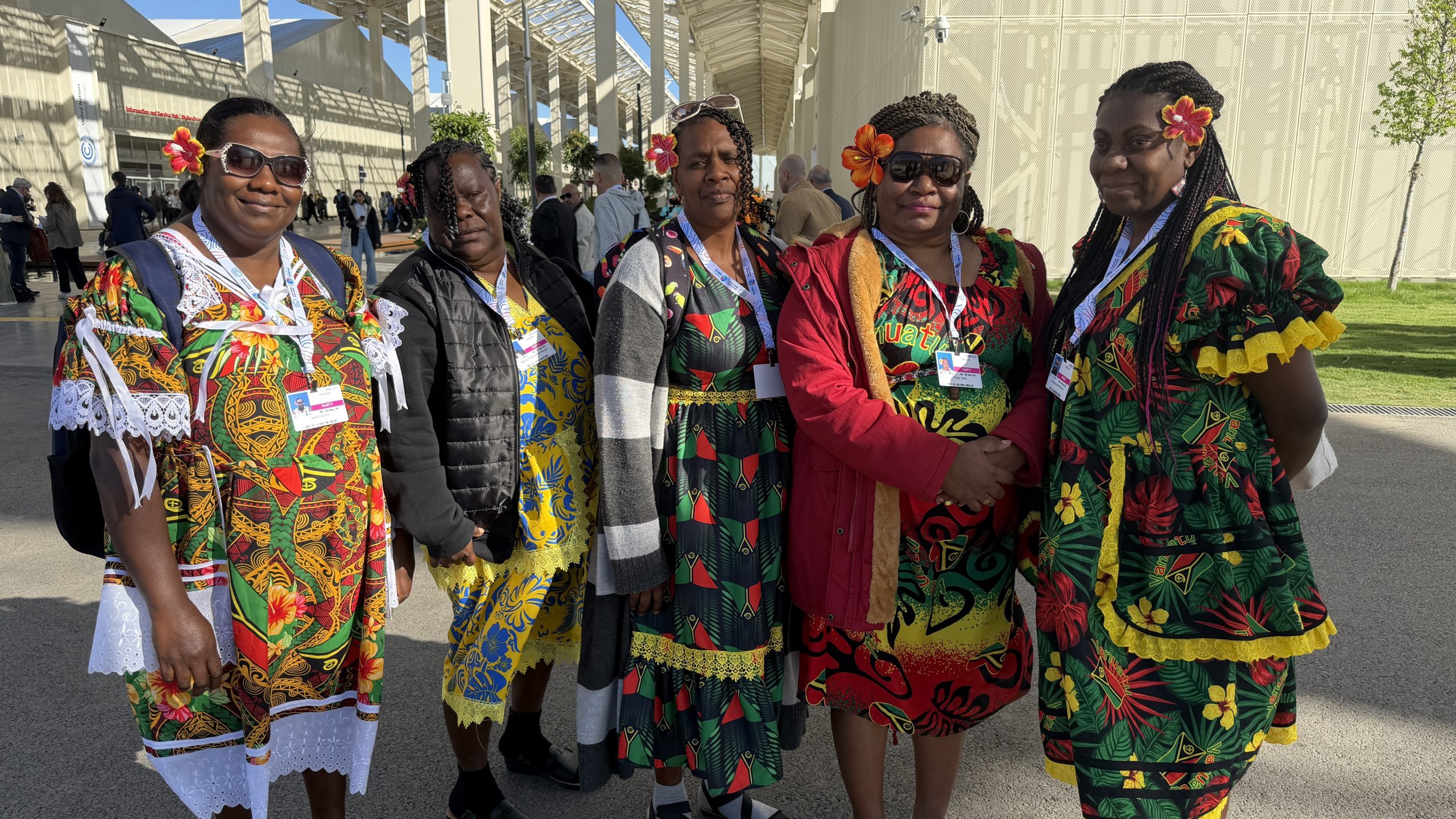
While negotiations will take place behind closed doors, the Pacific’s presence and priorities will also be visible through the Moana Blue Pacific Pavilion, the region’s home away from home in the COP space.
The pavilion is hosting a packed programme of side events, discussions and activities bringing together Pacific governments, regional organisations, civil society groups and development partners to highlight the region’s priorities and experiences.
This year, the Secretariat of the Pacific Regional Environment Programme (SPREP) has also brought together 17 Pacific journalists to cover COP31, providing an important platform to amplify regional voices and report on the realities of climate change across the islands.
Their coverage will help connect the discussions taking place in Antalya with the communities and countries whose futures are at stake in the decisions being made.
As the conference gets underway, Pacific leaders, Council of Regional Organisations in the Pacific (CROP) agencies and civil society representatives are preparing to return to the negotiating rooms with a familiar but increasingly urgent message.
The world has the science. It has the technology. It has the commitments.
What the Pacific is demanding now is the political will to deliver.
For the region, COP31 must be more than an Implementation COP in name. It must be a conference that protects the integrity of the 1.5°C goal, delivers on climate finance and ensures that the promises made by world leaders translate into action for the people and communities already on the frontline of climate change.
The Pacific has spent decades making its case to the world. In Antalya, it is returning to ensure that case is not lost in the negotiations.