
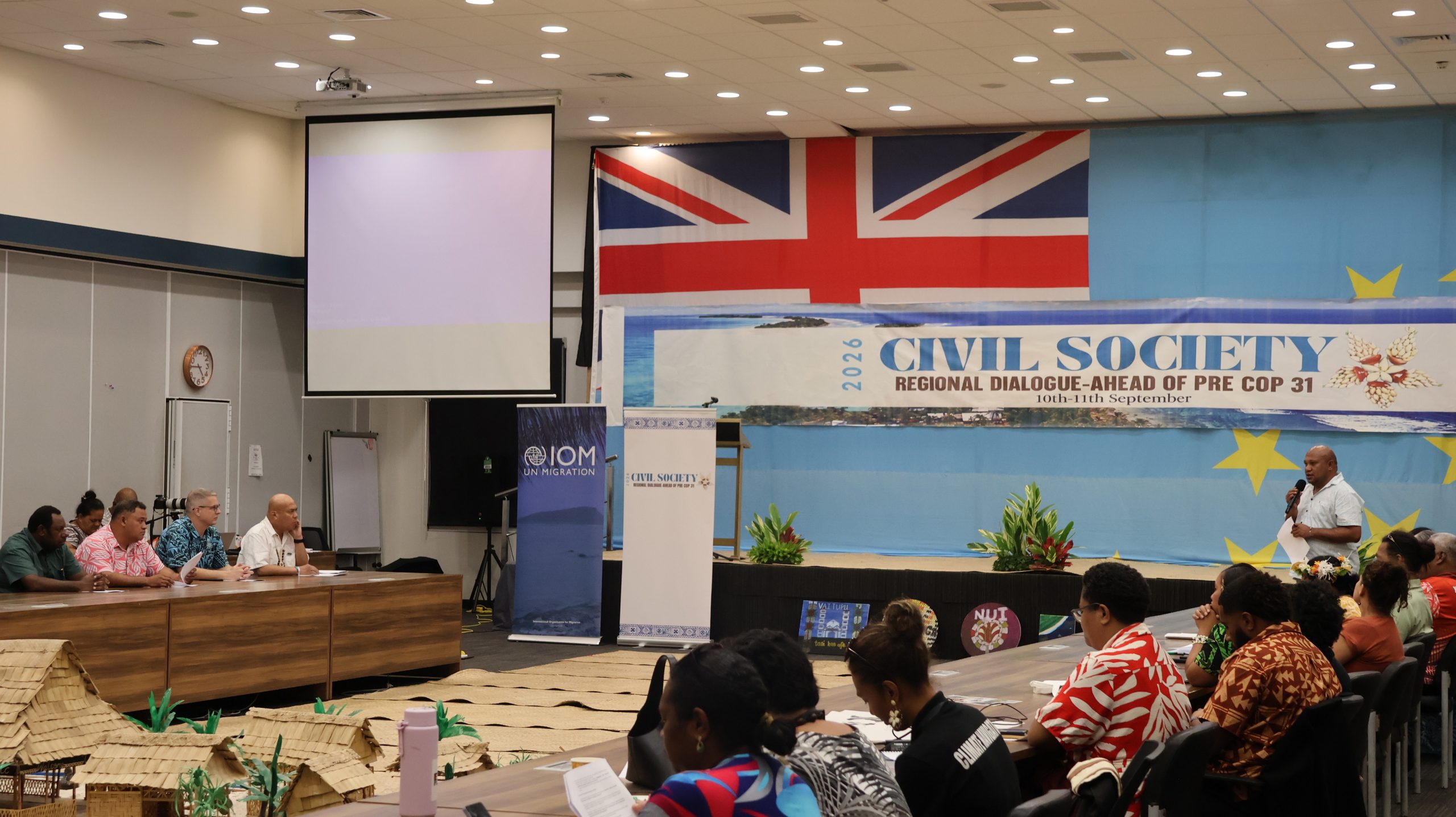
PACIFIC voices are calling for climate finance reform to ensure funding reaches communities on the frontline of climate change, with greater access to grants and fewer barriers for local organisations.
The Funafuti Call for Climate Justice outlines the call, following the Civil Society Regional Dialogue for Pacific Voices Ahead of Pre-COP31 and COP31, held in Funafuti, Tuvalu, on September 10–11, 2026.
With Pacific Pre-COP31 having concluded in Nadi on October 8, the outcome statement’s calls remain relevant as Pacific leaders and negotiators take the region’s climate priorities forward to COP31.
The outcome statement calls for new, additional, adequate, and predictable climate finance, provided mainly as grants rather than loans that could deepen debt or undermine essential services.
It says funding must reach Pacific communities directly and enable civil society organisations and marginalised communities to lead climate action through simplified access, flexible capacity support, and proportionate requirements.
The statement argues that climate finance is an obligation arising from climate-related harm, rather than charity for vulnerable countries and communities.
It raises concerns that funding arrives late, comes as debt, or fails to reach those who need it, while organisations closest to affected communities struggle to access available resources.
It calls for urgent reform of climate finance systems to reflect the realities of small island countries.
This includes simplifying application, approval, procurement, financial oversight, and reporting requirements; reducing transaction costs; and removing accreditation and co-financing barriers that exclude Pacific organisations.
It also calls for climate funding to reach outer islands, maritime communities, and informal settlements, supported by transparent reporting on money committed, delivered, and spent.
The outcome statement further calls for fully capitalising and rapidly and accountably operationalising the Pacific Resilience Facility through binding, transparent, and additional pledges.
Beyond funding access, it emphasises that climate finance must support locally led adaptation, resilient food systems, water resource management, and disaster preparedness.
It also calls for accessible, adequately resourced loss-and-damage financing to address the economic, cultural, social, and other impacts communities already face.
Such support should come as grants and respond to affected communities’ needs, including losses involving ancestral lands, cultural identity, traditional knowledge, and relationships with the ocean.
The outcome statement also calls for sustained investment in Pacific civil society networks and community organisations, recognising their role in bringing local knowledge and community experiences into regional and international climate discussions.
It urges Pacific leaders, regional institutions, development partners, and the international community to act on these priorities and carry them into COP31.
The Government of Tuvalu hosted the Civil Society Regional Dialogue. The United Nations Resident Coordinator Office, the International Organisation for Migration, the Pacific Regional Non-Governmental Organisations Alliance, the Pacific Conference of Churches, the Pacific Community, and the Secretariat of the Pacific Regional Environment Programme jointly coordinated it.