
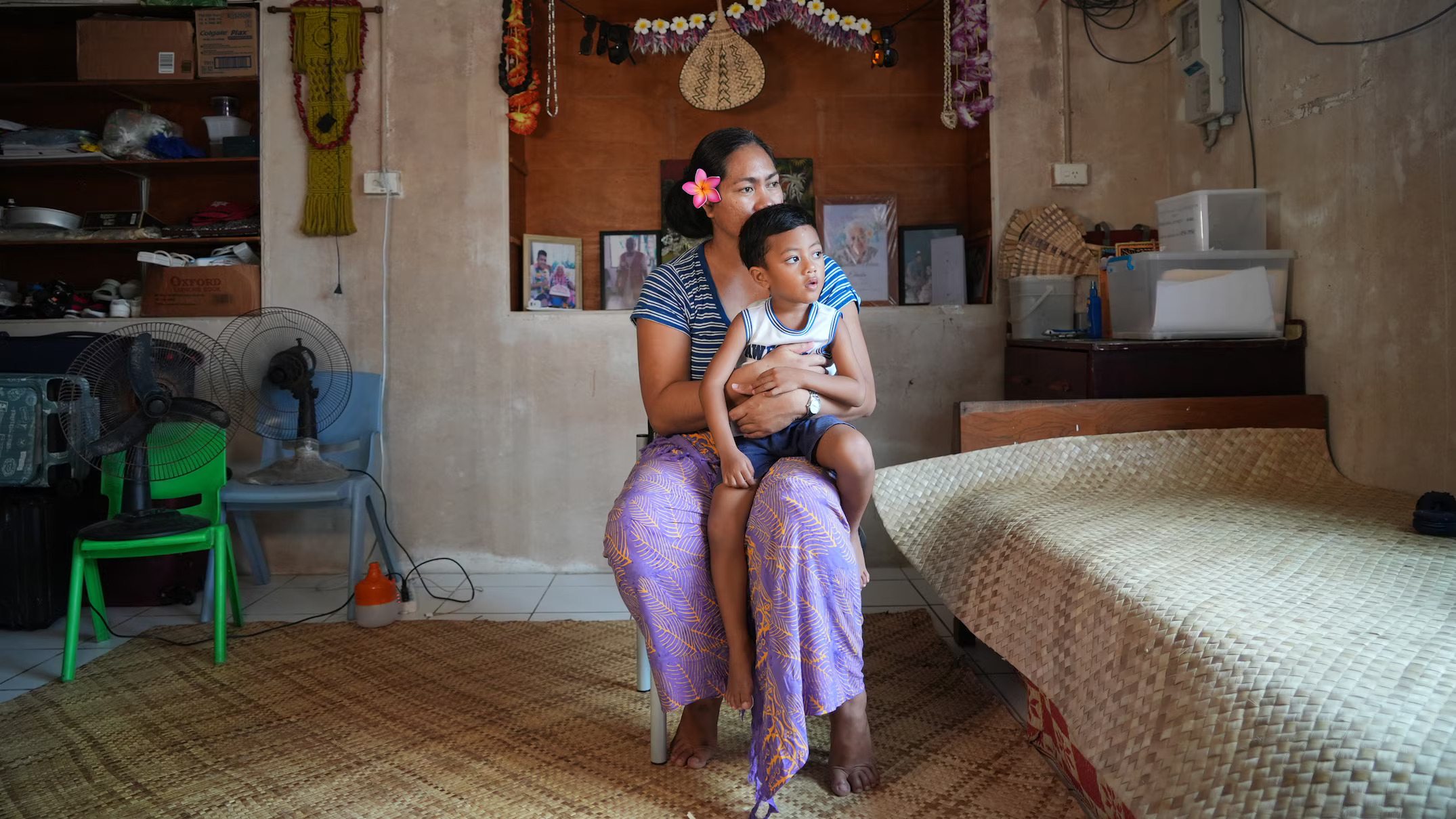
“THE actual impact of climate change is on people. And then when they’re impacted, they move.”
For Pacific families facing the possibility of losing a home to climate change, the question is not simply where to go. It is whether they can stay, whether moving is their choice, what they stand to lose, and who will pay for the land, livelihoods, schools, services and cultural connections that make a place home.
Speaking to Islands Business at the Pre-COP meeting in Nadi, Iori Kato, Regional Director for Asia and the Pacific for the International Organization for Migration (IOM), put human mobility at the heart of the climate discussion.
He said Pacific voices and experiences must be “not only heard but also inform the global decisions on climate change going forward.” He said the Pre-COP outcome should inform COP31 in Antalya and lead to an “actionable solution.”
The challenge is not only to set out what is needed but to finance it.
The updated IOM South Pacific Climate Mobility Action Plan identifies $USD19.1 million in requirements for 2026 and $USD36.9 million across 2026–2028 for planning and funding requirements.
Asked how much had been secured, Kato said he did not have the exact number. He was clear about the difference between a funding requirement and actual financing: “Until we see the actual financing, any action is not going to be sustainable.”
Kato said he was working to link ideas to “bankable solutions” that could attract traditional donors and other investors for community resilience-building efforts.
On whether relocation costs should fall under climate finance or development assistance, he said: “I don’t think it’s either or, it can be both.” He said national budgets could contribute alongside climate, humanitarian, development, international support, and business investment.
For Pacific states facing fiscal challenges, he said, the task is to draw on different funding instruments rather than exhaust one avenue.
The aim is to reduce displacement risks and mitigate the impacts of climate change while giving affected people choices: to stay, if they wish and it is feasible, or to move with informed consent, a clear understanding of what the move entails, and access to services and livelihoods at the new location.
Staying, moving and deciding with dignity
Kato described IOM’s approach to planned relocation as “rights-based, human-centred.”
He said Pacific people should be able to stay where they are if that is feasible. But some communities may no longer be habitable. In that case, affected people and local or national governments need information on how movement could happen, so communities can decide what is involved.
The question of who bears the cost cannot be separated from the question of responsibility. “The Pacific member states or Pacific communities are the least contributors to the effects of climate change,” Kato said.
He hoped financing mechanisms would allow the burden to be “shared globally.” He said the discussion touches on fiscal space and intergenerational justice: how to finance the needs of future generations, who will be more affected by climate change.
Losses that cannot be priced
A relocation budget may cover housing and infrastructure. But what of burial grounds, fishing grounds, language, identity, and spiritual connection? Kato said the Pacific experience could contribute to global discussion of the “non-economic dimension to the loss and damage.”
He said cultural and traditional attachment to land may not easily translate into monetary terms, but is “very, very important for people’s sort of identity.”
The Pacific Regional Framework for Climate Mobility (PRFCM) approaches the issue through people’s relationship with culture and a regional lens, including peer-to-peer learning among governments and communities.
Kato acknowledged: “At this moment, we may not have the answer.” He said the framework’s ideas and solutions could be shared globally and financed with predictable, sustainable finance.
He said the regional partnership underpinning this work began in 2019. It subsequently supported the development of the Pacific Regional Framework on Climate Mobility, endorsed in 2023, and its Implementation Plan 2025–2030, and the PCCMHS programme has received the 2026 Human Security Award. It offers information, experience and workable models from the Pacific. Now, the need is implementation at scale.
As the masthead put it, the Pacific has produced declarations, frameworks, relocation guidelines and migration policy; “what we appear to lack is implementation at a scale.”
A dedicated window, with every sector in
Kato supported exploring dedicated financing options for climate mobility while also integrating mobility across existing climate, humanitarian and development financing channels.
He said multiple financing sources may need to be combined, including international climate, humanitarian and development finance, complemented where feasible by national and private investment. Such approaches should not reduce the international community’s responsibility to provide adequate and accessible support.
He also pointed to community-based resilience projects that could keep livelihoods and labour opportunities attractive at home. Such efforts might help address people leaving the Pacific in search of work and give young Pacific Islanders a reason to stay.
Kato said financing should include Pacific Islanders’ ownership and active participation.
When asked whether preparing Pacific people to migrate could allow major emitters to accept displacement rather than cut emissions, he said IOM was not in a position to draw that line.
He said its work is to put people at the centre and support movements undertaken “because of choice, not because of necessity,” and with dignity.
For COP31, Kato said IOM would continue working with Pacific member states, the international community, UN agencies, regional agencies, businesses, civil society organisations, and affected communities.
He said the Pacific’s solutions and commitments must be financed, and people’s voices and experiences must remain “at the cornerstone” of international decisions about their lives.
The test is whether COP31 turns Pacific voices into action: whether people can make informed choices about staying or moving, whether financing reaches the solutions communities have put forward, and whether the lives and connections bound to land remain central to the decision.
“Climate Mobility is already taking place,” Kato said, “and it must not be neglected in climate policy, finance and action.”