IT is a Friday afternoon, and the sun hangs high over the Yasawa Islands, pouring light across a vast expanse of ocean that shifts from deep blue to brilliant turquoise. The water glitters beneath the afternoon heat, while along the shoreline, fishermen and women prepare their boats, gathering their nets, check their equipment and head out towards the fishing grounds.
In the village of Nacula, Lavenia Naivalurua, a gonedau (a traditional fisher), says the ocean is also a place of sacred knowledge.
She remembers sitting with her grandfather and listening to his talanoa about venturing far beyond the shallow waters, into what they describe as the tuba ni bai ki Viti (the waters beyond the reef) and the familiar boundaries of home.
“He would talanoa (share stories) about how they would go out to the deep, deep waters,” she recalls. “Sometimes what they experience in the shallow waters is what is happening in the deep blue zone.”
Her grandfather would speak of signs, the movement of fish, changes in the water and other clues from nature that could tell experienced fishers what was happening beyond the reef.
Today, talk of what could happen in those deeper waters leaves Lavenia almost speechless.
“To mine something out of our ocean bed, you know, this is something sacred we hold dear to our heart,” she says. “I can’t even think about it.”
Lavenia is not alone in asking what could be lost beneath the Pacific. Fiji has called for a precautionary pause on commercial deep-sea mining, arguing that more science is needed to understand the risks before the industry moves ahead. But while Fiji has urged caution on mining, exploration in its waters has continued, exposing a tension at the heart of the country’s position: how do you decide whether an industry is safe when the ocean it could disturb is still being explored?
An Ocean Governed by Tradition
For Lavenia, the prospect of removing minerals from the seabed is not an abstract conversation about economic opportunity or resources beneath the ocean floor.
“The ocean is our life,” she says.
That relationship is reflected in the decisions the community makes today.
When hotels approach communities seeking ocean leases, she explains, giving away a portion of the sea is not as simple as signing a document because the ocean is not viewed merely as an economic space.
“It belongs to our people, our customs and therefore our responsibilities.”
In Nacula, where traditional stewardship remains woven into everyday life, conservation does not necessarily begin with a government gazette or a sign declaring a marine protected area.
The community has its own systems.
“There are no tabu (restricted) marine protected areas gazetted by government because we have our own traditional protected areas,” Lavenia says.
Traditional protocols still govern how marine spaces are used, while practices such as yararau — where men weave coconut leaves into nets used to catch fish at particular times of the year — continue to carry knowledge passed from one generation to another.
“They are traditional systems of conservation, handed down to us by our forefathers,” she says.
Now, as conversations about what lies beneath the Pacific Ocean reach her shores, Lavenia wonders where communities like hers fit into decisions about the deep sea.
She wants to see the science. She wants to understand the studies. And she wants the people whose lives are tied to these waters to have a voice.
“I’m keen to know about the studies on deep-sea mining and how we will be consulted as qoliqoli (traditional owners) of the deep-sea waters.”
It is a question that stretches far beyond Nacula.
Fiji’s Precautionary Pause Leaves the Door Open to Exploration
Thousands of kilometres from the village, Suva moves to a different rhythm.
Traffic crowds the streets, businesses hum and government offices drive the country’s daily affairs.
Inside Fiji’s Ministry of Minerals, Acting Assistant Director for Minerals Unaisi Rawaikela describes the government’s approach to deep-sea mining with a warning.
“Do not open a door that cannot be closed until we understand what lies behind it.”
Fiji’s position is often described as a moratorium or precautionary pause for 10years, but it is not a permanent ban on all activity associated with deep-sea minerals.
“The pause”, Rawaikela says, “applies to commercial mining and reflects Fiji’s position that baseline science, monitoring systems and governance must be strong enough to understand and manage the risks before extraction is considered.”
According to Rawaikela this applies only in waters under Fiji’s jurisdiction and guides their engagement internationally.
“The pause will remain until comprehensive, conclusive science can confirm whether seabed mining can take place without lasting harm.”
Yet beneath that position lies an important distinction, exploring the seabed is not the same as commercially mining it.
Over the years, the Fiji Government has issued exploration licences to Nautilus Minerals, Blue Water Minerals and the Korean Institute of Ocean Science and Technology (KIOST), with KIOST currently the only active explorer.
Rawaikela says those activities can help build knowledge about an environment where information remains scarce.
“A moratorium does not mean we cannot give license to explore our ocean, the deep ocean is data poor, and these DSM explorations are a way to build the data for us,” she says.
The Ministry, together with the Fiji Law Reform Commission, is also reviewing the Mining Act 1965 and Quarries Act 1939, comparing Fiji’s legislation with frameworks in Papua New Guinea, Australia and New Zealand.
For the government, the pause holds while that knowledge and governance continue to develop.
For critics, however, allowing exploration while calling for a pause raises another question: where does exploration end and the road towards extraction begin?
Who Gets a Voice?
That tension surfaced in Suva in May when International Seabed Authority Secretary-General Leticia Reis de Carvalho visited Fiji for a Opening of the Pacific SIDS Regional Workshop , describing her mission as “long overdue and of great strategic importance”.
Fiji’s place in the debate is significant. Its central location and role as a regional centre for diplomacy, education, development agencies and civil society have long made Suva a meeting point for Pacific affairs.
But the ISA workshop drew criticism from Pacific civil society groups who said they had been excluded from the meeting.
At a press conference in Suva, campaigners condemning the decision and argued that sidelining grassroots voices and non-sponsoring states risked what they called “bluewashing”, presenting deep-sea mining as part of a cleaner or sustainable future while downplaying its potential environmental costs.
Rae Bainteiti, a social justice advocate of Banaban and Kiribati origin, was among those speaking out.
“Deep-sea mining is a risky investment that will negatively impact the Pacific the most and benefit them the least,” he said.
“Calling the destruction of our ocean floor ‘sustainable blue growth’ is deceptive, biased, and wrong.”
Civil society groups including the Pacific Network on Globalisation and the Pacific Blue Line Collective have campaigned against deep-sea mining for more than a decade.
But across the Pacific, there is no single position.
A Pacific Divided Over the Seabed
Fiji’s approach has not emerged in isolation.
Across the Pacific, governments, churches, youth organisations, Indigenous leaders and environmental groups have spent more than a decade questioning whether the region should become the testing ground for a new extractive industry before its consequences are fully understood.
Civil society in the Pacific, like Pacific Network on Globalisation which acts as the Pacific region’s watchdog and advocacy that monitors trade, investment and development policies and advocates for Pacific communities and their interests. This includes the Pacific Blue Line Collective and partners representing Pacific Civil Society collective have been advocating against deep-sea mining for more than a decade, employing diverse campaign strategies.
The movement has steadily gained momentum.
Palau was among the first Pacific nations to call internationally for a moratorium or precautionary pause and later helped launch the Alliance of Countries Calling for a Deep-Sea Mining Moratorium alongside Fiji and Samoa. Fiji soon became one of the first Pacific countries to introduce a moratorium on seabed mining within its own waters and is one of the 46 countries around the world that supports a moratorium on DSM in international waters.
The Federated States of Micronesia has also joined the alliance.
Melanesian leaders, have taken a similarly cautious position. Through the 2023 Udaune Declaration (UD)., members of the Melanesian Spearhead Group that includes members from Fiji, the Front De Liberation Nationale Kanak Socialiste (FLNKS), Papua New Guinea, Solomon Islands, and Vanuatu have agreed to a moratorium on deep-sea mining, citing gaps in scientific understanding and concern over potential impacts beyond national borders.
Melanesian leaders acknowledge there is a lack of information, scientific evidence and that the ongoing discussions about the mining code at the International Seabed Authority proves that the cautious approach is the right approach stressing the limited understanding of what seabed mining can impact beyond their national jurisdiction.
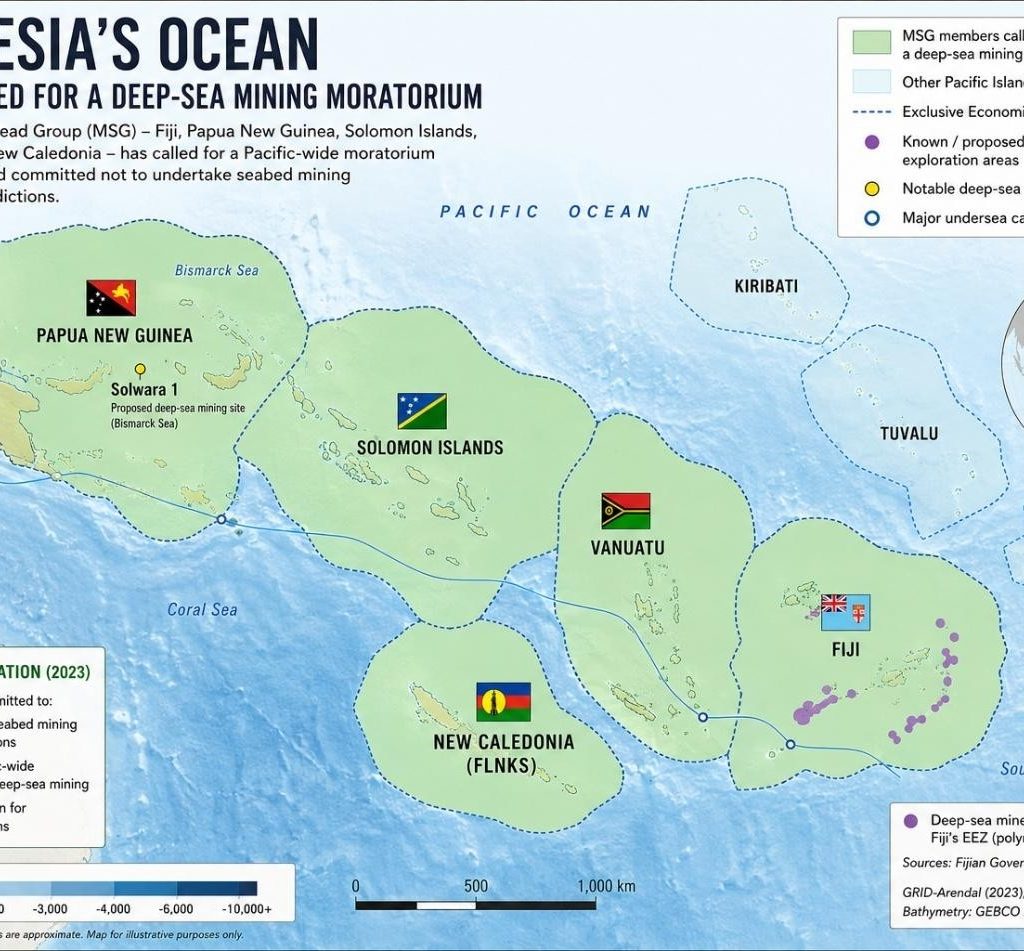
AI Illustration: Melanesia’s Ocean — a region united for a deep-sea mining moratorium.
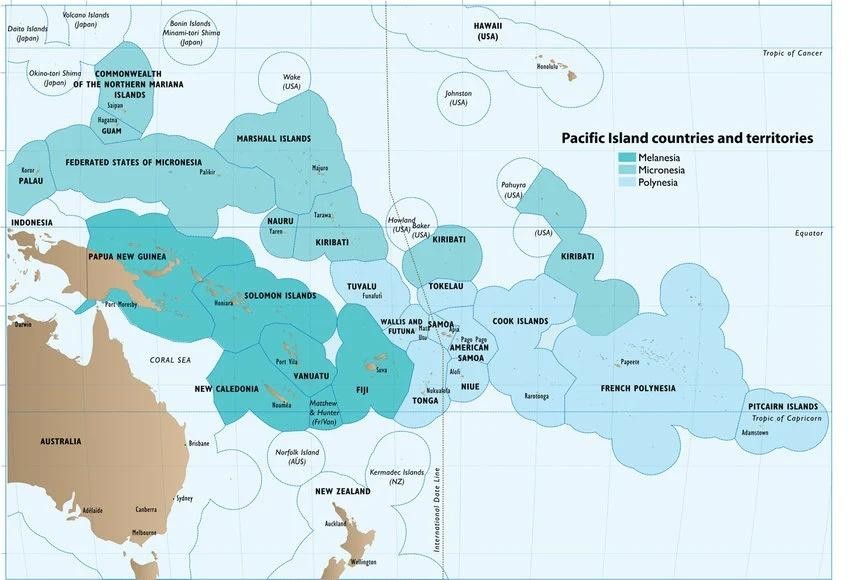
Image credit: The Secretariat of the Pacific Community – The exclusive economic zones of Pacific Islands Countries and Territories. The subregions of Melanesia, Micronesia and Polynesia are also shown (as first published in Bell et al, 2011, provided for use by the Secretariat of the Pacific Community)
Elsewhere in the Pacific, governments have taken a different path.
The government of the Republic of Naoero (Nauru) involvement in deep-sea mining stretches back to 2011, when the International Seabed Authority signed a 15-year exploration contract with Nauru Ocean Resources Inc (NORI), sponsored by the Nauruan government, giving the company rights to explore 74,830 square kilometres of international seabed for polymetallic nodules.
Since then Naoero’s government has consistently framed deep sea mining as an economic opportunity, releasing a media statement in June of 2025, announcing the updated sponsorship agreement for NORI in a joint statement with The Metal Company (TMC).
President Adeang states that,” we have worked to establish a responsible pathway for deep-sea mineral development, one that can serve as a model for other developing states.”
“We believe the world must explore new sources of critical metals if we are to address the urgent realities of climate change. For small island nations like ours, this is not an abstract concern, it’s an existential one,” he said. “We seek practical, science-based solutions that allow us to participate meaningfully in the energy transition.”
The Cook Islands has also moved ahead with seabed exploration.
The contrasting positions reveal a Pacific wrestling with the same ocean but reaching different conclusions about how quickly or whether its mineral resources should be developed.
And beneath that debate are minerals increasingly sought far beyond the region.
A Legacy of Decisions Made Elsewhere
For decades, Pacific Islanders have lived with the consequences of decisions made elsewhere. From nuclear testing and the escalating impacts of climate change to overfishing and increasing geopolitical competition, the region has repeatedly been asked to shoulder risks in the name of global progress.
Deputy Coordinator of the Pacific Network on Globalisation (PANG) and ocean campaigner Joey Tau says the Pacific is still living with the consequences of decisions made decades ago.
“Pacific people continue to live with the traumatic legacy of nuclear testing; its impacts continue across generations,” he said.
For Tau, that history offers a warning about how little was once understood about the ocean’s capacity to absorb human activity and how long the consequences can last.
“During the nuclear-testing era, there was an assumption, or rather an ignorance, that the ocean was so vast that it could accommodate large atomic and nuclear tests,” he said. “Fast-forward to today, and there is a leaking nuclear-waste dome in the Marshall Islands.”
This time the focus lies not on land, but thousands of meters beneath the Pacific Ocean.
What Lies Beneath the Pacific
Scattered across the deep seabed are polymetallic nodules, small rock-like lumps scattered across the ocean floor, rich in nickel, cobalt, manganese and copper. These minerals have been promoted for their potential use in vehicles, renewable energy technologies and the global transition away from fossil fuels. But these minerals are not only for the green economy. They can also feed data centres, electronics, military and weapons technologies, raising a more complicated question about who ultimately benefits from unlocking the seabed, and at what cost.
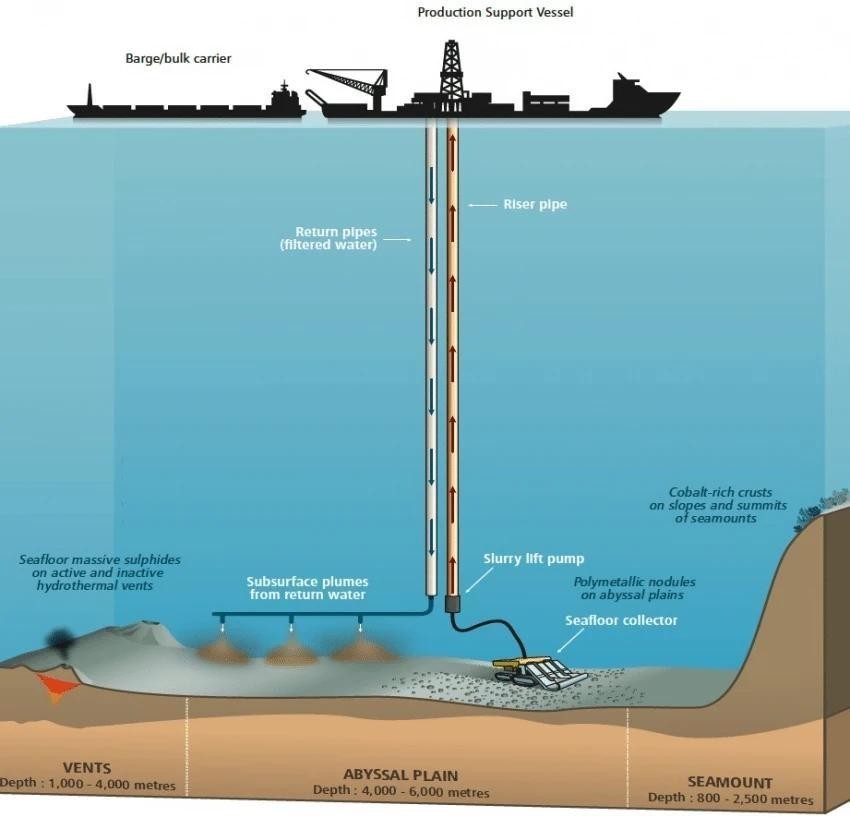
Illustration supplied: deep-sea mining system showing a production support vessel, riser and return pipes, seafloor collector, polymetallic nodules, polymetallic sulphides and cobalt-rich ferromanganese crusts.
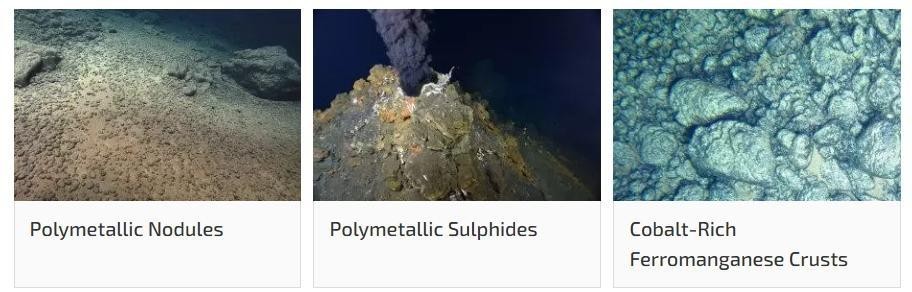
Image supplied: polymetallic nodules, polymetallic sulphides and cobalt-rich ferromanganese crusts.
Supporters argue these minerals could support a cleaner future while opening a new source of revenue for Pacific communities, but for island communities whose source of food, traditions, livelihoods are tied to the ocean scientific evidence suggests that extracting them could irreversibly damage one of Earth’s least understood ecosystems.
But the ocean floor is not empty.
Deep-sea ecosystems support species adapted to darkness, cold temperatures and immense pressure, many growing slowly in environments where disturbance can persist for long periods.
What Scientists Know and What they Still Don’t
Today, more than 900 scientists and policy experts have signed a global statement calling for a precautionary pause on commercial deep-sea mining until enough scientific knowledge exists to understand its long-term environmental consequences. The statement draws on expertise from marine science, oceanography, ecology, environmental policy and related fields, giving weight to concerns that the deep ocean remains poorly understood and that the potential impacts of industrial-scale mining are not yet fully known.
Professor Carrie Pucko, a biologist at the University of Georgia,and a Researcher for the Environment and Science Desk at the US Embassy in Fiji presented on Deep Sea Mining in Fiji to the media in Suva.
According to Pucko the greatest concern is not simply mining itself, but how little scientists still know about the ecosystems that would be disturbed.
Pucko shares that, “the biggest ecological concern is to the deep-water ecosystems which are not well explored.”
“The density of organisms there is low, but they are very diverse, slow growing and slow to recover from damage, if they can recover at all since about half of the animals that live there need the nodules to survive.”
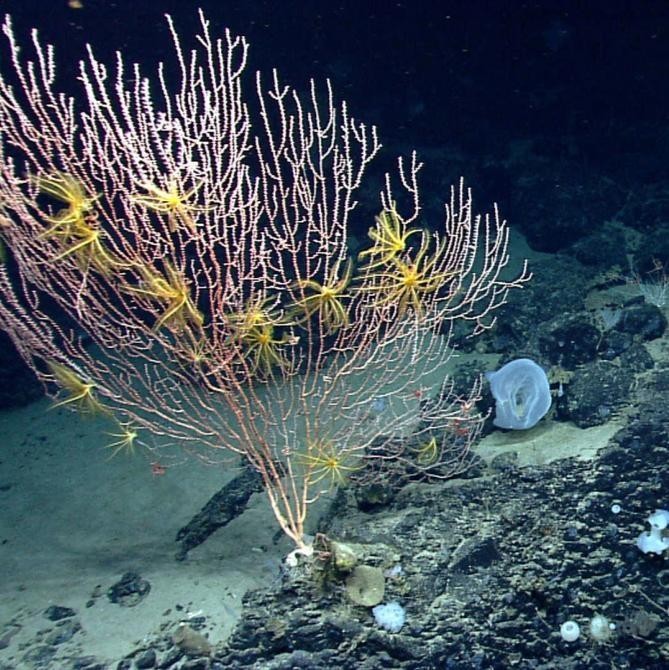
Deep-sea coral community shown in the source draft.
Many of the species living in these environments have yet to be named and entered into official scientific record and the marine species database.
According to Pucko, scientists remain concerned that some organisms could disappear before they are even discovered.
“The deep-sea environmental impacts are unavoidable, and some are permanent, but some impacts can be limited by regulations.”
Between 2016 and 2021, a group of scientists from New Zealand’s NIWA Taihoro Nukurangi, University of Waikato, and University of Wellington investigates what happens when the deep seafloor is disturbed including how clouds of sediment spread through the surrounding water and what happens when processed water is released back into the ocean.
Their research examined an area between 400m to 500m in depth on the Chatham Rise, comparing conditions before and after disturbance and studying the seabed, surrounding water and marine organisms.
Researchers found that sediment plumes can move away from the disturbance with ocean currents, increasing sediment in the water near the seafloor. Dense clouds can obscure the seabed, while material settling back down can cover organisms and alter habitat.
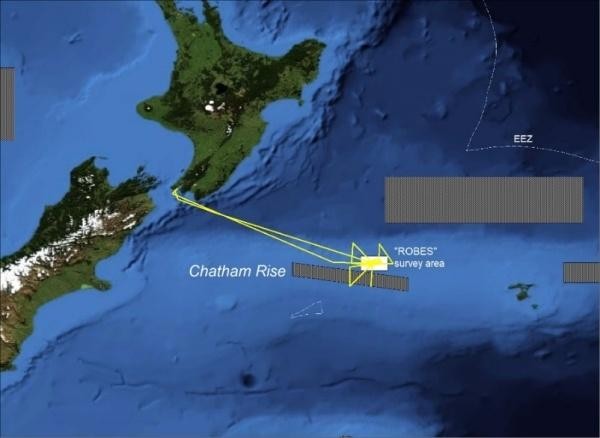
NIWA: The survey area (white box) on the Chatham Rise and approximate voyage track 2020 (yellow line) at depths of 400–500 m. Grey hatched areas are Benthic Protection Areas.
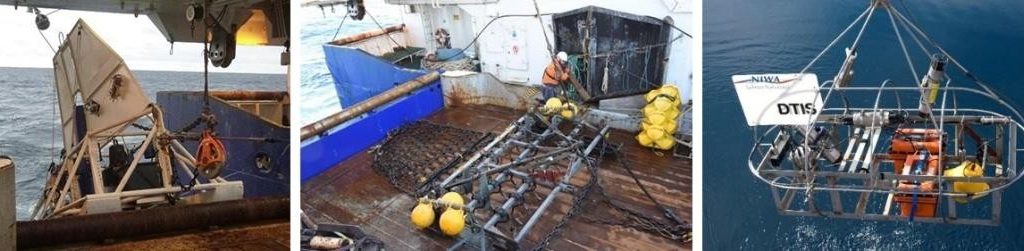
NIWA: Benthic disturber 2018 (left), Sediment Cloud Induction Plough (SCIP) used in 2019 (middle), and Deep Towed Imaging System (DTIS) (right).
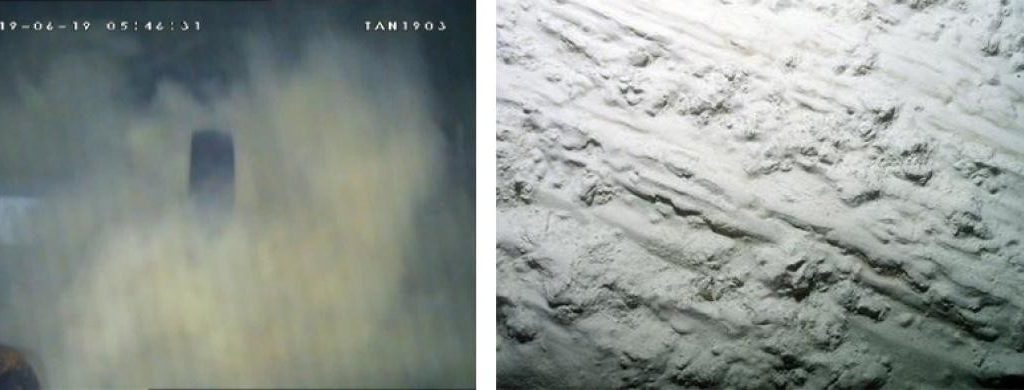
Images credit: NIWA: Sediment plume generated by SCIP (left) and disturbed bottom sediment (right).
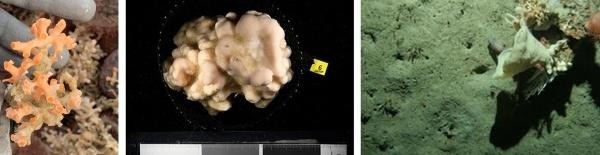
Image credit: NIWA: Samples for aquarium study species — deep-sea stony branching coral Goniocorella dumosa (left), deep-sea sea sponge Ecionemia novaezelandiae (middle), and a seafloor image of a coral community in situ (right, from DTIS).
Suspended sediments can also interfere with biological functions.
The research does not replicate every condition that would exist during commercial deep-sea mining across the Pacific, but it offers scientists a closer look at how disturbance can move beyond the precise place where the seabed is touched.
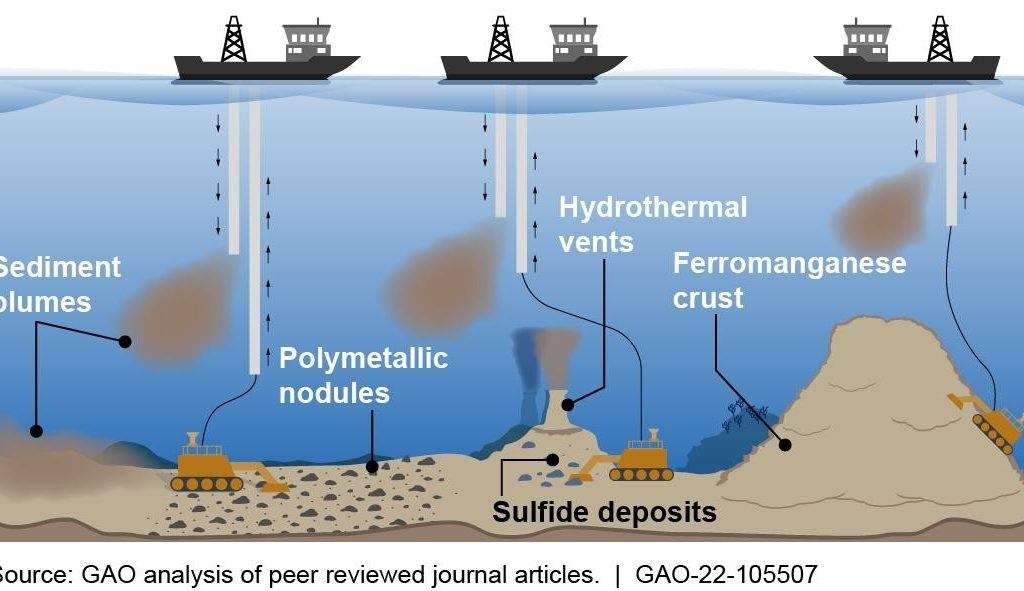
Source: GAO analysis of peer-reviewed journal articles. GAO-22-105507.
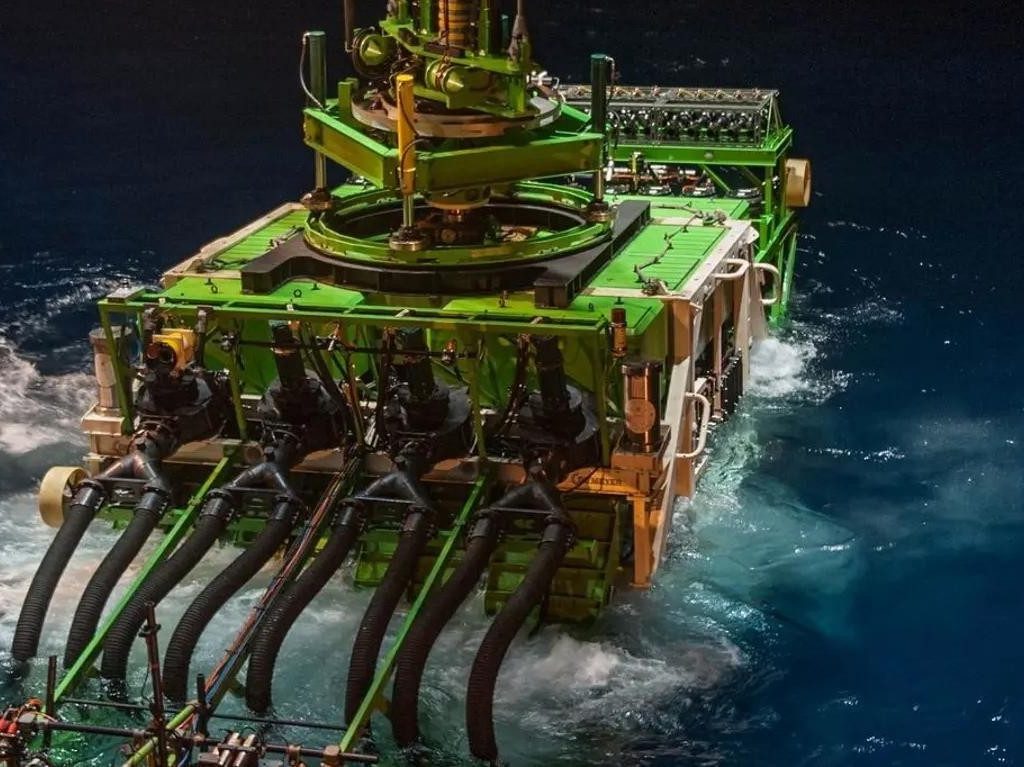
Deep-sea mining equipment shown in the source draft.
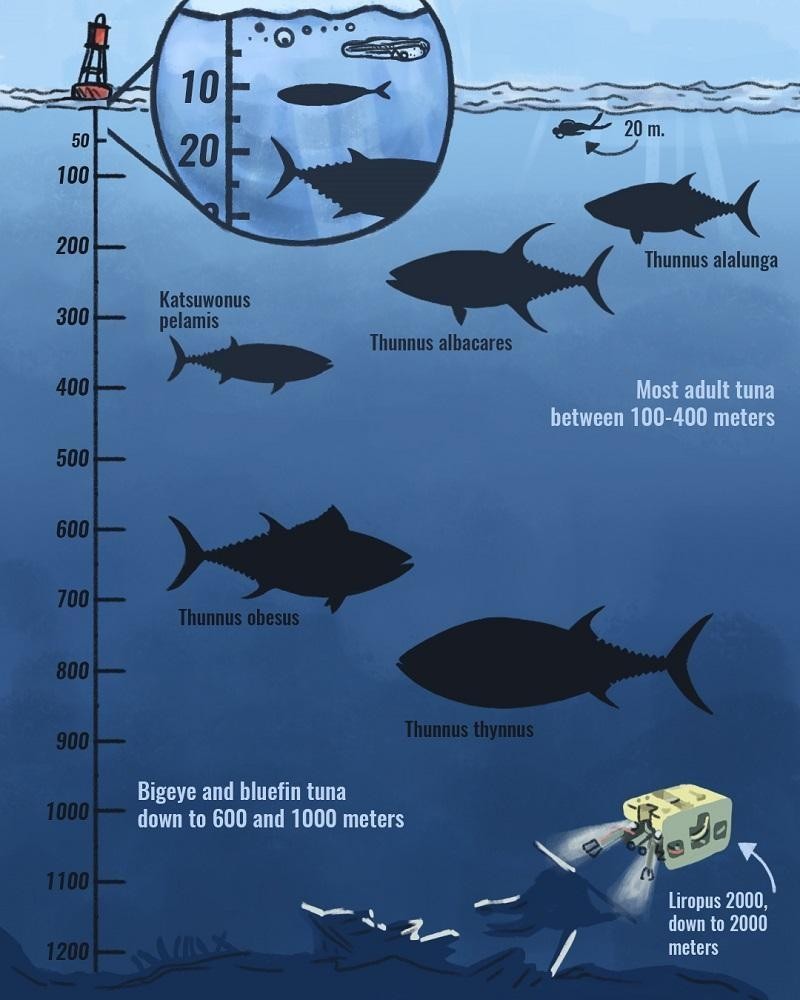
Tuna depth illustration shown in the source draft.
In Fiji, scientists are still establishing a much more fundamental picture of what exists in the deeper ocean.
Mapping WHat Fiji Is Still Discovering
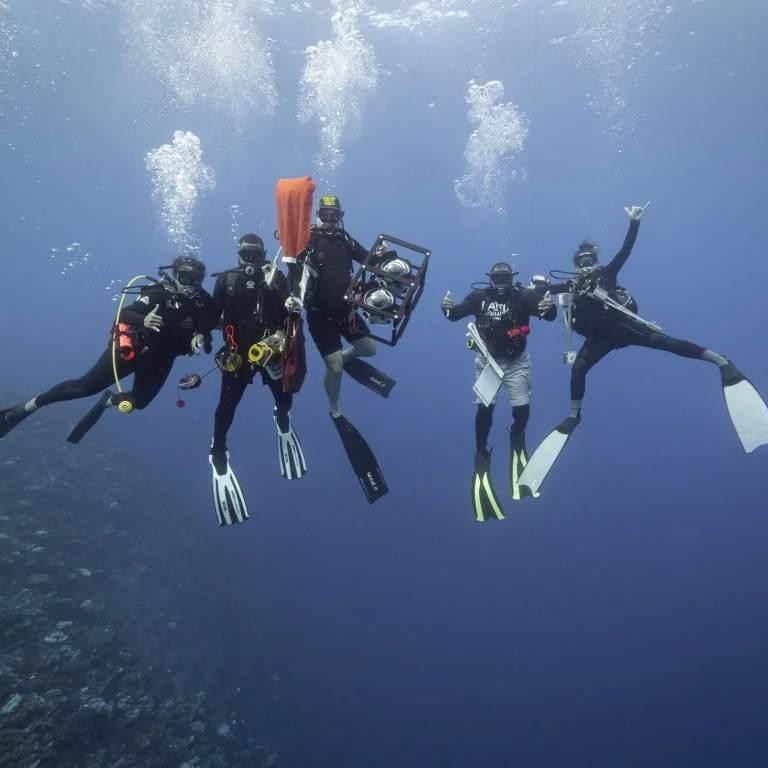
On board the research vessel Argo, scientists invited by the Fiji Government travelled from shallow reefs into waters rarely seen by people.
The National Geographic Pristine Seas expedition deployed deep-sea cameras capable of reaching 6,000 metres, while the Argonauta submersible carried scientists to depths of about 1,300 metres.
The expedition covered waters around Kadavu, the Great Astrolabe Reef, Great Sea Reef/Cakaulevu, the Melanesian Border Plateau, Rotuma, the Ringgold Islands and Yasawa.
.The Government of Fiji report in September 2025 states that the expedition includes the collection of eDNA sampling (Environmental sampling that involves collecting water sample, collecting DNA from what was captured, identifying different species,etc), submersible dives, seabird surveys, coral surveys and underwater imagery.
Marine ecologist and National Geographic Explorer Whitney Goodell says researchers encountered species in Fiji’s deeper waters that local communities did not know were there.
“Species were less abundant near the island compared to the offshore banks and in the deep there are some species that were discovered that the locals did not know lived in the depths of their ocean,” Goodell says.
The expedition was not an exploration of an ocean scientists already understood.
It was designed to fill some of the gaps in what is known about Fiji’s deeper waters.
And those gaps matter when decisions being contemplated could change the seabed itself.
From the Deep Ocean to the Reef
Fijian marine conservation practitioner and marine scientist Ulamila “Mila” Matairakula, has seen Fiji’s reefs from below the surface. As part of the Blue Prosperity Fiji scientific dive team, representing the University of the South Pacific, she travelled underwater from Malolo and Tivua along the Coral Coast to Serua, Beqa, Yanuca, Lami, Suva Harbour and Navakavu. The dives gave her a close view of reefs already under pressure from bleaching, predation and human activity.
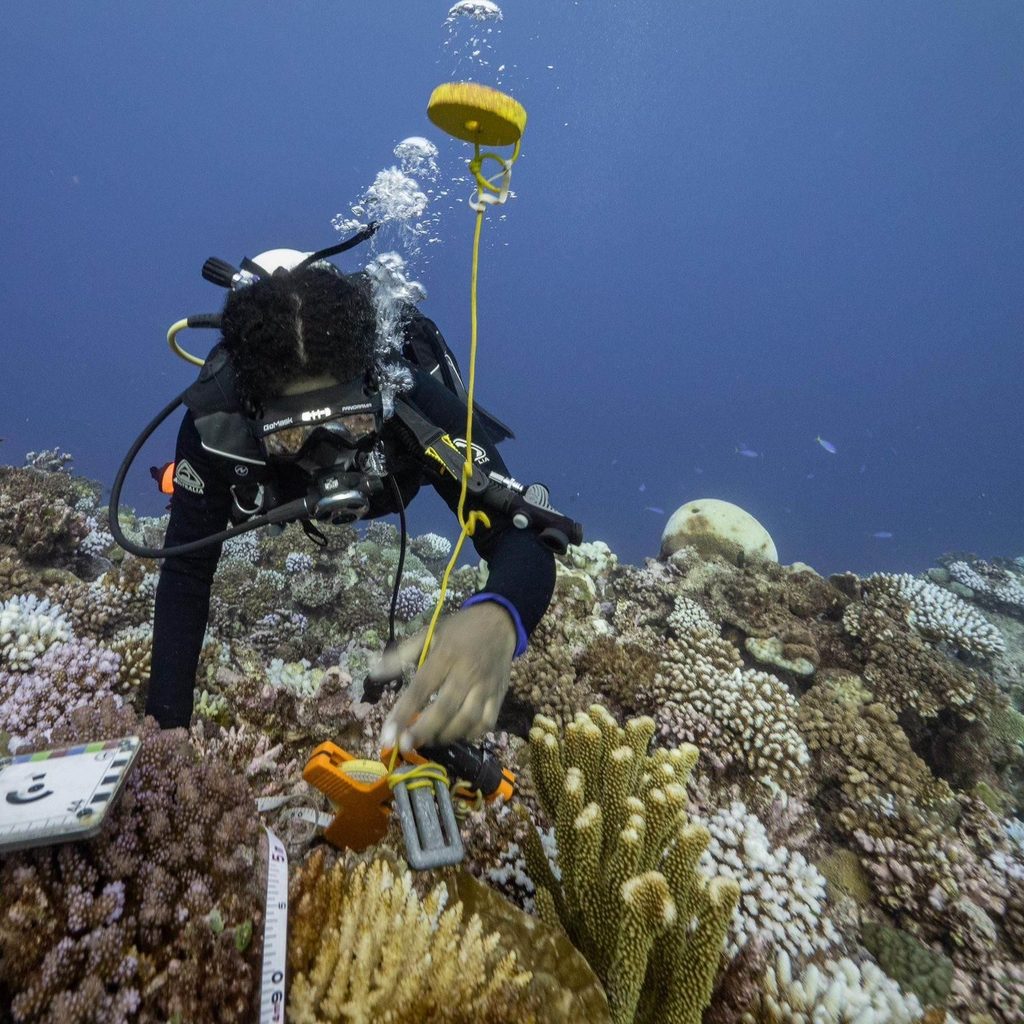
Image credit: Supplied by Ulamila Matairakula
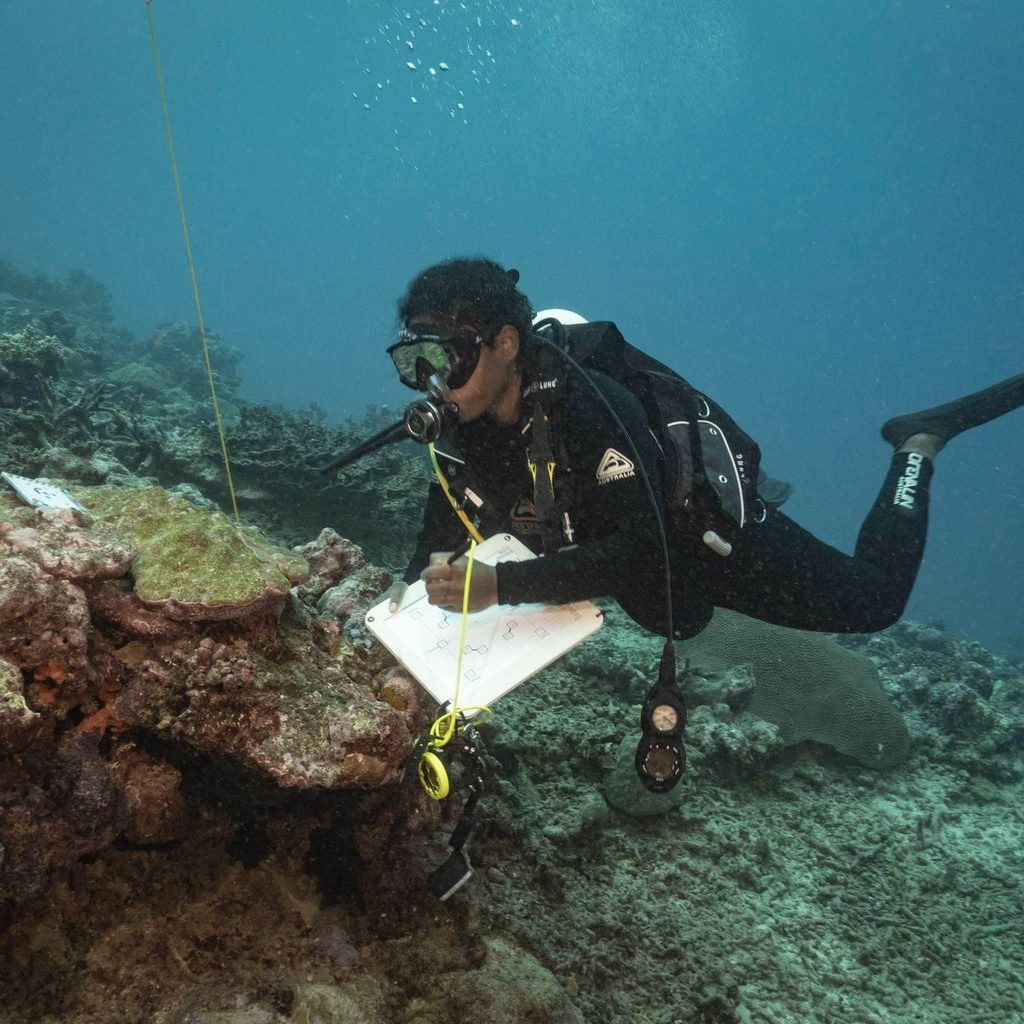
For Matairakula, the ocean is not an abstract ecosystem on a research paper. Her work has taken her into the water and into communities that depend on it. She has also worked with people in Rukua Village, Beqa, on community-based coral-reef monitoring, helping develop ways to track changes in the reefs that support local marine resources.
That experience shapes how she views another potential disturbance to Fiji’s ocean: deep-sea mining.
She says, “any decision on commercial deep-sea mining needs to consider the full chain of effects from the animals living on the seafloor to the coastal communities whose livelihoods depend on healthy marine ecosystems.”
While she acknowledges the potential for economic and employment benefits, she argues that the longer-term consequences need to be understood before those benefits can be weighed against the risks.
An area of concern is biodiversity, “Fiji’s waters support corals, fish and other marine life, while larger species such as tuna and other marine megafauna move through wider ocean routes.”
According to Matairakula seabed disturbance could affect not only organisms living on or near the seafloor, but also species whose movements depend on interconnected marine habitats.
“Coastal communities significantly depend on marine resources for livelihood,” she says. If ecosystems that provide food and shelter for marine species are damaged, she argues, the consequences could eventually reach fishing communities and the people whose income depends on those resources.
But perhaps the biggest gap, Matairakula says, is what scientists still cannot answer.
“We do not know the extent of ecological loss that DSM will bring about,” she says, pointing also to unanswered questions about the socio-economic consequences for communities dependent on fisheries and Fiji’s ability to monitor the industry over the long term.
The Deep Ocean May Be Out of Sight, But Not Out of Reach
Back in Yasawa, Ratu Manasa Naikasowalo sits on his verandah as children play nearby.
His son walks down to the beach to collect kaikoso (ark shell or blood cockle) and returns with two fish.
“For us in the village life is simple,” Naikasowalo says. “What my son is doing is going out to collect enough just for dinner, we don’t need to go to the shop to buy food, it is right here in our ocean.”
Knowledge about when to fish, when not to fish, when cyclone season arrives and when crops should be planted and harvested has long shaped village life.
But Naikasowalo says the changing climate is already disrupting that rhythm, damaging corals and affecting harvests.
“I worry about our future. If we can feel the impact of climate change in our remote island, what would happen if it’s just outside our part of the ocean?”
For PANG the Pacific Ocean cannot be neatly divided into isolated ecological systems.
PANG’s Deep-Sea Mining Lead, Laisa Nainoka, believes many people underestimate the issue because its impacts occur thousands of metres below the ocean’s surface.
“Deep-sea mining happens far below the surface, so it becomes an ‘out of sight, out of mind’ situation,” she says. “But people do not always understand the possible scale of its impacts.”
For Nainoka, the greatest warning lies in what science still cannot answer.
“We know more about the moon than we do about the deep ocean. That alone should be enough reason for us to stop and think before entering this industry.”
According to Nainoka, we could possibly be harming an ecosystem that can be the solution to diseases.
“Yet, we are proposing to destroy the ecosystems and biodiversity that we barely understand, even though science continues to remind us that there is not enough knowledge of the ocean.”
That uncertainty sits at the heart of the Pacific’s civil societies argument.
This is not simply a debate about whether the world needs critical minerals, but whether we know enough, and have the governance and safeguards to mine one of Earth’s least explored ecosystems.
In a Pacific region that has repeatedly borne the costs of decisions made elsewhere, Fiji is calling for a precautionary pause not necessarily rejecting innovation but asking that evidence lead ambition, not the other way around.
This story was supported by Earth Journalism Network as part of the “Mining the Unknowns” cross-border collaboration.