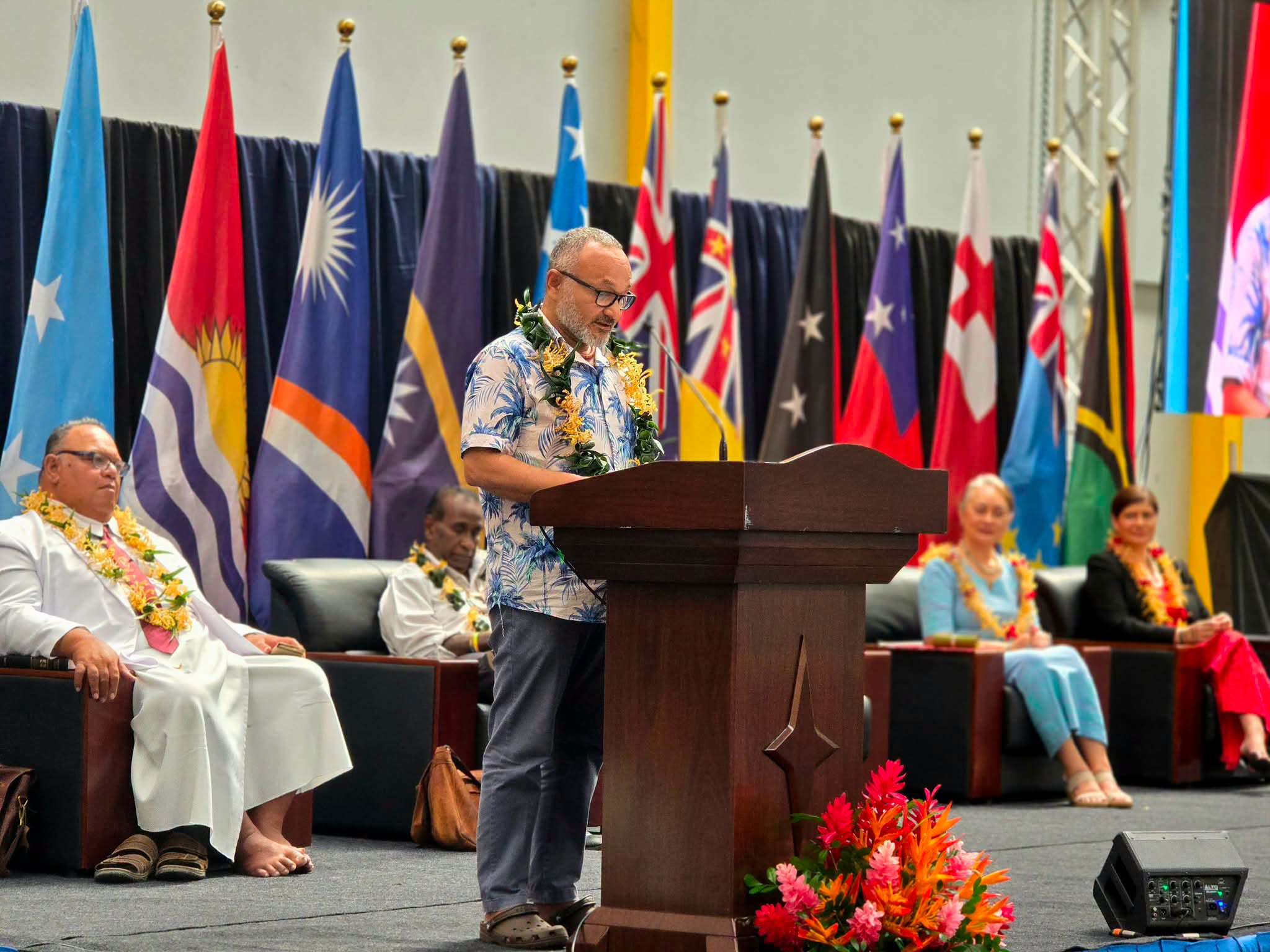
PACIFIC countries must turn climate knowledge and research into practical action, Solomon Islands Prime Minister Mathew Wale says.
Opening the Fifth Pacific Climate Change Conference in Honiara, Prime Minister Wale called for stronger regional efforts to translate Pacific knowledge into policies, projects and solutions that benefit communities.
The Pacific-owned and Pacific-led conference is being hosted in the Solomon Islands for the first time under the theme, “Amplifying One Pacific Voice for Action on 1.5°C to Stay Alive.”
Wale said the Pacific should no longer be viewed only as a region experiencing the impacts of climate change, but as a source of knowledge, leadership, innovation and solutions.
“The Pacific is not merely a place where climate impacts are observed. It is a source of knowledge, leadership, law, innovation and solutions,” he said.
He said Pacific communities were already experiencing the effects of climate change through rising seas, threats to freshwater supplies and food gardens, warming oceans and increasing risks from extreme weather events.
“My central message to this conference is simple: turn Pacific knowledge into Pacific action,” Wale said.
He urged participants to focus on implementable outcomes, including stronger climate policies, early-warning systems, finance-ready projects, practical research, and community-based solutions.
Wale said the success of Pacific regionalism should be measured by implementation and the difference made in communities, rather than the number of regional meetings held.
“The strength of our Blue Pacific Continent will never be found in the number of meetings we hold but, in the difference, we make together for the generations that follow,” he said.
With Pacific countries preparing for pre-COP31 and COP31, Wale also called for sustained regional coordination and a united negotiating position.
He acknowledged that Pacific countries have different national circumstances but said the region must remain united on issues critical to the survival and wellbeing of Pacific peoples and the ocean.
“One Pacific voice must mean sustained coordination before, during and after international negotiations,” he said.
Wale said the conference should strengthen links between Pacific researchers, governments, institutions and communities, while helping translate scientific evidence into policy, investment and action.
“Let this gathering be remembered not only for what we discussed, but for what it helped to deliver,” he said.