PACIFIC nations and their development partners must ensure that meteorological and multi-hazard warning systems are maintained, financed and accessible to every community across the region.
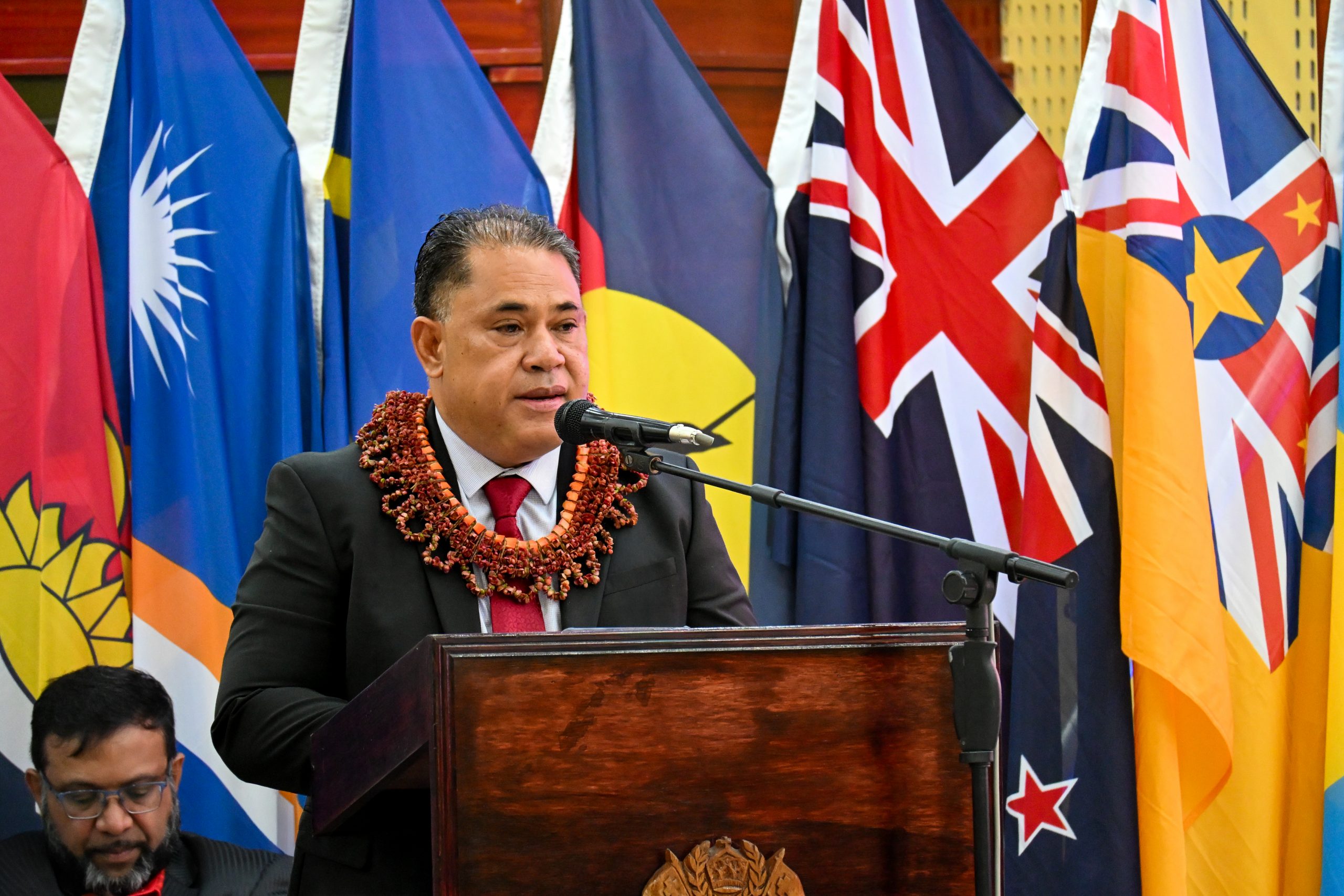
Tongan Deputy Prime Minister, Dr Viliami Uasike Latu, made the call today at the opening of the Pacific Meteorological Council (PMC-8).
Latu said the value of weather and climate services should be measured not by the sophistication of their technology, but by whether people receive information they can understand and use to protect their lives and livelihoods.
“The true measure of a meteorological service is not simply the sophistication of its technology. It is whether the right information reaches the right person in a form they understand and can act upon,” he said.
Latu said forecasts must serve farmers deciding when to plant, fishers preparing to go to sea, shipping operators, pilots, schools and families considering whether to evacuate.
“No village should be considered too small. No community should be considered too remote to receive an effective warning,” Latu said.
The deputy prime minister pointed to Tonga’s experience with tropical cyclones, droughts, volcanic eruptions and tsunamis as evidence of the need for stronger coordination across government agencies and communities.
He cited the January 2022 eruption of Hunga Tonga-Hunga Ha’apai and the tsunami that followed, saying the disaster showed how quickly a single hazard could develop into a wider regional emergency.
“The volcanic eruption became an atmospheric event, an ocean event, a tsunami emergency, a communications crisis and a network disaster,” he said.
The experience, he added, demonstrated the need for a genuinely integrated, multi-hazard early-warning system.
“Meteorological services, geological and ocean agencies, disaster-management authorities and communications providers could not work in isolation, he said, because the hazards facing Pacific communities do not occur separately.
Latu also warned that major investments in weather stations, ocean-observing systems, telecommunications, forecasting platforms and warning infrastructure would fail to build long-term resilience if governments and partners did not plan for their upkeep.
“An early-warning system that cannot be maintained will eventually cease to be an early-warning system,” he said.
He urged governments and development partners to consider maintenance, replacement, operating costs, national technical capacity and sustainable financing from the beginning of every project, rather than waiting for infrastructure to deteriorate.
“Every piece of infrastructure creates a responsibility that extends beyond its installation,” Latu said.
“We must think about maintenance, replacement, life-cycle costs, national capacity and sustainable financing from the moment an investment is conceived.”
The deputy prime minister welcomed the PMC-8 focus on sustainable approaches to maintaining and financing meteorological and early-warning infrastructure.
He said partners had made important contributions to strengthening Pacific meteorological services, but future assistance should also ensure systems can be operated and maintained locally.
“The next stage is for partners to ensure that what we put together can also be operated, maintained and sustained by the people and institutions of the Pacific,” he said.
Latu said advances in satellites, forecasting systems and artificial intelligence would continue to improve scientific capability, but technology alone would not make Pacific communities safer.
The region’s most important investment, he said, remained its people: meteorologists, hydrologists, technicians, observers, forecasters, disaster managers, communicators and community leaders.
He called for continued regional sharing of observations, expertise, technology and resources, saying weather systems and hazards crossed national borders even when the institutions responding to them did not.
Latu urged delegates to keep one question at the centre of the council’s discussions: whether their decisions would ultimately make Pacific communities safer.
“If the answer is yes, then our work is worthwhile,” he said.
He formally opened the eighth meeting of the Pacific Meteorological Council, calling for a Pacific that was informed, prepared, sustainable and secure.
Supported by SPREP and SPC to cover the 8th Pacific Meteorological Council Meeting (PMC-8) in Nuku’alofa, Tonga. Editorial control remains with the author.