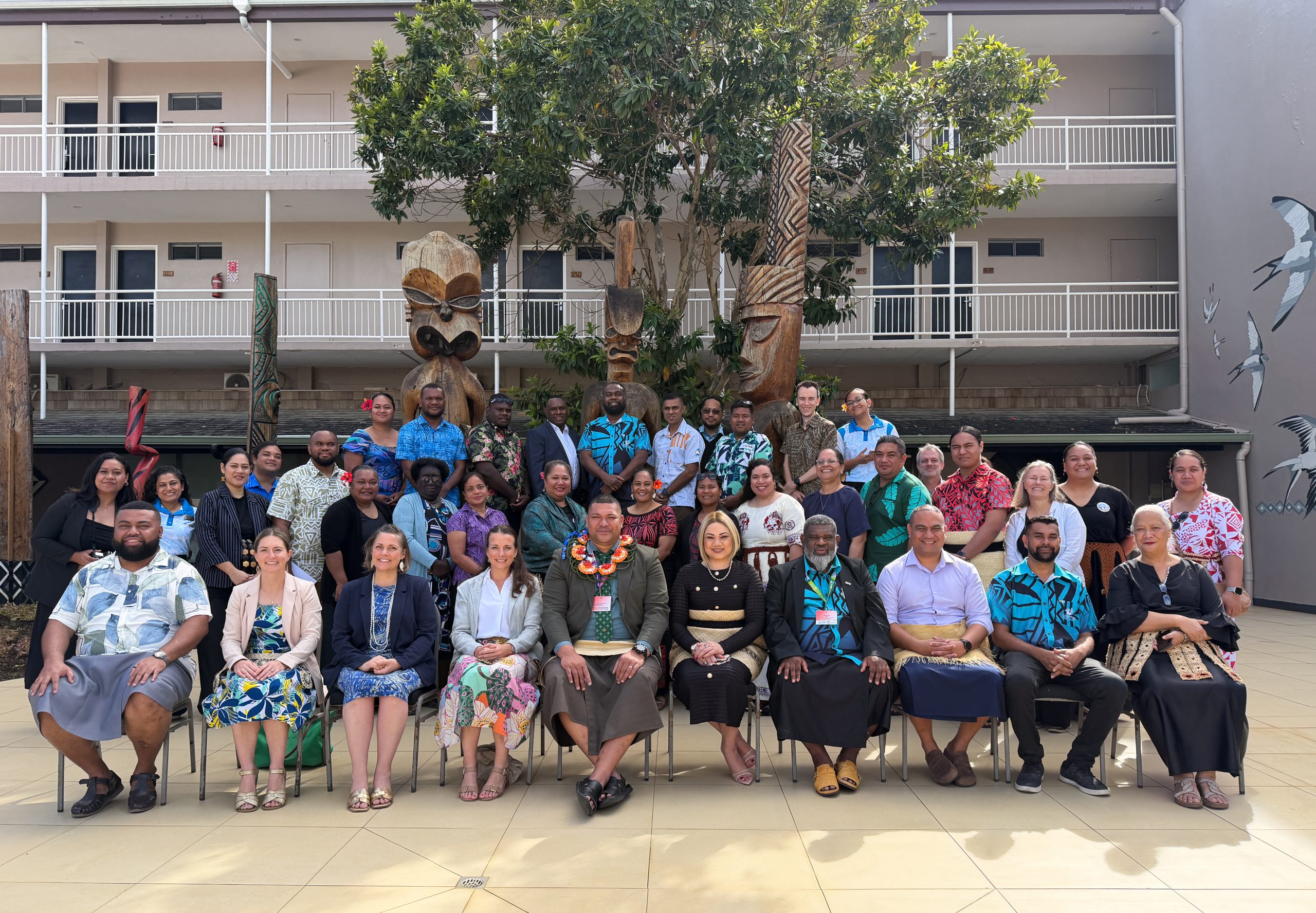
PACIFIC media have been urged to turn weather and climate information into knowledge and warnings into action as the region prepares for the tropical cyclone season.
“Do not just report the weather. Tell the story of why it matters,” Laitia Fifita, Director for Tonga Meteorological Services, told participants of the Pacific Media Master Class in Tonga.
“Translate science into stories our people can understand. Turn information into knowledge and turn warnings into action.”
Fifita said media coverage of political, social and economic stories, the daily lives of people in the islands, fishermen, farmers and women in villages weaving mats was “the voice that empowers our people” and protects lives and livelihoods.
“We provide the technical, the science, the early warning to advise our people, our leaders, but we cannot do that alone,” Fifita said.
“We need you. Your voice matters.”
He said the workshop was not simply to train journalists for one meeting, but to strengthen a network in Tonga and a network of Pacific reporters who could continue working with meteorological services and each other.
The network would be particularly important as the region encounters the tropical cyclone season, which Fifita said starts in November and continues until April next year.
The workshop was officially opened under the theme of empowering Pacific media to amplify weather, climate stories and resilience.
Science Must Be Understood, Trusted and Acted Upon
Elsie Fukofuka, regional director for Polynesia at the Pacific Community, said strong science alone was not enough.
“Scientific information only delivers real impact when it is understood, trusted, and acted upon by governments and communities,” Fukofuka said.
“That is where communications matter.”
She said Pacific communities faced increasingly complex challenges, including climate change, sea level rise, food and water security, disaster risks and environmental pressures.
“Scientific information could often be difficult to access or understand, making communications professionals essential in transforming technical information into stories relevant and accessible to everyday lives.”
Fukofuka said the Pacific Community had recognised media professionals not merely as observers of science, but as partners in the design, communication and application of scientific knowledge.
“By bringing journalists into the technical discussions and regional consultations, we created opportunities for science and storytelling to work hand in hand,” she said.
She pointed to the Pacific-led campaign for the International Court of Justice Advisory Opinion on Climate Change as an example of evidence, advocacy and communication working together.
“The Pacific Community supported Pacific island countries through technical assistance, scientific evidence and regional coordination, while its communications team helped bring Pacific perspectives to global audiences through storytelling, digital media, video production and public engagement.
“As the principal scientific and technical organisation in the Pacific region, SPC has proudly served our members since 1947,” Fukofuka said.
The organisation is owned and governed by 27 member countries and territories, with work spanning climate change, the ocean, public health, fisheries and agriculture.
Fifita said the work required collaboration among meteorological services, media, and technical partners, including SPREP, SPC, Australia, and New Zealand.
“Use the power of the Pacific media to help build a safer and more resilient Blue Pacific.”
Supported by SPREP and SPC to cover the 8th Pacific Meteorological Council Meeting (PMC-8) in Nuku’alofa, Tonga. Editorial control remains with the author.