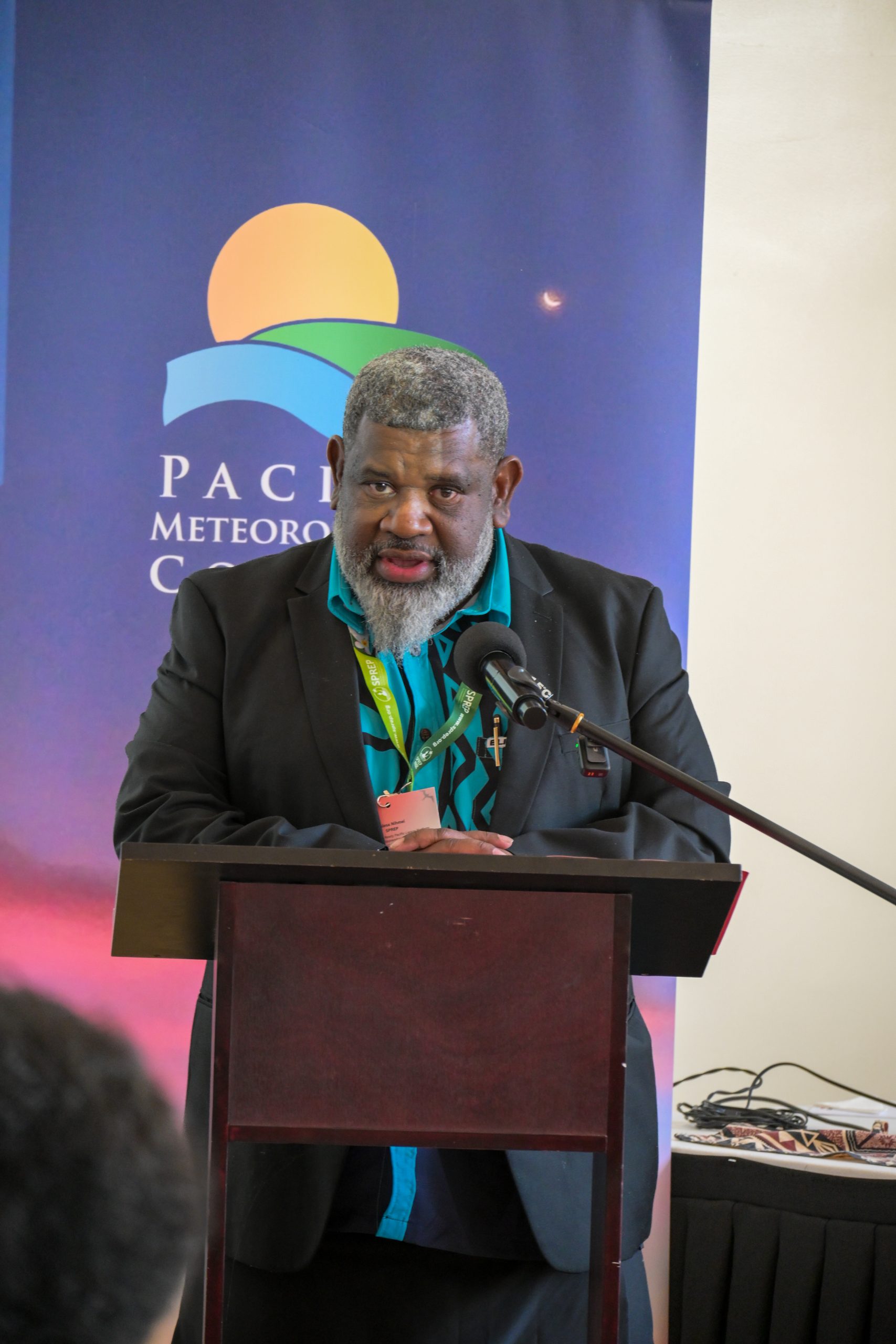
“PACIFIC journalists must help carry weather and climate information from National Meteorological Services and regional agencies to the most remote communities”
SPREP Climate Science and Information Director Salesa Nihmei said during the Media Master Class, adding, “When a cyclone is approaching, when a drought is affecting our communities, when flood threatens our homes, when an El Niño event such as this one affecting us now changes rainfall patterns, people need to know the information, and they need to know it from sources that they trust.”
He said weather and climate affect food security, health, livelihoods, national economies and the safety and security of Pacific people.
“This is where your partnership with the National Meteorological Services and also regional agencies such as SPREP and SPC and the media is important,” he said.
Nihmei said journalists could help ensure that science, observations, forecasts and warnings reached communities that government-funded meteorological services could not reach directly.
“The journalist can be your ears, they can be your eyes, and they can be your mouth,” he said.
“Because the budgets that the government gives to the MET services is not able to reach the most remote communities in our Pacific Island countries. You play that role.”
Nihmei said meteorological services had the science, observations, forecasts and warnings, while the media could turn that information into stories and messages that made sense to communities and reached “the last mile”.
“For many years, SPREP has recognised that strengthening weather and climate services is only one part of the equation,” she said. “Good science must be communicated effectively.”
SPREP had invested in strengthening the communications capabilities of Pacific MET services and building the capacity of Pacific journalists to understand and report weather and climate issues, she said.
The agency had worked with the World Meteorological Organisation, the Pacific Community, the Pacific Islands News Association, the Pacific Environment Journalist Network, the Pacific Media Network, Pasifika TV and others to strengthen connections between climate scientists, meteorologists and the media.
Nihmei said SPREP’s first media capacity-building activity was held during the second Pacific Meteorological Council meeting in 2013 in Nandi, funded by the Government of Australia. The media training has been held as part of every PMC since then.
“It has been a decade-long commitment by SPREP in building capacity and our Pacific journalists and also our Pacific MET staff to ensure that weather and climate information are communicated effectively and accurately,” she said.
He thanked the Governments of Australia and New Zealand, and SPC through the COSPAC project, for supporting the Pacific Media Mana class at the edges of PMC8 in Tonga.
Nihmei urged journalists and meteorological communications officers attending the training to use the class to build skills and relationships.
“This week and next week we are inviting you to be part of our canoe,” he said. “We are inviting you to be part of our community so that you can tell our stories to communities, to development partners, and you can tell it well.”
He said journalists should report the role of National Meteorological Services in protecting air travel, including the safety of flights when people land and take off.
“Not many people know that,” he said.
“That is an agenda that will be discussed this week and we need for you to tell the story because we need investments in this area.”
“We need meteorologists,” he said.
Nihmei also urged journalists to invite meteorologists, including those who were shy, onto radio programmes and talkback shows, and to ask questions when they did not understand forecasts.
She urged meteorological communications officers to make themselves available to journalists and help them understand the science behind weather and climate information.
“A strong relationship between our Pacific media and the national meteorological services will mean more secure and sustainable weather in the Pacific.”
Supported by SPREP and SPC to cover the 8th Pacific Meteorological Council Meeting (PMC-8) in Nuku’alofa, Tonga. Editorial control remains with the author.